Ductless Minnesota

Adding a mini split to a Minnesota home with a furnace

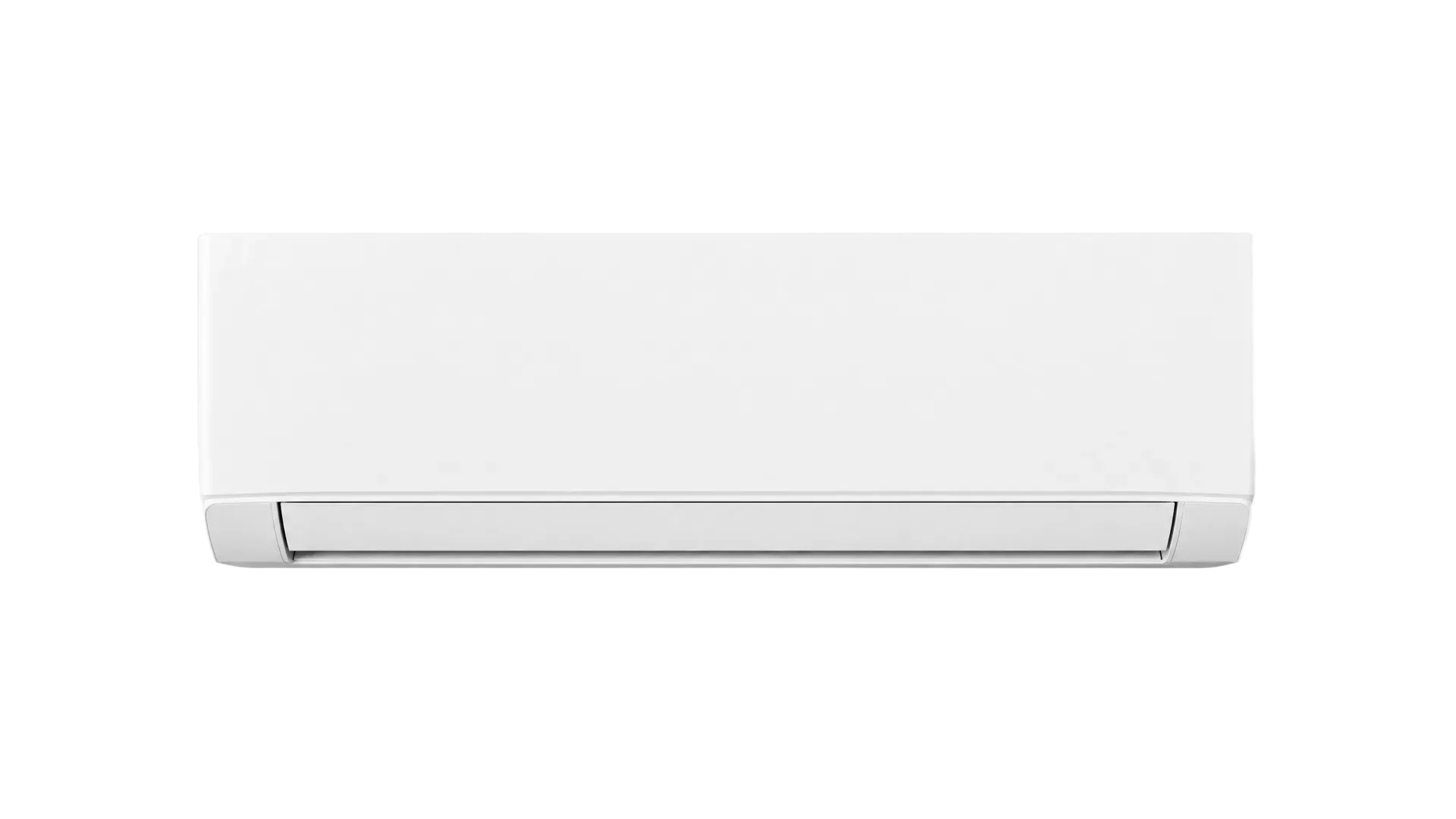
A white wall-mounted mini-split air conditioner indoor unit shown straight-on against a plain light gray background.
Hand it off

Can I add a mini split if my house already has a furnace?

You've got a furnace keeping the place warm all winter, and now you're looking at a mini split for a room or two, maybe the whole house in summer. You want to know if that's actually how these things get installed, or if having a furnace already rules it out. It doesn't, and the two systems don't need to fight each other for the job.

Yes, a mini split works alongside your furnace without any conflict

A mini split and a furnace run on separate systems entirely. Your furnace pushes heat through ducts. The mini split heats or cools the room it's mounted in directly, with no ductwork involved. In Minnesota, most homes use that furnace for the hard part of winter and let the mini split handle the rest of the year, when summers run warm but not sticky and the furnace would otherwise sit idle except for backup heat on the coldest stretches. Installing one means running a line set and mounting an outdoor unit, work that's separate from anything connected to your gas furnace. A licensed installer sizes the mini split to the room, not the whole house, so it adds comfort where you want it without touching how your furnace already works.

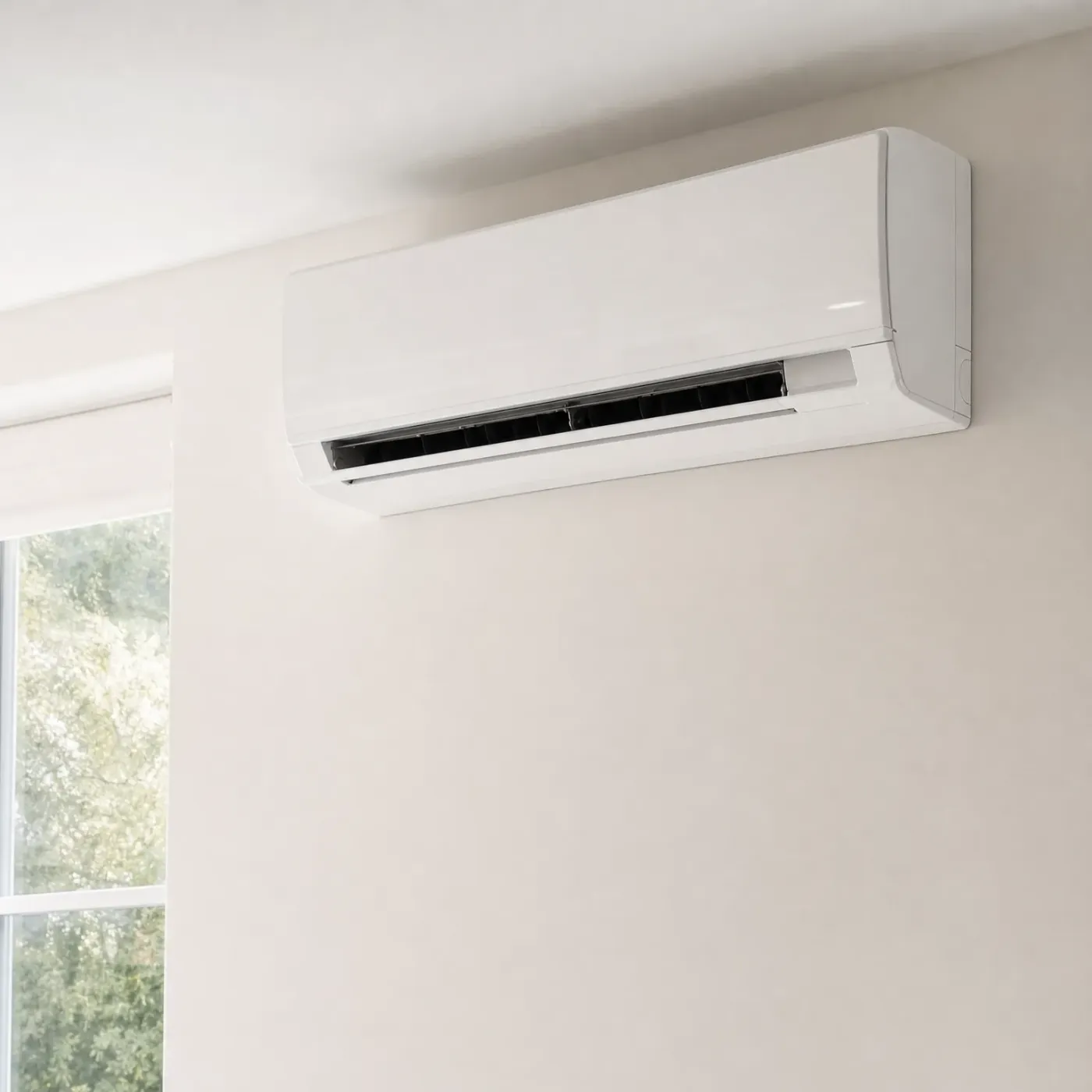
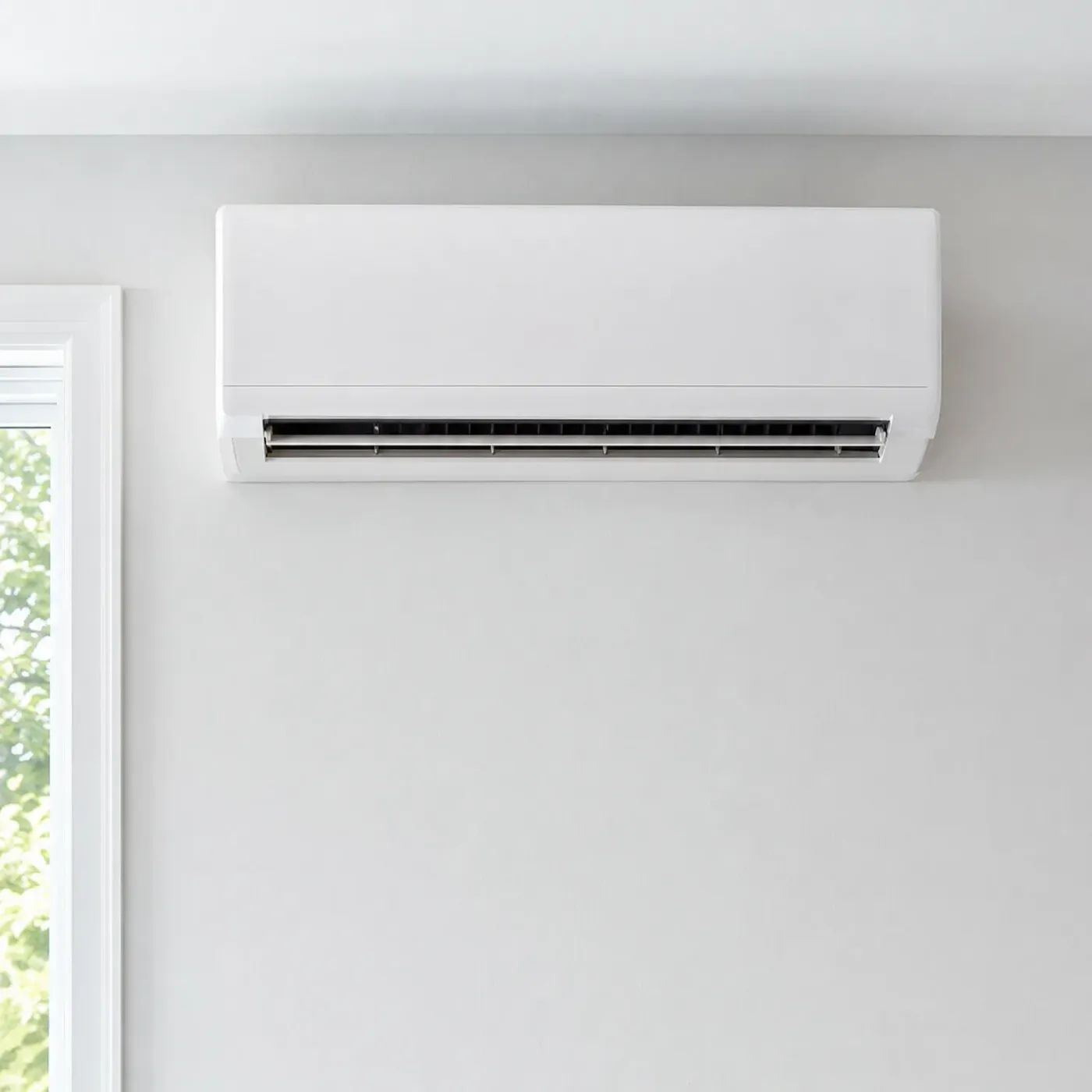
A white wall-mounted mini-split air conditioner unit installed high on a light gray interior wall near the ceiling, with a white-framed window and green foliage visible at the left edge.

Mini split installed right

A mini split mounted high on the wall like this one should run quiet, with steady airflow across the room. Minnesota summers don't need heavy cooling, just enough to cut the humidity and keep the air moving. Sized and placed correctly, it does that without fighting your furnace for the job.
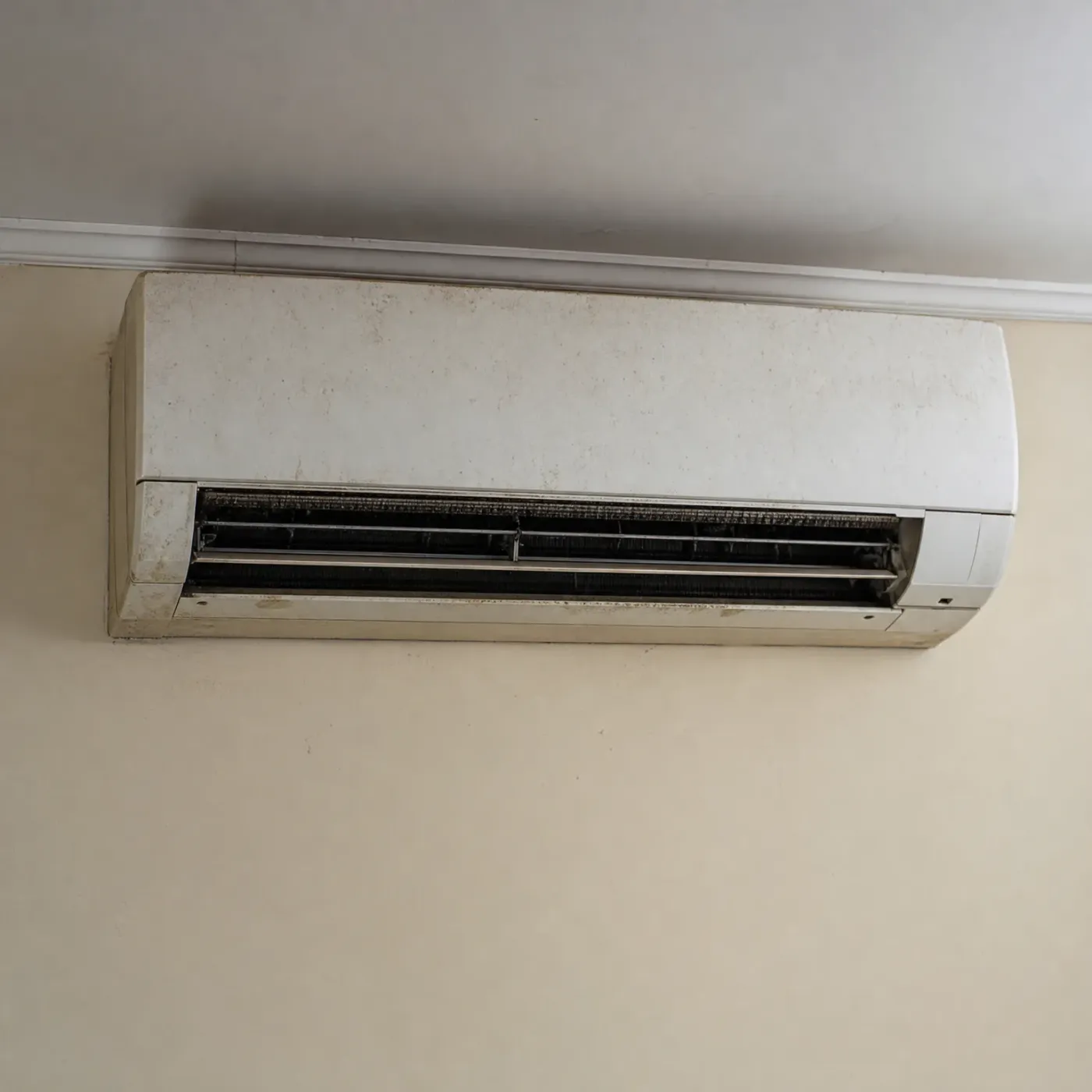

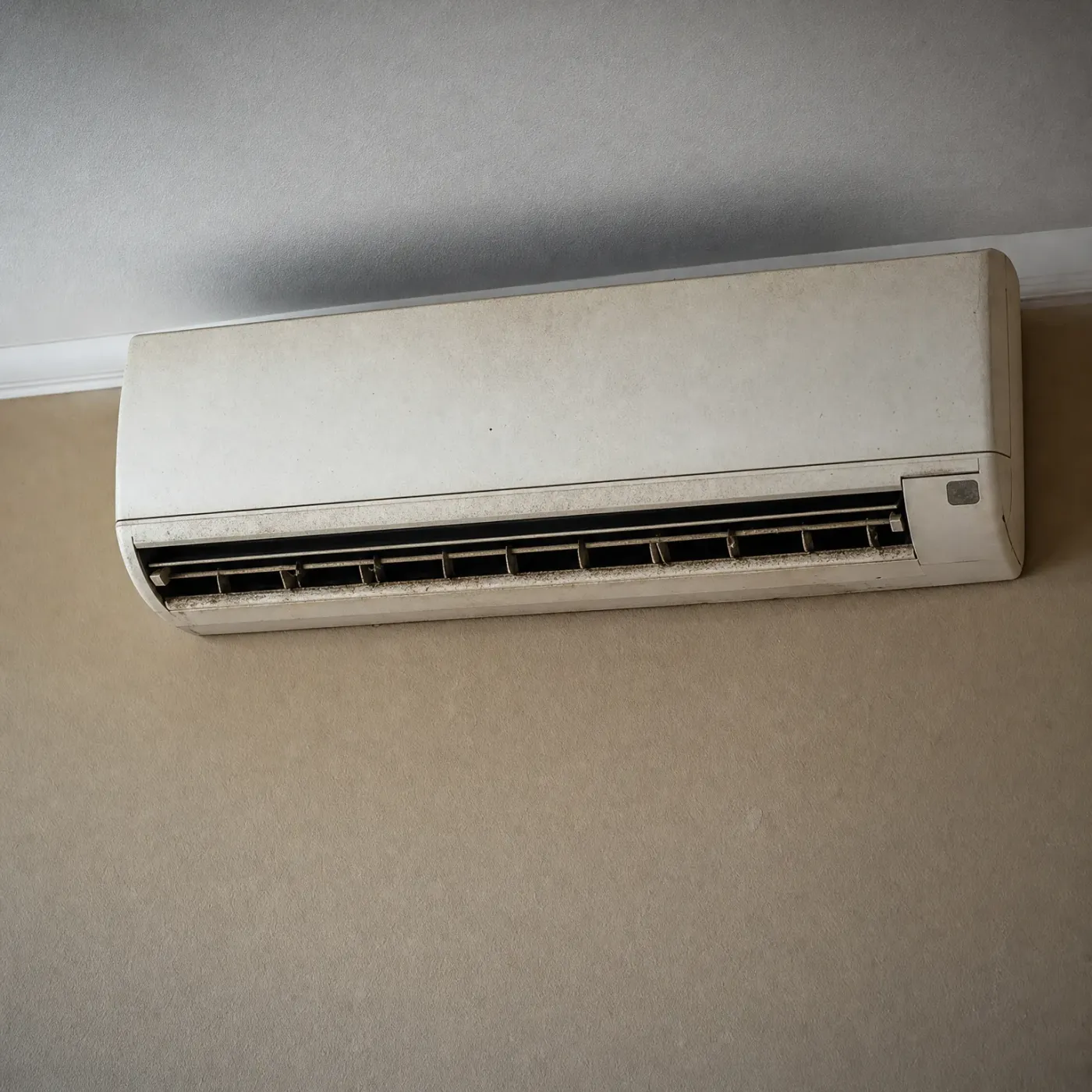
A dusty white wall-mounted mini-split air conditioner installed high on a beige interior wall below a molded ceiling trim.

Mini split left to struggle

That open panel and the dust packed into the vents means the filter hasn't been pulled and cleaned in a while. A unit running dirty like this loses airflow and has to work harder to cool the same room. Left alone, it strains the compressor and shortens how long the unit lasts.

A man with grey hair and stubble in a dark sweater sits on a grey sofa indoors, looking off to the side, with a potted plant and a sunlit window behind him.
A man with gray hair, a beard and glasses, wearing a dark green sweater, sits on a gray sofa in a sunlit living room with a potted plant, table lamp and wooden sideboard behind him.
A middle-aged man with graying hair and a short beard sits on a blue sofa in a living room, looking toward a window, with a bookshelf, lamp and framed picture in the background.
A man with graying curly hair and a dark green sweater sits on a gray sofa in a sunlit living room, looking off to the side, with a framed picture, shelving, an armchair and a window with sheer curtains behind him.

Two systems, one house

Your furnace keeps running on gas all winter. The mini split handles the rooms it can't reach evenly, or takes over cooling in summer without ductwork changes.

Get a licensed local pro

Placement decides performance

A mini split set at the wrong height or on the wrong wall will short cycle or leave corners warm. Someone who installs these every season sizes it to the room first.

Get a licensed local pro

Why does one room never feel right?

You already know which room it is. The one over the garage, or at the end of the duct run, that's cold in January no matter how high you push the thermostat, and stuffy in July even with a window fan going. Your furnace is doing its job for the rest of the house. It just can't push enough warm air that far, and a window unit or a box fan hasn't fixed it either. Left alone, that room stays a room nobody wants to use, and in winter the parts of your house farthest from the furnace put more strain on it trying to keep up. A mini split placed in that room heats and cools it directly, with no ductwork involved, which is the whole reason you're looking into this.

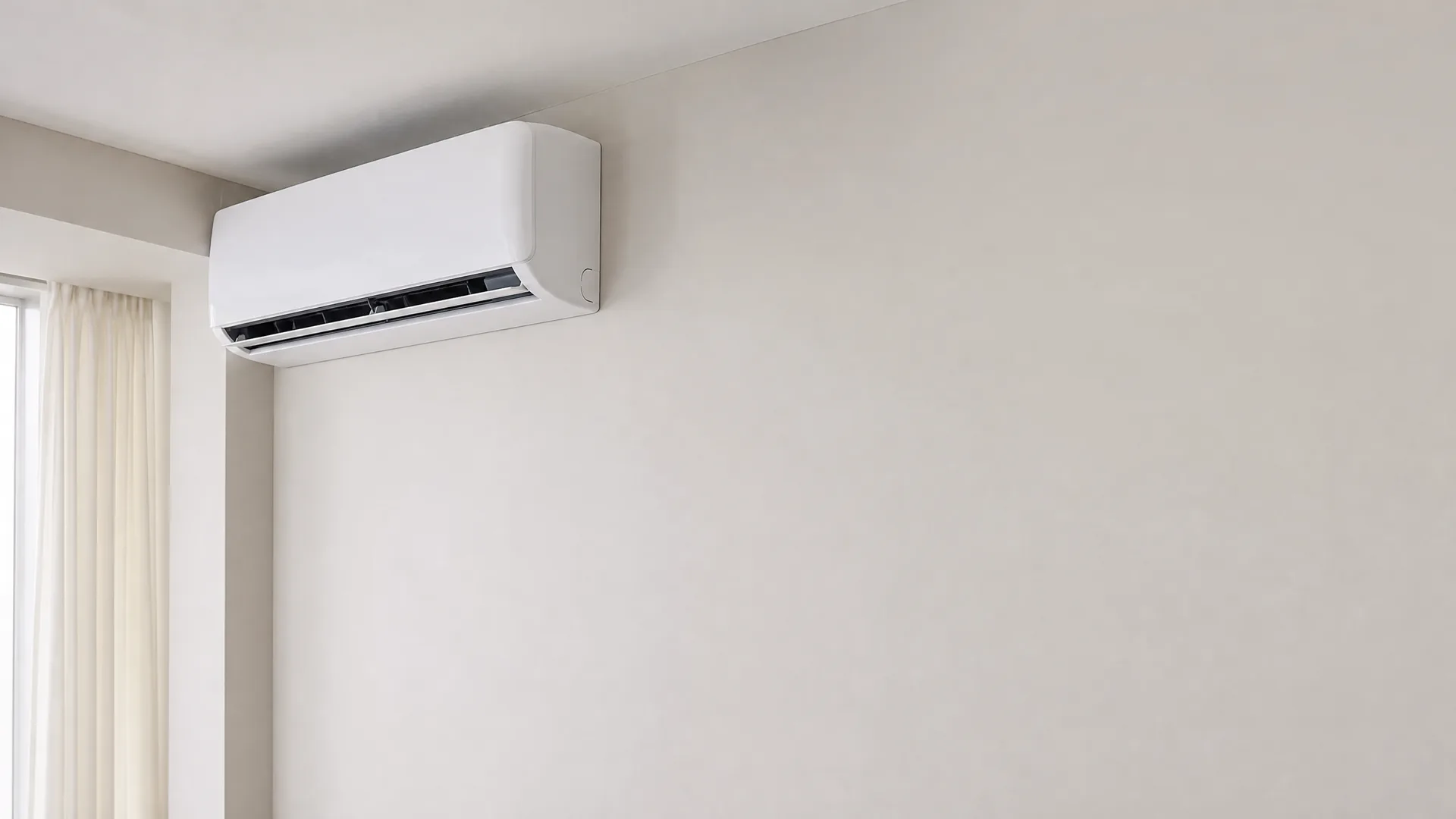
A white wall-mounted mini-split air conditioner near the ceiling of a room with plain beige walls and a pale curtain at the left edge.

Running the furnace alone

Your furnace heats the whole house off one thermostat, so every room gets the same call for heat whether it needs it or not. The room over the garage stays cold because it's fighting the same duct run as everything else. Gas keeps that furnace cheap to run through a Minnesota winter, but it can't fix a room that was never getting its fair share of airflow to begin with.

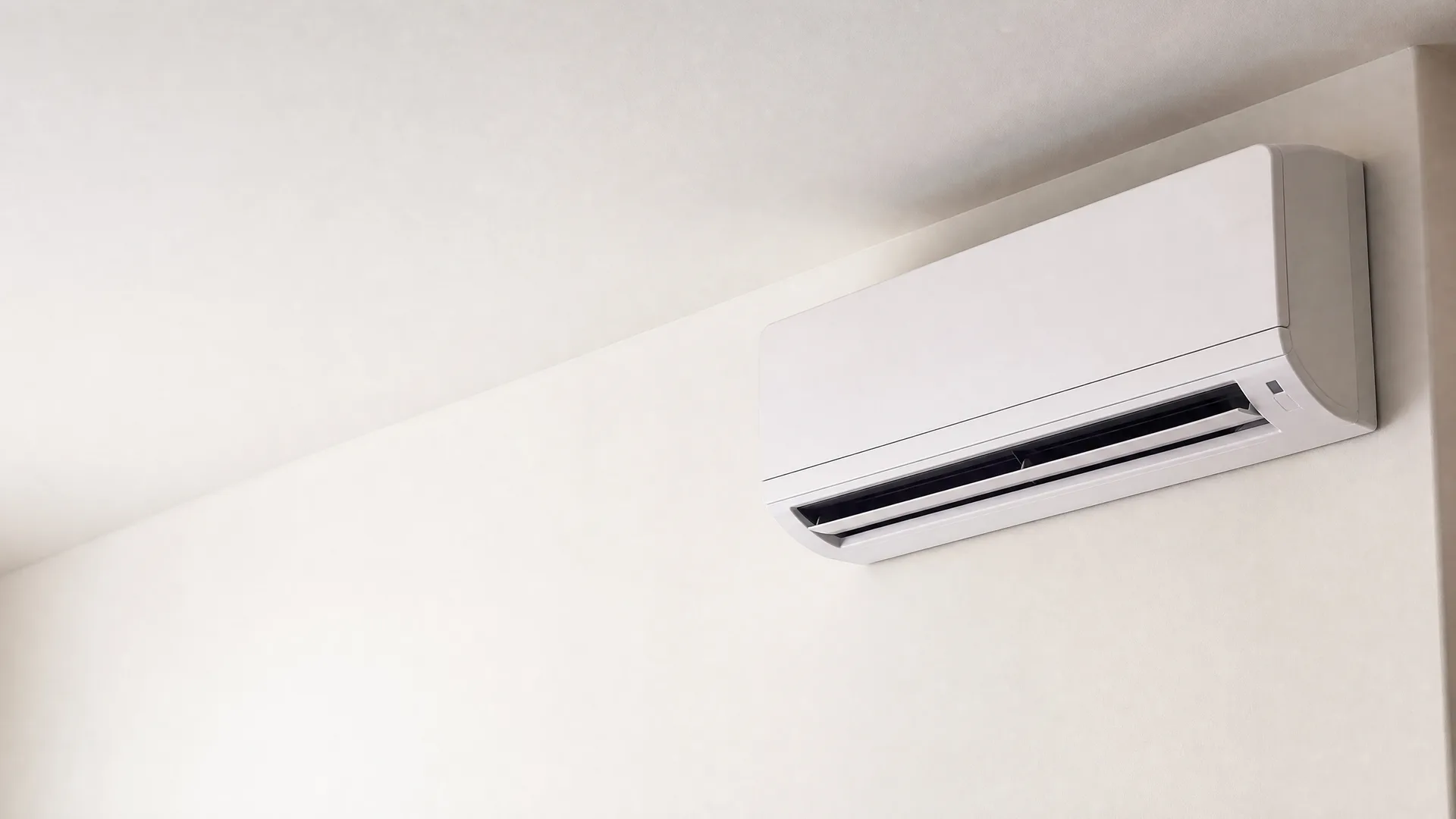
A white wall-mounted mini-split air conditioner indoor unit installed near the ceiling on a plain off-white interior wall.

Adding a mini split there

A mini split installed in that one room heats and cools it on its own thermostat, independent of what the furnace is doing everywhere else. It can run in July when the furnace is off completely, and it can back up that one cold room in January without you touching the thermostat for the rest of the house. The furnace still does the main work. The mini split just covers the room it never could.

Hiring It Out vs Doing It Yourself

Hire it out

  • A contractor who installs mini splits every season in Minnesota knows what fails when they're sized or placed wrong.
  • Refrigerant lines get charged and tested to the manufacturer's spec, which matters for how the unit performs in January.
  • The wall mount and condensate drain get set so the unit doesn't freeze up or leak when it's running hard.
  • Matching the mini split to the room and to what your furnace already covers takes someone who's done that math before.
  • A local contractor pulls the permit your city requires and knows the inspection steps for a line set running through an exterior wall.

Do it yourself

  • Mini split kits sold as DIY skip the vacuum pump step, so air and moisture can stay trapped in the line set.
  • A refrigerant leak from a bad flare connection won't show up right away, it shows up as weak cooling a season later.
  • Mounting height and placement affect airflow across the room, and there's no easy way to check that's right until it's running.
  • Permits and inspections still apply even if you do the work yourself, and skipping them can be a problem when you sell the house.
  • Getting the electrical right for the unit's disconnect and breaker size isn't guesswork you want to do once and hope.
A white wall-mounted mini-split air conditioner installed near the ceiling on a light-colored interior wall, with a window and green foliage visible at the left edge.

Installed and maintained right

A mini split mounted up near the ceiling like this should run clean, with clear vents and steady airflow into the room. That keeps it pulling the moisture out of the air in July without straining to do it.

A dusty white wall-mounted mini-split air conditioner indoor unit installed high on a beige interior wall below a white ceiling and trim.

Neglected and clogged

Dust builds up on the intake grille and across the vents when the filter hasn't been cleaned or the unit wasn't placed where it can breathe. A mini split working this hard to pull air through grime won't cool the room the way it should, and it won't last as long doing it.

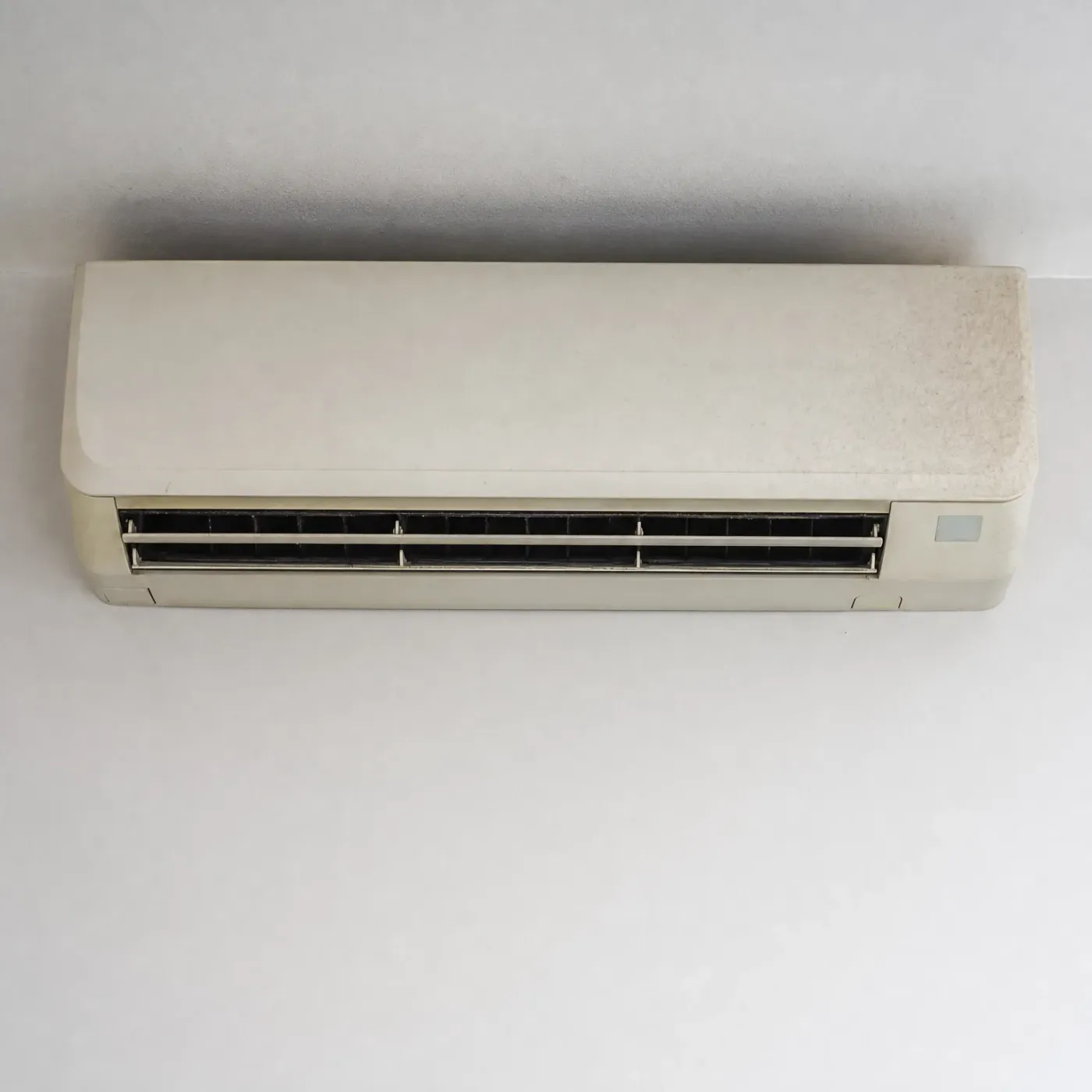
A wall-mounted mini-split air conditioner indoor unit with a yellowed plastic casing and dark horizontal vent louvers, installed on a plain light-gray wall.
Before you get your mini split installation
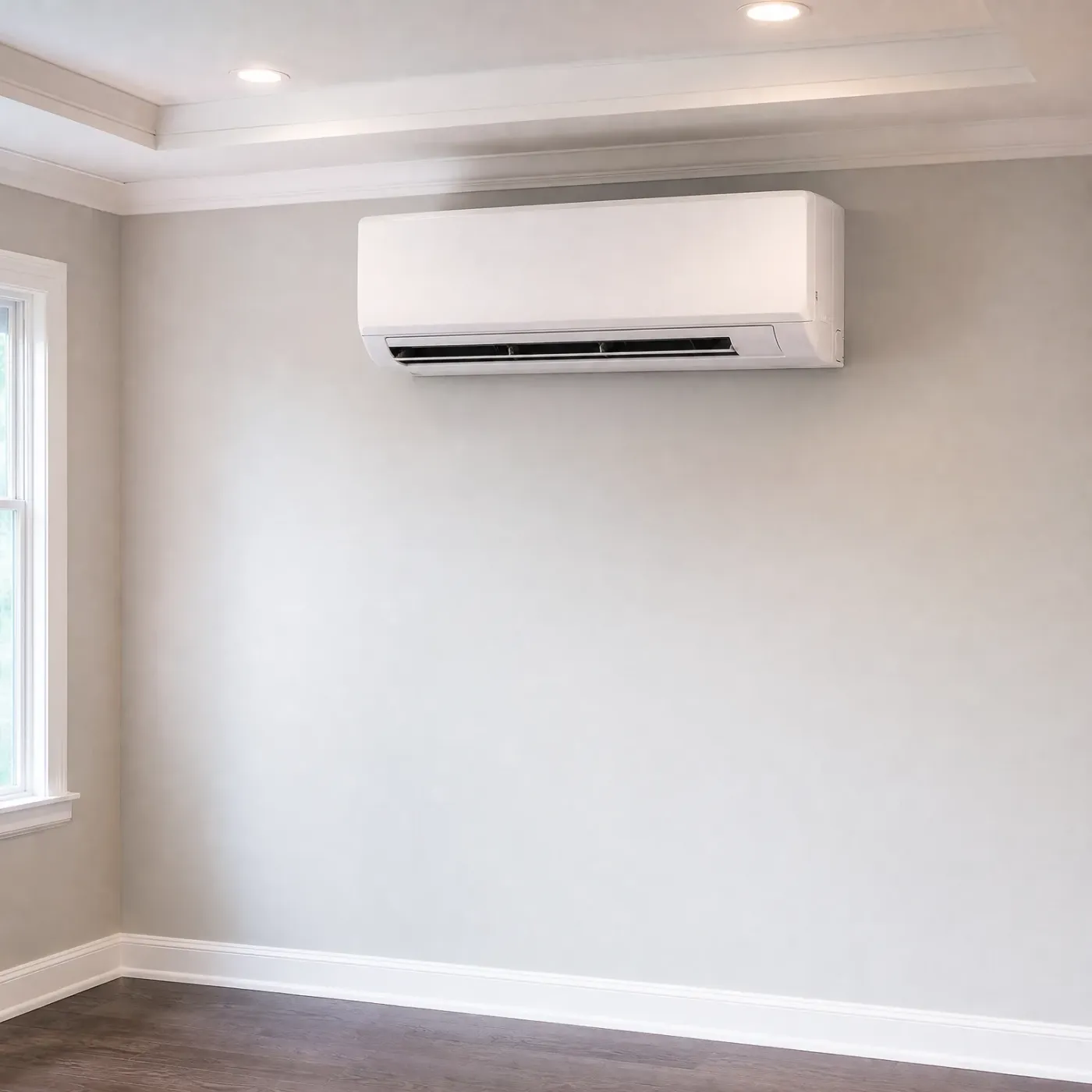
A white wall-mounted mini-split air conditioner on a light gray wall in an empty room with dark wood flooring, white baseboards, a tray ceiling with recessed lights, and a window at the left.
After you get your mini split installation

Stop chasing a mini split pro

Only one pro gets your request, so you hear from one company.

Asking costs nothing, and the choice to hire stays yours.

A two-story house with gray and light gray siding, white-trimmed windows and a white front door, flanked by deciduous trees, with a partly browned lawn in front under a clear blue sky.

Minnesota summers don't push a lot of moisture, a dew point averaging 59°F across June, July and August, by NOAA's numbers. That's dry enough that your mini split isn't working hard to wring water out of the air. Most of what it's doing on a warm July afternoon is just cooling the room, not fighting humidity the way a unit in a muggier state would. You'll notice it in how the unit runs: shorter stretches, not the long, straining cycles you'd get somewhere sticky. It also means a mini split sized right for your room should keep up without short cycling or leaving the air feeling damp.

NASA POWER T2MDEW county cells weighted by homes

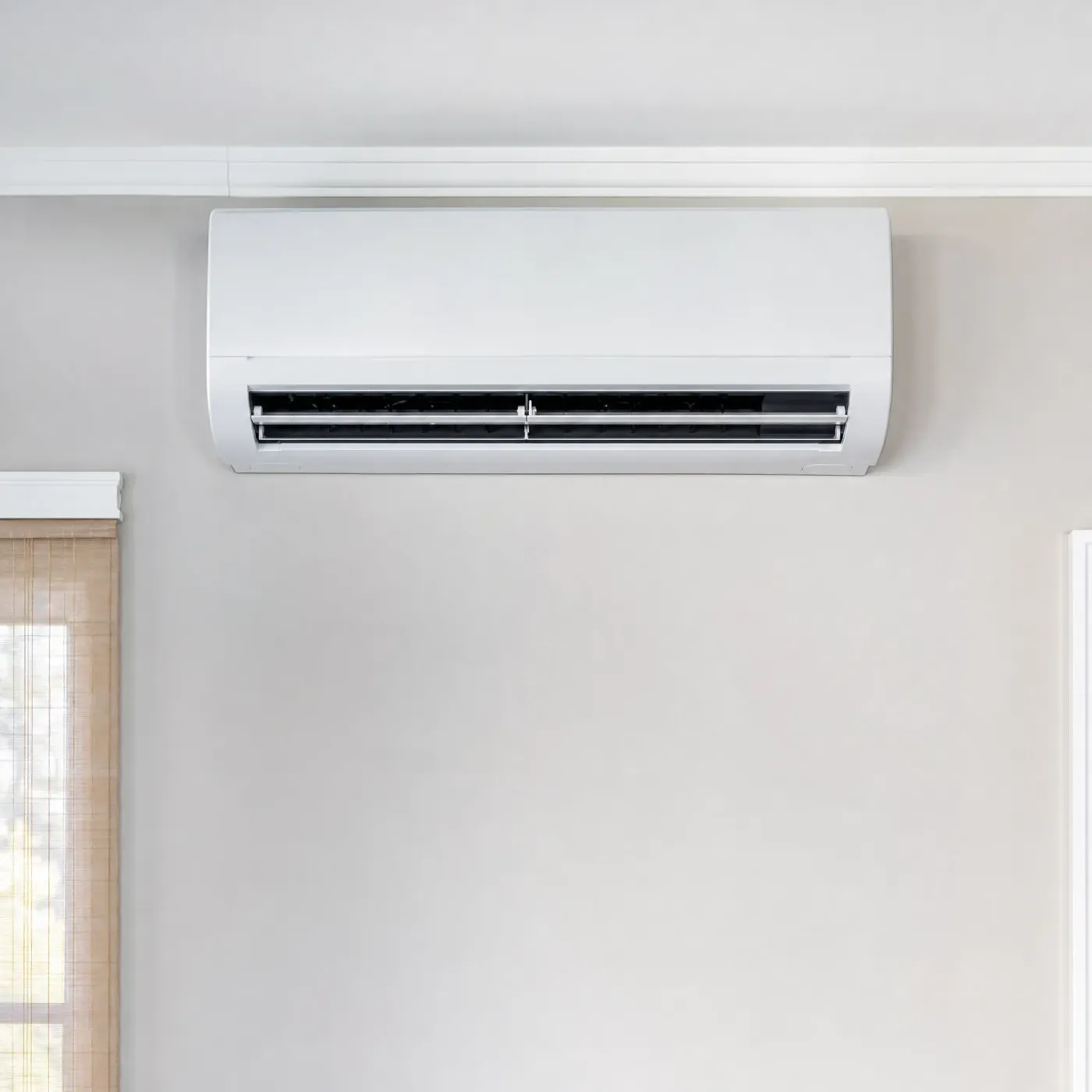
A white wall-mounted mini-split air conditioner unit installed high on a light gray interior wall below crown molding, with a bamboo-shaded window at the lower left.
Mounted high and running clean, this mini split moves air quietly with nothing blocking the vents.
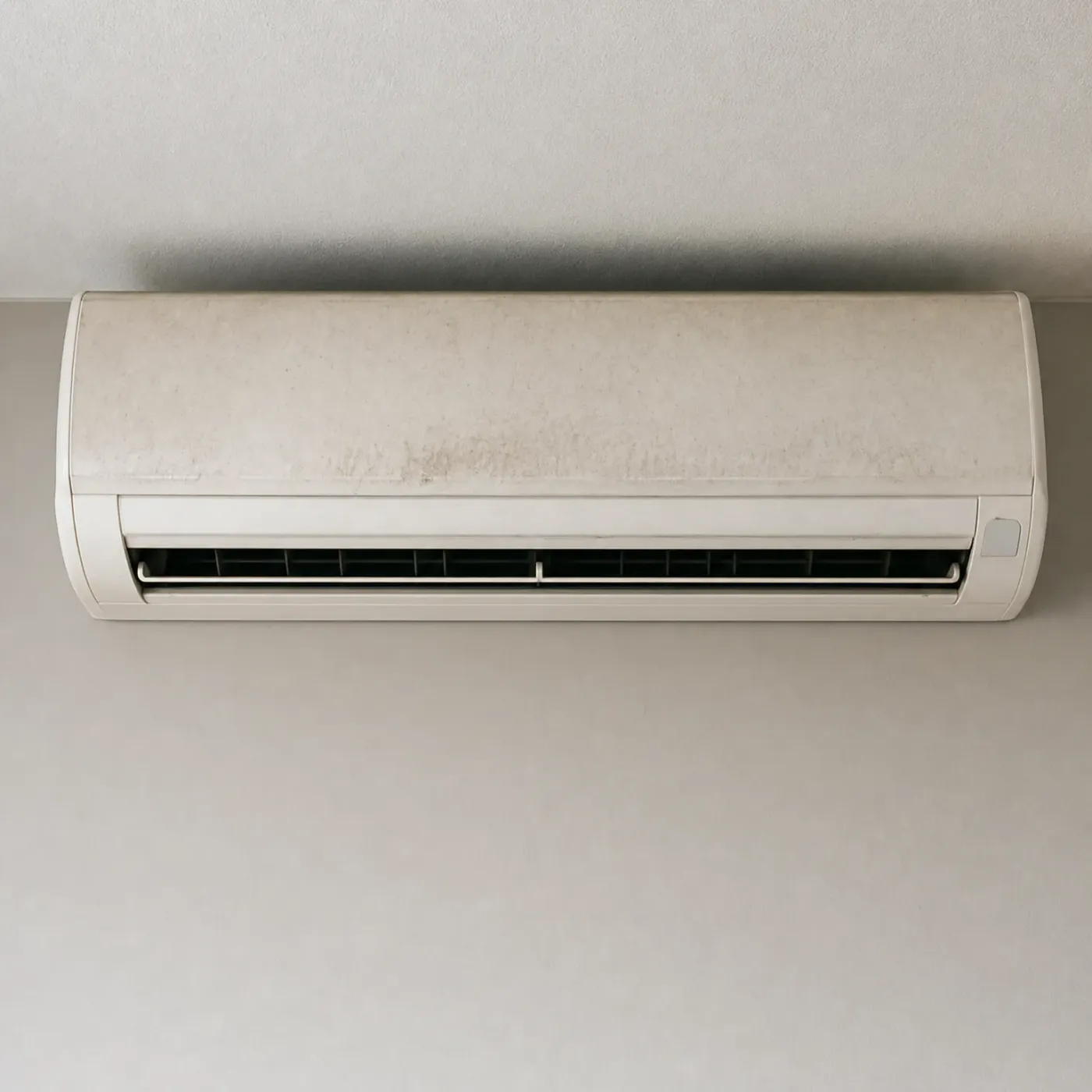
A wall-mounted mini-split air conditioner indoor unit with a dusty, discolored cover, installed near the ceiling on a plain light-colored wall.
Dust caked across the housing and louvers means the unit is working harder to push the same air.

A mini split doesn't make heat the way your furnace does. It moves heat using refrigerant, so there's no flame, no flue, nothing to vent outside. The indoor head you see on the wall holds a blower wheel and an evaporator coil. Outside, a separate unit holds the compressor and condenser coil, and the two are connected by line sets run through a small hole in the wall rather than tied into your ductwork. Before any refrigerant goes in, a contractor pulls a vacuum on those lines. That step pulls out moisture and air that would otherwise sit in the system and drag down how it runs. In winter, the outdoor unit reverses that same refrigerant cycle and pulls heat out of outside air, even when it's well below freezing out there. None of this depends on the brand on the indoor head. What decides how the system actually performs in your house is whether the line set is the right length and whether that vacuum was pulled properly before it got charged.

How a mini split actually works

  • A mini split moves heat with refrigerant instead of burning gas, so it doesn't need a flue or combustion air like your furnace.
  • The indoor head has a blower wheel and an evaporator coil, while the outdoor unit holds the compressor and condenser coil.
  • Line sets carrying refrigerant between the two units get run through a small hole in the wall, not through your existing ductwork.
  • A contractor pulls a vacuum on the line set before charging it, which clears out moisture and air that would otherwise hurt performance.
  • The outdoor unit still runs in cold weather by reversing the refrigerant cycle, pulling heat from outside air even when it's well below freezing.
  • Correct line set length and a proper vacuum matter more to how the system runs than the brand name on the indoor head.
A woman with shoulder-length brown hair wearing a beige knit cardigan sits in a gray upholstered armchair near a window, looking off to the side with a slight smile, with bookshelves blurred in the background.
A woman with her hair in a bun holds a sleeping young child against her chest, both wrapped in a textured beige knit blanket on a sofa in a dimly lit room with a lamp, framed picture, and bookshelf behind them.

Letting the furnace keep the duct work

The furnace stays as it is, and the mini split goes in on its own line set, no connection to the ductwork at all. That means whoever installs it isn't opening up your existing supply runs or touching what's already moving warm air through the house. Less to coordinate, less that can go wrong with the system you already rely on all winter. The tradeoff is you're running two separate systems with two separate controls, so you or whoever's in that room needs to manage both instead of one thermostat doing the whole job.

Tying the new line into gas service

Some homes route the mini split's electrical circuit through the same panel work being done near the furnace, especially if there's already an electrician on site for other reasons. It can save a second visit down the road if more cooling or heating capacity gets added later. But it means more coordination up front between whoever's doing the gas-side work and whoever's running the mini split's wiring and refrigerant lines, and more that has to get inspected and signed off before either system is considered finished.

Power costs 15.83 cents per kilowatt-hour statewide

At 15.83 cents a kilowatt-hour, running a mini split in that one room costs less than heating the whole house off the furnace to fix it. You're paying for a few hundred square feet of comfort, not the whole place.

EIA-861 2025 statewide residential average

A mini split works alongside your furnace, not against it. Your furnace keeps doing what it does well, heating the whole house through the duct work, and the mini split takes over the room that never felt right, in January or in July. Getting there means sizing the unit to the room, running the line set cleanly, and charging the refrigerant to spec, work that's easy to get wrong and hard to undo once it's on the wall. A contractor who installs these every season in Minnesota has seen what happens when that's skipped, and sizes and places the unit so it doesn't happen in your house. You'll hear back from one licensed local contractor, not a handful of companies competing for the job, so you're dealing with someone who already knows the equipment rather than explaining your situation over and over. That's where this ends up: one room, done right, and a furnace that keeps doing the rest.

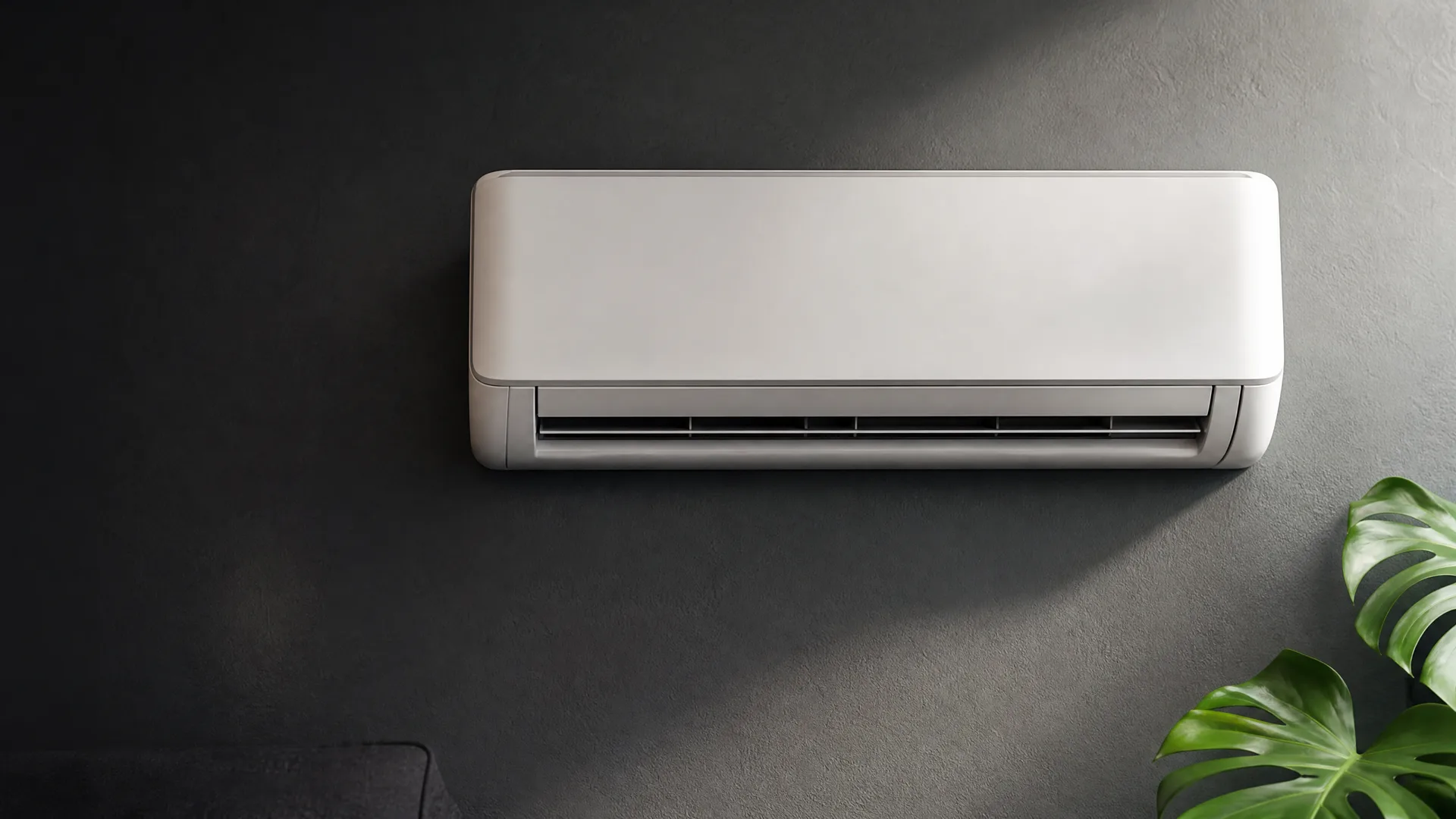
A white wall-mounted mini-split air conditioner on a dark grey textured wall, with a monstera plant leaf at the lower right corner.

Send one request and you're done looking

Step 1 of 3: Equipment