



A white wall-mounted mini-split indoor unit near the ceiling of a dimly lit room, with a curtained window at right, a leafy potted plant at lower left, and a cushioned sofa at the bottom.

Explain it one time

Best mini split setting for a Minnesota winter

A mini split left on the wrong setting works harder than it needs to through a Minnesota winter, and most people running one alongside gas heat have never been told what setting that is. This page gets into what to set it at and why, so you're not guessing or calling around to find a contractor who services heat pumps in the cold.

Start one form

Set the mini split to heat mode and let it run on its own thermostat curve, not on a manual fan speed, and keep the setpoint steady instead of turning it down when you leave the room. Mini splits lose efficiency when they have to ramp back up from a cold start, so a steady temperature, even one a couple degrees lower, costs less than cycling it. In a Minnesota winter, the outdoor unit will ice over below freezing and run a defrost cycle on its own. That's normal. Don't shut it off when you see steam coming off the coil. If you're running the mini split alongside gas heat, let the mini split handle the mild days and mornings, and let the furnace take over once it gets seriously cold outside, since most mini splits lose real capacity somewhere in the teens. Checking that balance point for your unit is worth doing before the cold settles in for good.

A smiling woman with long dark hair in a gray sweater sits at a white stone counter with a glass of white wine, with a kitchen, fireplace and sofa visible behind her.
A smiling woman with dark hair in a cream sweater sits at a marble table with a glass of red wine, with a lit lamp, sofa, fireplace and kitchen counter behind her.
A woman in a cream sweater laughs while seated at a marble countertop with a glass of red wine, with a dimly lit living room and sofa behind her.
A woman in a beige turtleneck sweater with her hair up sits laughing and looking to the side at a white marble table with a glass of red wine, in a dimly lit interior with a lamp and seating area behind her.

Why the outdoor coil matters

Below freezing, a mini split's outdoor unit builds frost on its coil and has to run a defrost cycle to clear it, pulling warm air from inside for a few minutes while it does. That's normal. What isn't normal is ice that doesn't clear between cycles, or a unit that's defrosting every few minutes instead of every hour or so. That usually means the coil is dirty or the refrigerant charge is low, and either one makes the unit lean harder on strip heat or your gas furnace to keep up, which is the opposite of what you set it up to do.
What the low ambient setting does

Most mini splits sold for Minnesota winters have a low ambient or winter mode that changes how the compressor and defrost cycle behave once outdoor temps drop well below freezing. It's not a setting you flip daily. It's meant to stay on through the cold months so the unit doesn't short cycle or ice up as readily. If your model has it and it's switched off, you're asking the compressor to work through conditions it wasn't tuned for, which shows up as higher runtime long before it shows up as a breakdown.

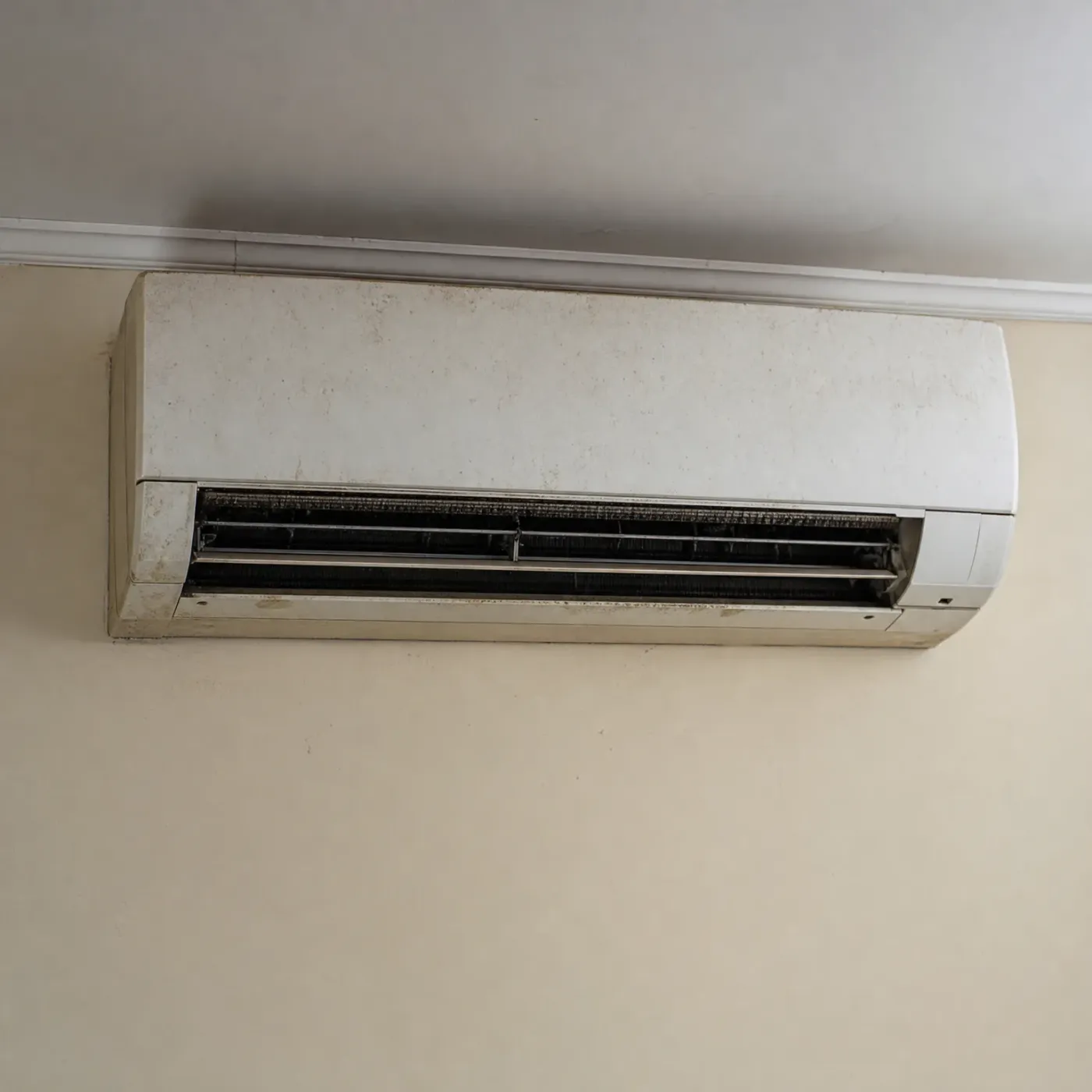
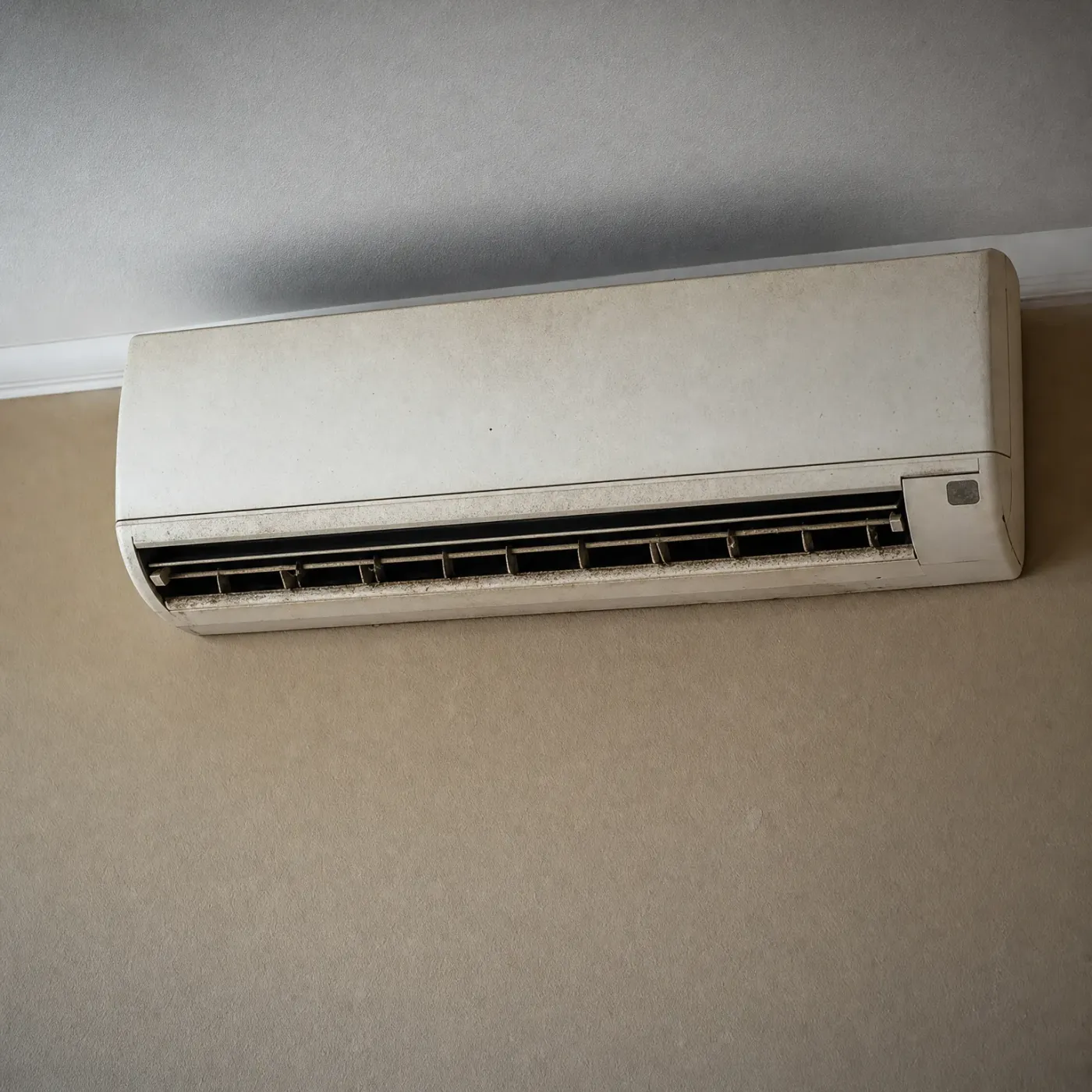
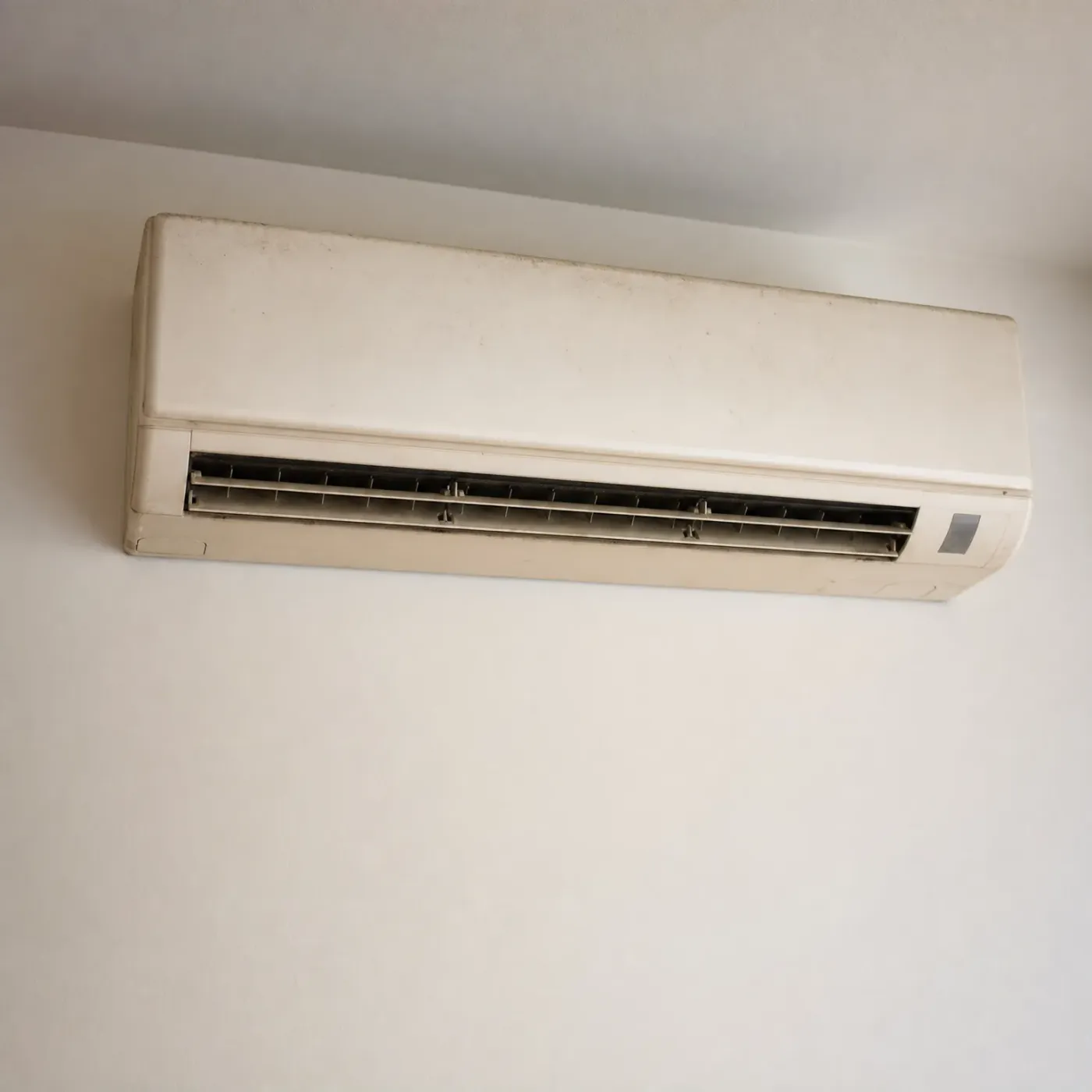
A wall-mounted mini-split air conditioner indoor unit with a discolored cream plastic casing and dusty outlet vanes, installed high on a plain light-colored interior wall near the ceiling.
Before you get your mini split maintenance
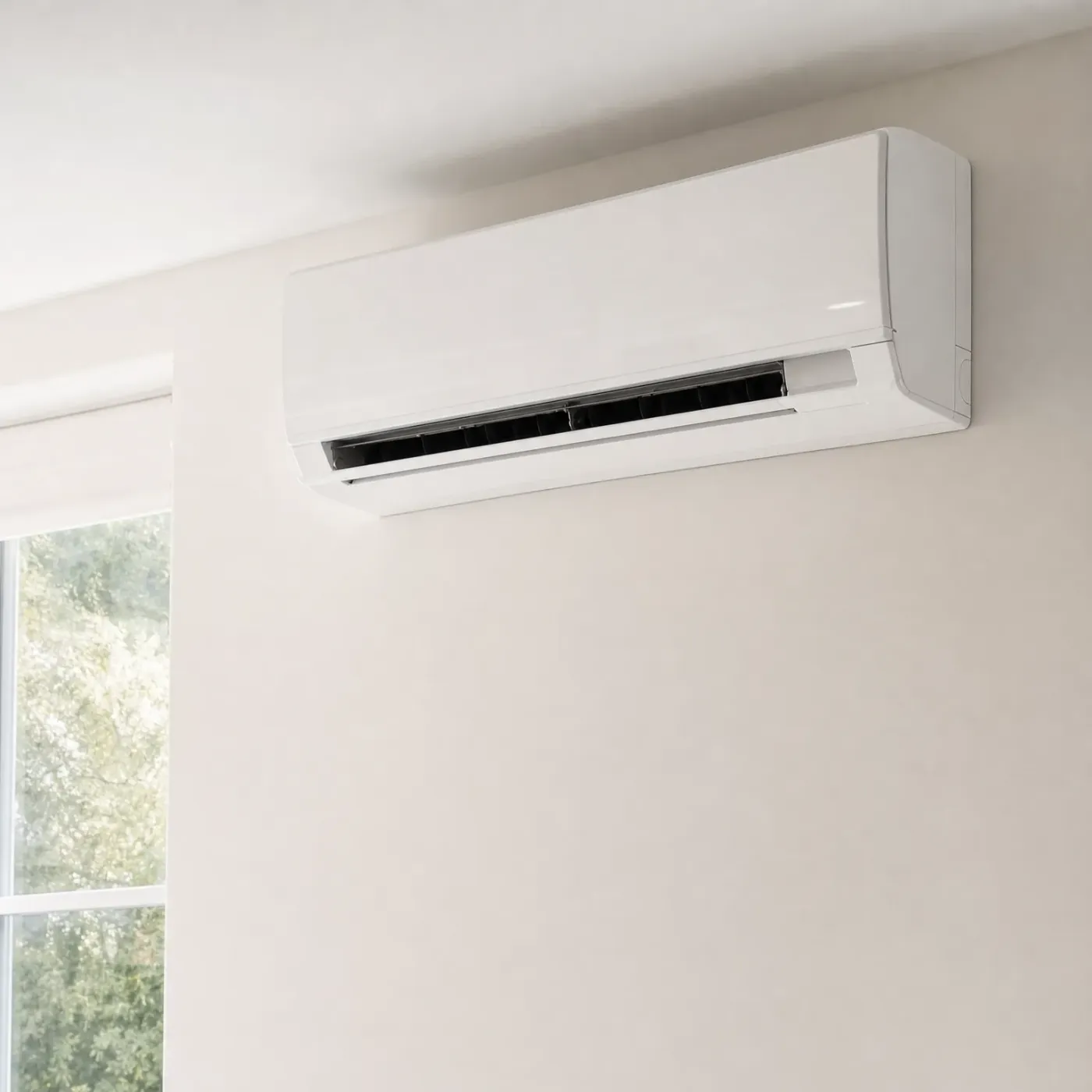
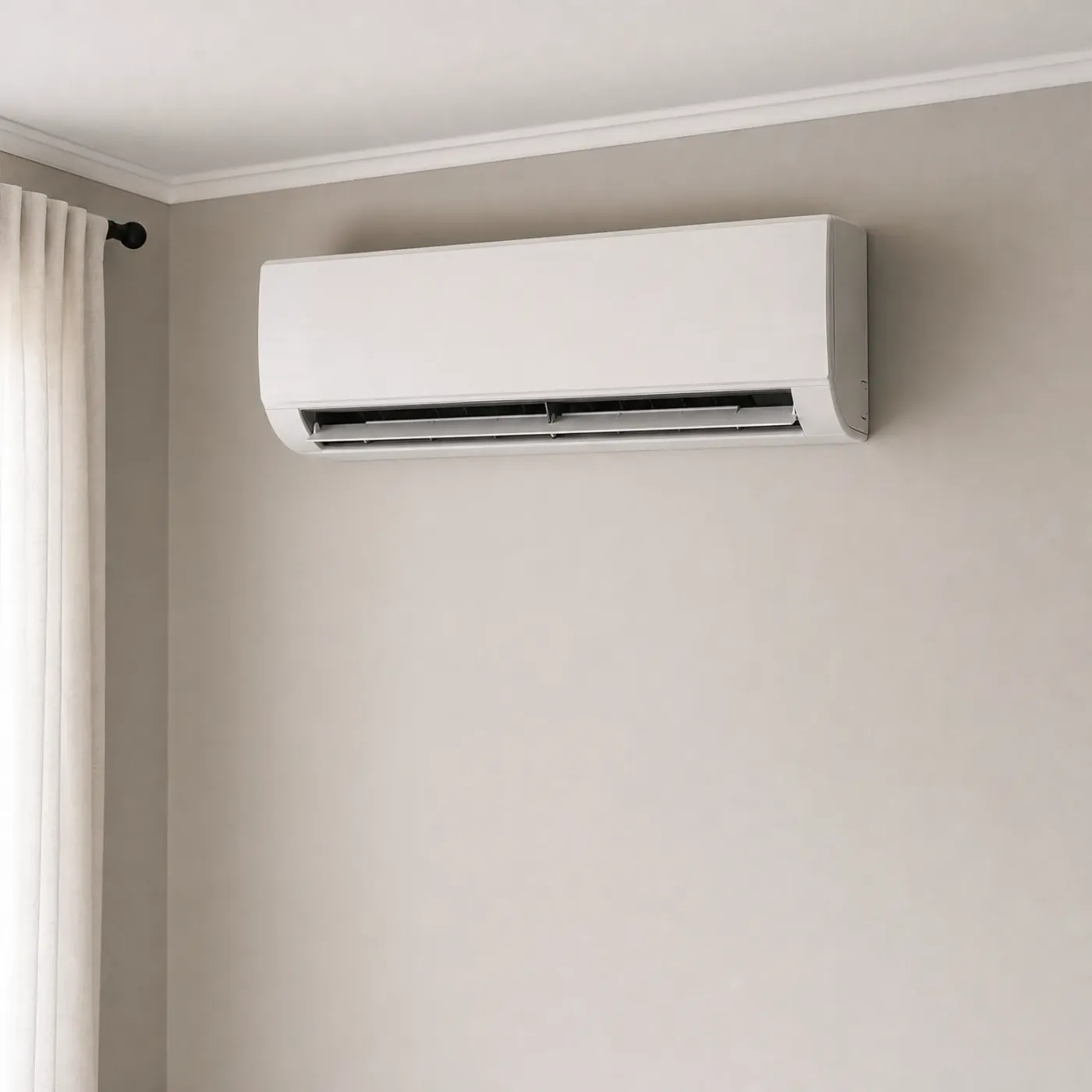
A white wall-mounted mini-split air conditioner installed high on a beige interior wall near the ceiling molding, with a light curtain and curtain rod at the left edge.
After you get your mini split maintenance
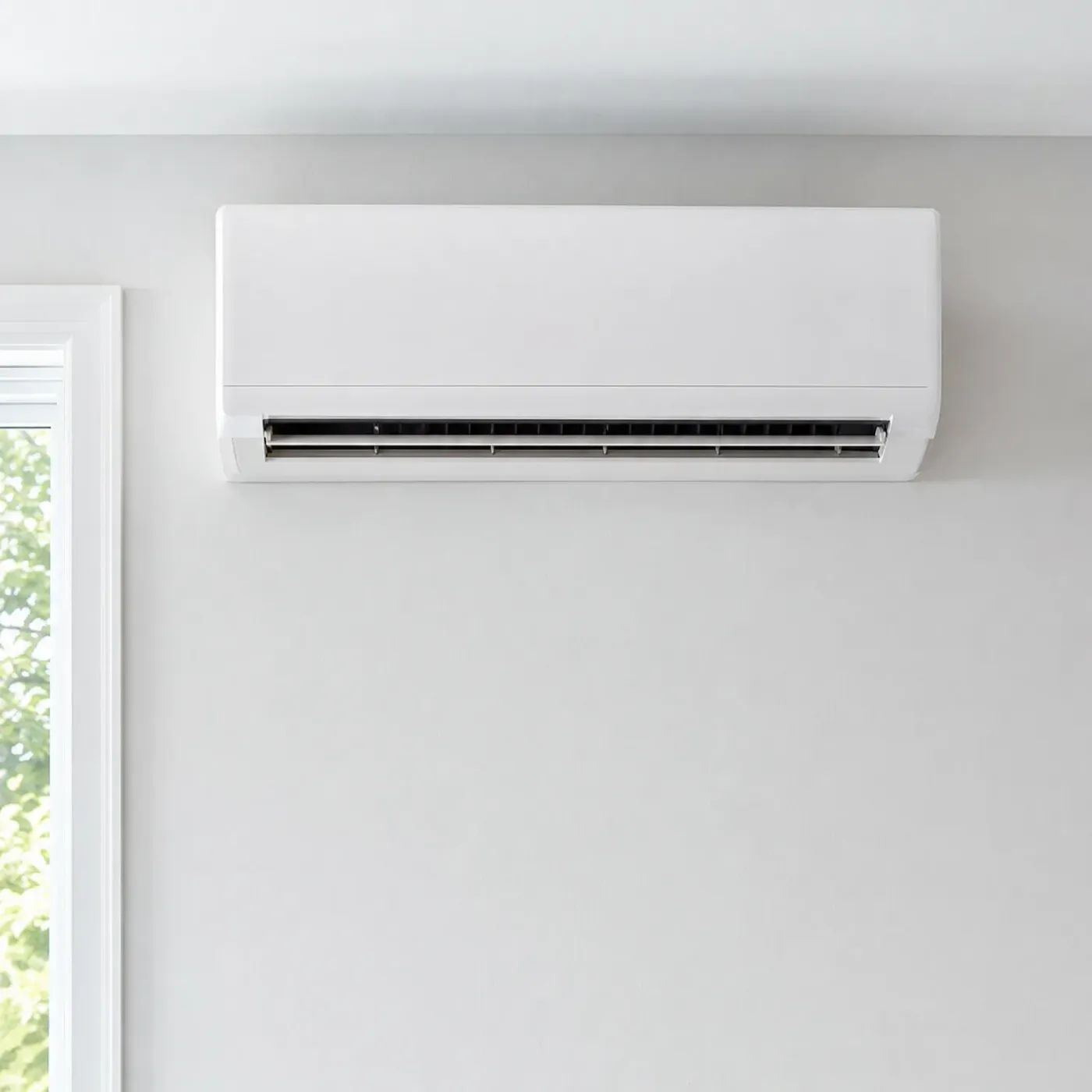
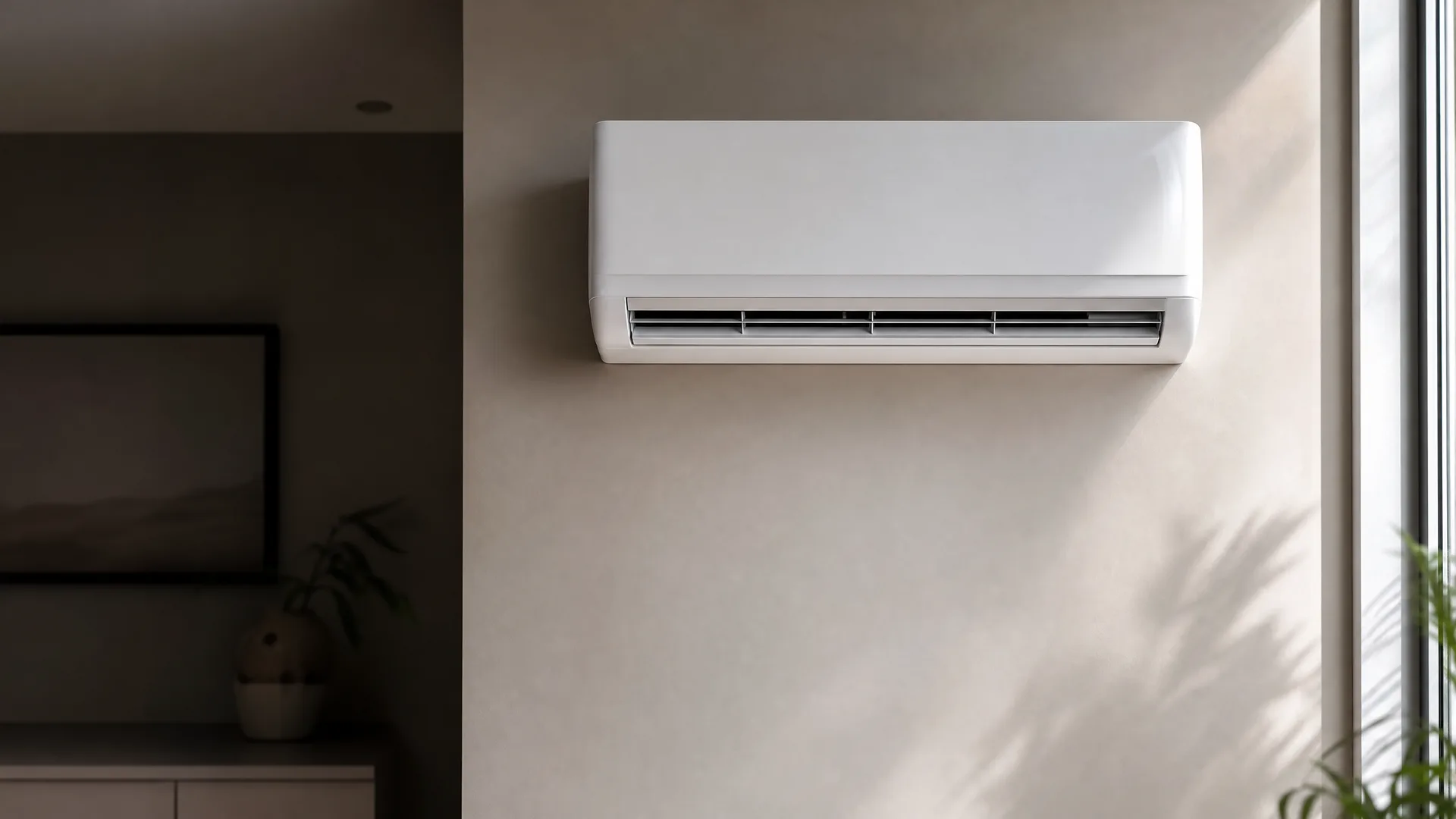
A white wall-mounted mini-split air conditioner unit installed high on a light gray interior wall near the ceiling, with a white-framed window and green foliage visible at the left edge.

Running clean

This is what a mini split should look like through the winter. The casing is clear, the vents are open, and air moves through it the way it was designed to. At this point it's holding the setpoint you gave it without extra strain on the outdoor coil.

A dusty white wall-mounted mini-split air conditioner installed high on a beige interior wall below a molded ceiling trim.

Running dirty

Dust and grime on the casing usually mean the filter behind it looks the same or worse. A clogged filter forces the unit to pull harder to move the same amount of air, and in a Minnesota winter that extra strain shows up fastest, right when you need the heat most.

Backup Heat or Running It All Winter

Mini split as backup

  • The gas furnace carries the house down to zero and below, so the mini split only needs to cover the mild stretches on either end of winter.
  • Running it in a shoulder season on a mild day costs less than firing the furnace for a short burn, since the compressor can cycle gently instead of starting cold.
  • Left off for weeks at a time, the outdoor coil and filter sit idle, which means less frost cycling but also less chance to notice a problem early.
  • If the unit only runs occasionally, a slipping belt tensioner or a dirty filter can go unnoticed until the one week you actually need it.
  • Switching between furnace and mini split means two systems to keep straight, two sets of filters, two schedules to remember.

Mini split running all winter

  • Holding a steady setpoint lets the compressor modulate instead of shutting off and restarting, which is where a mini split loses the least ground to the cold.
  • The outdoor unit sees regular defrost cycles all season, so a tech can catch an ice buildup that won't clear before it becomes a real fault.
  • Power here is typical in price, so running the mini split as the main source for part of the day alongside gas heat doesn't swing the bill much either way.
  • A mini split working continuously through a Minnesota winter puts more hours on the compressor and filter, so it needs a filter check and coil look more often.
  • Leaning on it daily means you'll notice right away if airflow drops off or the room isn't holding temperature, instead of finding out on the coldest night.
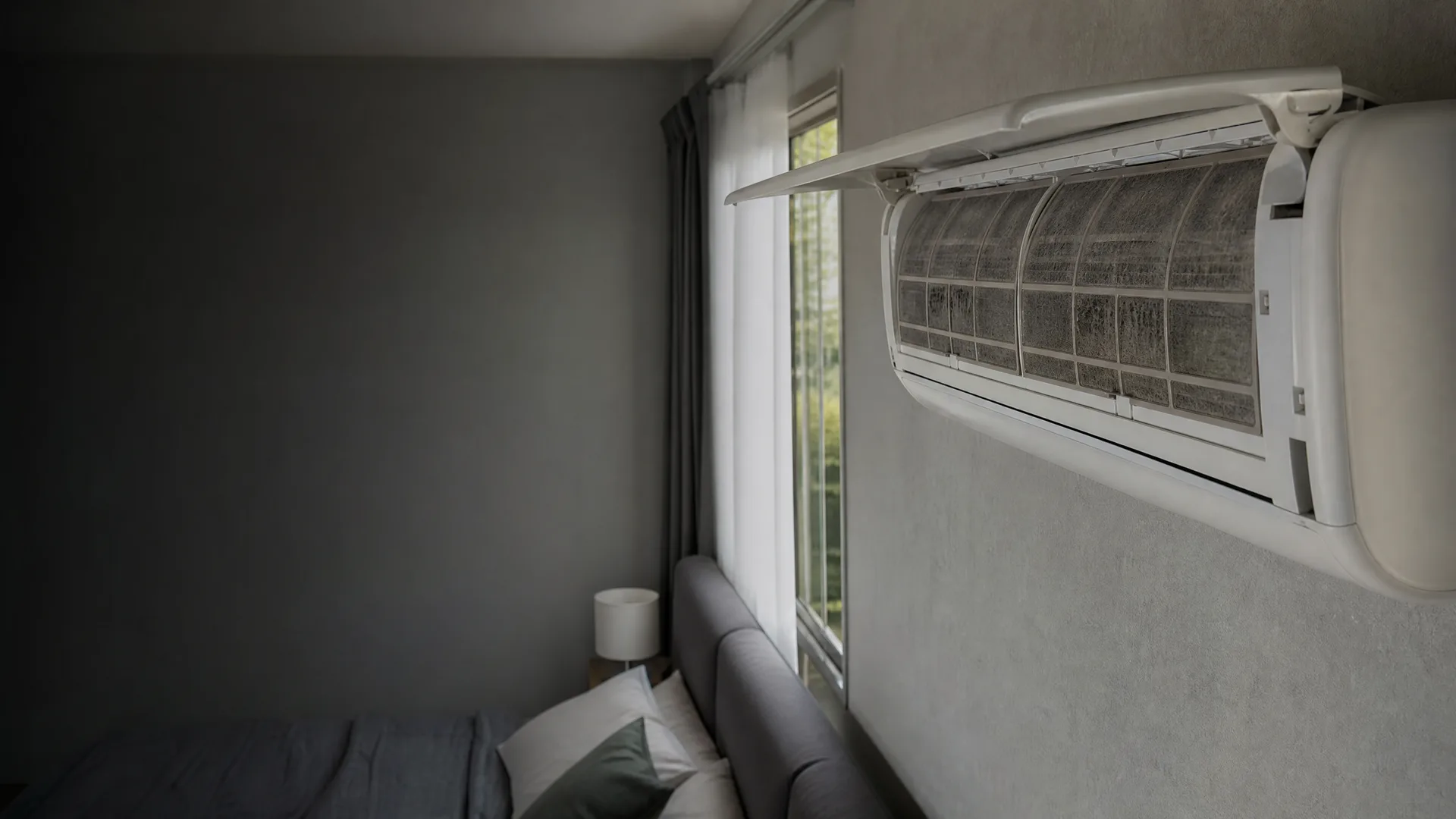
Interior room corner with a wall-mounted mini-split air conditioner, its front panel open to expose dusty coils, beside a curtained window and a gray sofa with pillows.

You pull the cover off the indoor unit on a warm afternoon in April, the first day you've had the windows cracked since October. The filter screen comes out grey, matted with the dust that moved through it all winter while the mini split ran alongside the furnace. You hold it up to the light from the window and can't see through the mesh at all. It's been months since anyone looked at it, back when the leaves were still down and the setpoint never changed. You set it on the dresser, meaning to rinse it, already thinking about whether the rest of the unit looks this bad behind the cover.

Skip the calls to every shop

A licensed local pro takes the request for your mini split tune-up.

You only hire the pro if you want to.

A mini split set to run constantly at a low setpoint still has to fight the cold every time the compressor cycles, and most of what it pulls from the wall goes to restarting itself rather than heating the room.

A mini split left on one steady setpoint all winter draws less than one that's turned down and back up, and the outdoor unit spends less time working against frost it just cleared.

Power costs 15.83 cents per kilowatt-hour statewide

At 15.83 cents per kilowatt-hour, every degree you make your mini split work for shows up on the bill. A dirty filter or a frosted coil that won't clear makes the compressor run longer to hold the same setpoint, and you pay for that extra runtime all winter.

EIA-861 2025 statewide residential average

A white wall-mounted mini-split air conditioner installed near the ceiling on a light-colored interior wall, with a window and green foliage visible at the left edge.
A clean mini split holds the setpoint you gave it without the compressor working to make up for anything.
A dusty white wall-mounted mini-split air conditioner indoor unit installed high on a beige interior wall below a white ceiling and trim.
Dust packed into the vents and intake grille forces the unit to run longer and pull harder for the same heat.
Two-story house with beige horizontal siding, gray shingled gable roofs and a covered front entry, with an outdoor air conditioning unit beside it and a partly dry grass lawn in front under a clear blue sky.

Minnesota summers don't carry the heavy air you get farther south. Averaged across homes here, the dew point sits around 59°F for June, July and August, based on NOAA climate data, which is the dry side of comfortable. Your mini split spends those months barely working to pull moisture out, so the compressor cycles less and the coil stays drier. That matters once winter comes back around. A coil that wasn't straining against humidity all summer isn't carrying extra wear into the season when it has to fight frost and cold air instead. Summer here is the easy season for the unit. Winter is where the setting you choose actually counts.

NASA POWER T2MDEW county cells weighted by homes

Why does my mini split blow cold air before it warms up?

Why does my mini split blow cold air before it warms up?

That's the defrost cycle, not the unit struggling to heat

The indoor fan has a built in delay so it doesn't blow until the coil is warm enough to put out real heat, so what you're feeling at startup is usually just room temperature air moving past a coil that hasn't caught up yet. It clears in a couple minutes. If cold air keeps coming well after that, or the fan cuts out and blows cold again later in the cycle, the outdoor coil is likely in defrost, melting frost it built up pulling heat from the Minnesota cold, and pulling warm air off the indoor side to do it. Either way it should settle back into steady heat on its own. If it doesn't, that's worth having a contractor look at before the coil starts icing over for good.

A smiling middle-aged man in a dark green sweater sits at a candlelit table with wine glasses and a plate of greens in a dimly lit interior.
A woman in a dark knit turtleneck sweater reclines on a couch under a cream knit blanket, looking down at an open book, with a lit table lamp and framed pictures behind her.

The setting, and what keeps it working

  • Heat mode, a steady setpoint, and a thermostat curve left alone is the setting that gets your mini split through a Minnesota winter without extra strain.
  • The gas furnace carries the deep cold, so the mini split's job is the mild stretches, and it only does that job well when it's clean inside and out.
  • A frosted coil that won't clear or a packed filter makes the compressor run longer for the same heat, and that extra runtime is on your next bill.
  • A contractor who services mini splits in this area all winter has usually already seen whatever is wrong with yours.
  • One local, licensed contractor looking at your unit beats sorting through several companies that don't know your equipment.

The setting itself is simple. Heat mode, a setpoint you leave alone, and a thermostat curve that's allowed to do its own work instead of a manual fan speed fighting it. That's the whole answer. What changes the outcome is whether the unit can actually hold that setpoint without strain, and that comes down to whether the coil defrosts clean and the filter is clear. A mini split working alongside a gas furnace isn't carrying your house through January. It's covering the shoulder months, the mild mornings and the stretches that don't need the furnace at all, and it only covers them well when there's nothing inside it making the compressor run longer than it should.

That's where a service visit does more than a setting ever could. Someone who works on these units through a Minnesota winter has already seen the coil that won't clear, the filter packed with a season's worth of dust, the unit quietly running harder than it needs to for a room that isn't getting any warmer for it. A local contractor who knows this equipment in this climate isn't guessing at what's wrong. They've likely seen your exact problem on a unit three streets over.

You don't need several companies looking at your mini split to get that. One licensed, local contractor who already knows what tends to go wrong on these units in this weather can tell you, directly, what yours needs. The setting gets the thermostat right. Maintenance gets the machine itself able to hold it.

A white wall-mounted mini-split air conditioner on a plain beige interior wall, with a framed picture and potted plant in the dim left background and sunlit window with foliage at right.

Skip calling around

Step 1 of 3: Equipment