Profile view of a bearded man wearing a black baseball cap and a dark gray T-shirt against a plain light background.

Can a mini split be your only heat in Minnesota

Step 1 of 3: Equipment

Can a mini split be my only heat here in Minnesota?

You've got a mini split and you're wondering if it can carry you through a Minnesota winter on its own, or if you still need something to fall back on when it gets really cold. Most houses around here heat with gas, so a mini split as the only heat source is an unusual setup, and you want to know before you commit to it.

Not reliably on its own in most Minnesota winters

A standard mini split loses heating capacity as the outdoor temperature drops, and Minnesota winters get cold enough, often well below zero, to push past what most units can deliver. Cold climate mini splits are built to keep working at much lower temperatures than standard models, but even those have a point where they can't keep up with the heat loss from a Minnesota house. Most homes here already heat with gas, and that furnace stays the steadier choice for the coldest stretches. A mini split can carry the heating load on mild days in fall and early spring, and some homeowners pair one with their existing furnace rather than replace it outright.

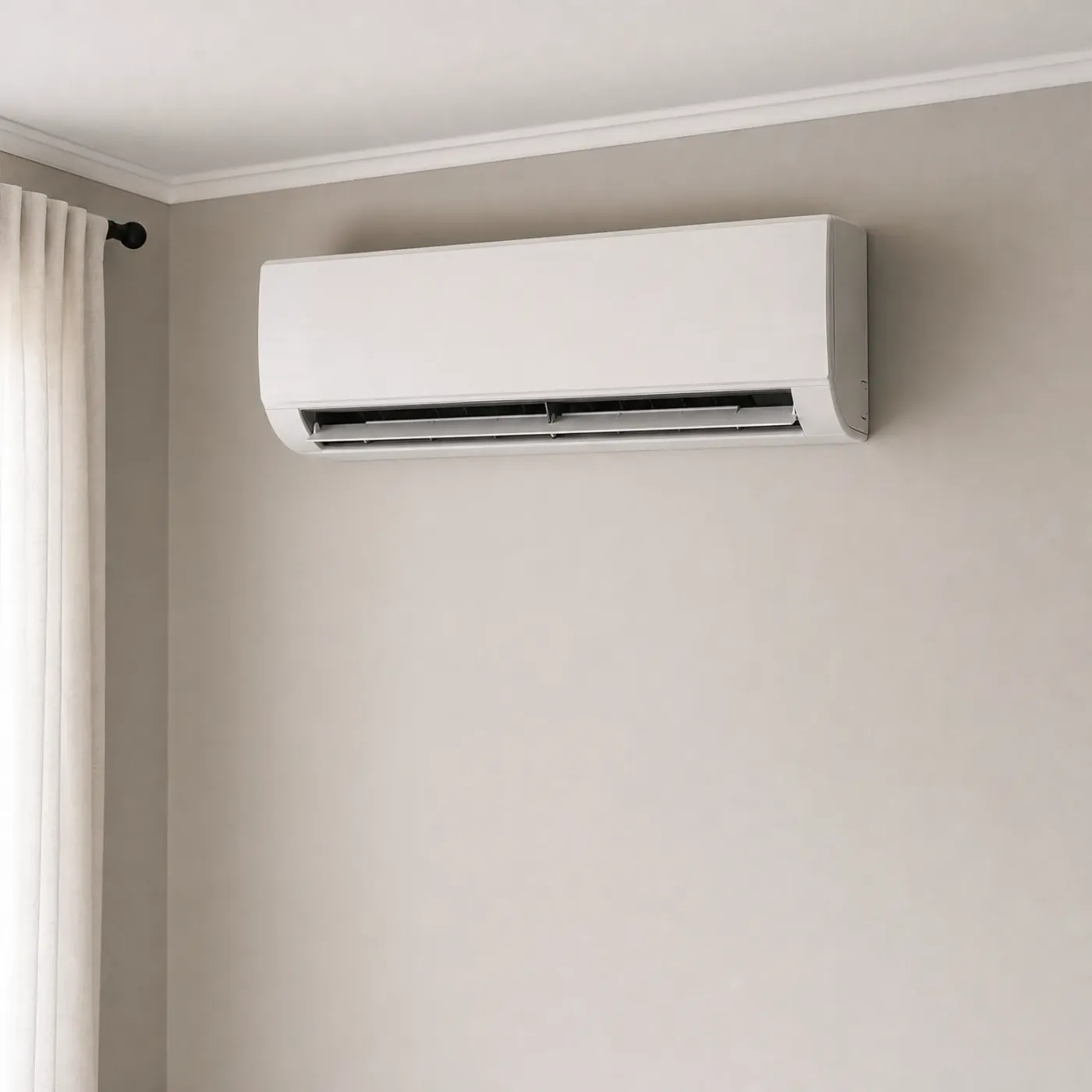
A white wall-mounted mini-split air conditioner unit high on a light gray interior wall, with a beige curtain and window at the left and wood-look flooring below.

Paired with gas heat

Your mini split handles the mild stretches, spring and fall, and keeps cooling you through the warm summer months. The gas furnace carries the house once temperatures drop hard, so the mini split never has to work past what it's built for.
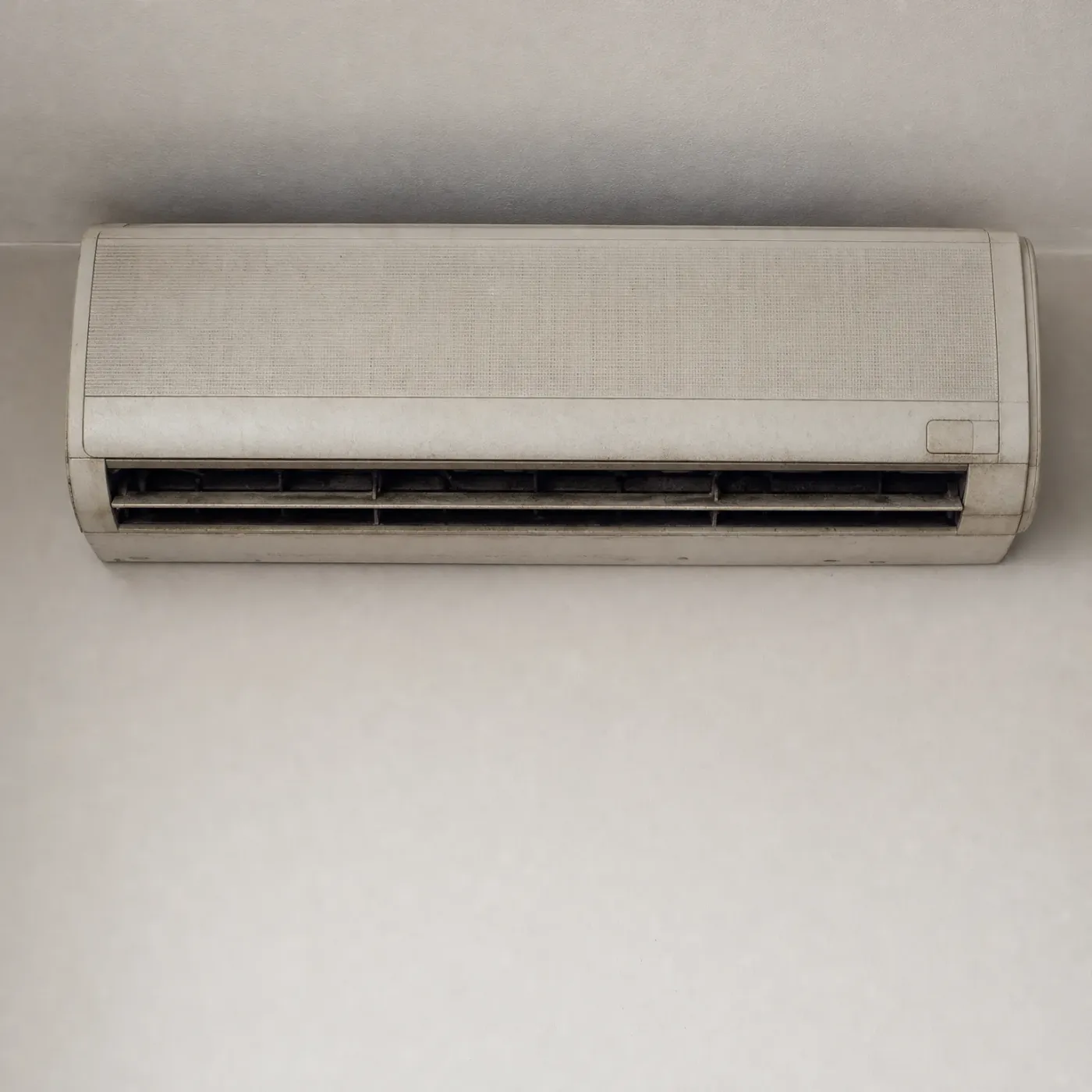
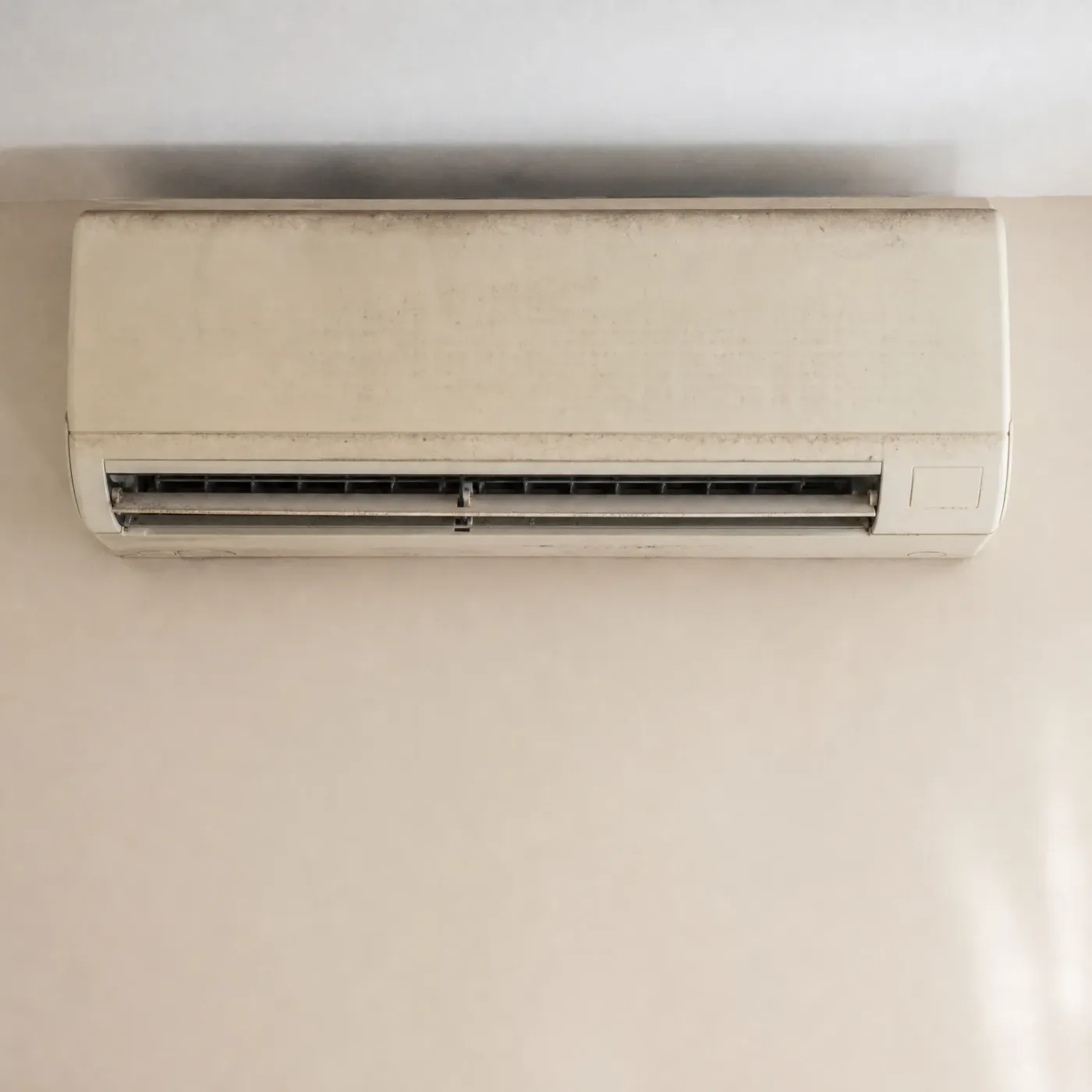
A dusty white wall-mounted mini-split air conditioner indoor unit with open louvers, installed near the ceiling on a plain light-colored wall.

Running as the only heat

Ask it to carry a Minnesota winter alone and a mini split works harder for longer stretches. That strain shows up as dust and grime building up around the vents, the kind you'd see on a unit nobody's kept checked on.

Mini Split Alone or With Backup Heat

Mini split alone

  • Most mini splits lose heating capacity as the outdoor temperature drops, and output can fall well short of what the house needs on the coldest nights.
  • Some cold climate models hold their output down to very low temperatures, but you have to check the specific unit, not assume yours is that kind.
  • If a single indoor head is covering more than one room, the far corners of the house will run colder than the room with the head in it.
  • With no backup, a breaker trip or a unit that needs service in January leaves the house with no heat until it's fixed.
  • A mini split sized to cool the house in summer isn't automatically sized to heat it through a Minnesota winter.

Mini split with backup

  • Gas is what most homes around you already heat with, so pairing the mini split with the furnace fits the house instead of replacing how it's built to run.
  • The furnace only has to cover the stretch of real cold, so it isn't running nonstop from October to April.
  • If the mini split ever needs a repair, the furnace keeps the house warm while you wait for someone to look at it.
  • Power here isn't priced to make an electric-only system cheap to lean on through a long cold snap.
  • Two systems means two things that can need attention, so whoever installs it should set up both to work together, not just sit side by side.
A white wall-mounted mini-split air conditioner unit near the ceiling on a plain light-colored interior wall with open space to the right.

How cold changes a mini split

A mini split moves heat from outside air into your house, and that gets harder as the air outside gets colder. Below a certain point, usually somewhere around zero, even a cold climate unit is working at its limit. The compressor is running flat out just to keep up, and if the duct- or line-run was sized wrong for the house, you'll feel the gap on the coldest nights no matter what the spec sheet says.

A white wall-mounted mini-split air conditioner unit installed near the ceiling on a plain beige interior wall, with a light curtain at the right edge.

What the backup actually does

A gas furnace kicks in exactly where the mini split runs out of room, so the switch happens on its own once a thermostat or controller is set up for it. You're not choosing between the two every morning. The furnace only fires when it's needed, which in most Minnesota winters is a smaller share of the season than people expect, with the mini split covering the rest without strain.

Is your mini split keeping up on the coldest nights?

You'll notice it first at the thermostat: the mini split running constantly but the room still feels cool, especially far from the indoor unit. Upstairs bedrooms or rooms at the end of the house lag behind. Outside, the outdoor unit may be caked in frost or ice during a deep cold snap, and the fan can sound like it's working harder than usual. If you're leaning on the mini split alone on a night near zero, the house can lose ground faster than the unit can recover it, and pipes in exterior walls are the ones at risk if the house gets cold enough for long enough. That's the point where a backup source of heat stops being optional.

  1. Outdoor air passes over the coil, giving up its heat to refrigerant

  2. The compressor squeezes that refrigerant until its temperature climbs higher

  3. Hot refrigerant moves inside and releases heat through the indoor coil

  4. The indoor fan pushes that heated air out across the room

A woman wrapped in a thick beige fleece blanket sits on a sofa with an open book on her lap, beside a lit table lamp, with a frost-covered window behind her.
An older woman with gray hair in a bun and glasses, wearing a beige knit sweater, smiles while looking to the side in a warmly lit kitchen, with a loaf of bread on the counter in the foreground and a snowy scene outside the window.

Matched to your mini split job

One form replaces the calls you'd make to find a mini split pro.

No charge to send it. You decide if you hire them.

A gray-haired bearded man in a dark coat and scarf dusted with snow stands smiling in a dimly lit entryway with a white front door, a side table with a lit lamp, an oval mirror, and a patterned rug.
An older bearded man in a dark snow-dusted coat and gray scarf stands just inside a dimly lit home entry, with a framed picture, lit table lamp, and an adjoining room with a fireplace behind him, and snow visible through the open door.
A gray-haired, bearded man in a dark snow-dusted coat stands smiling in a dimly lit entry hall with a staircase, a lit table lamp, a framed picture, and a living room visible through a doorway.
An older man with gray hair and a beard, wearing a dark jacket dusted with snow, stands smiling in a dimly lit hallway with lamps and a living room visible behind him.
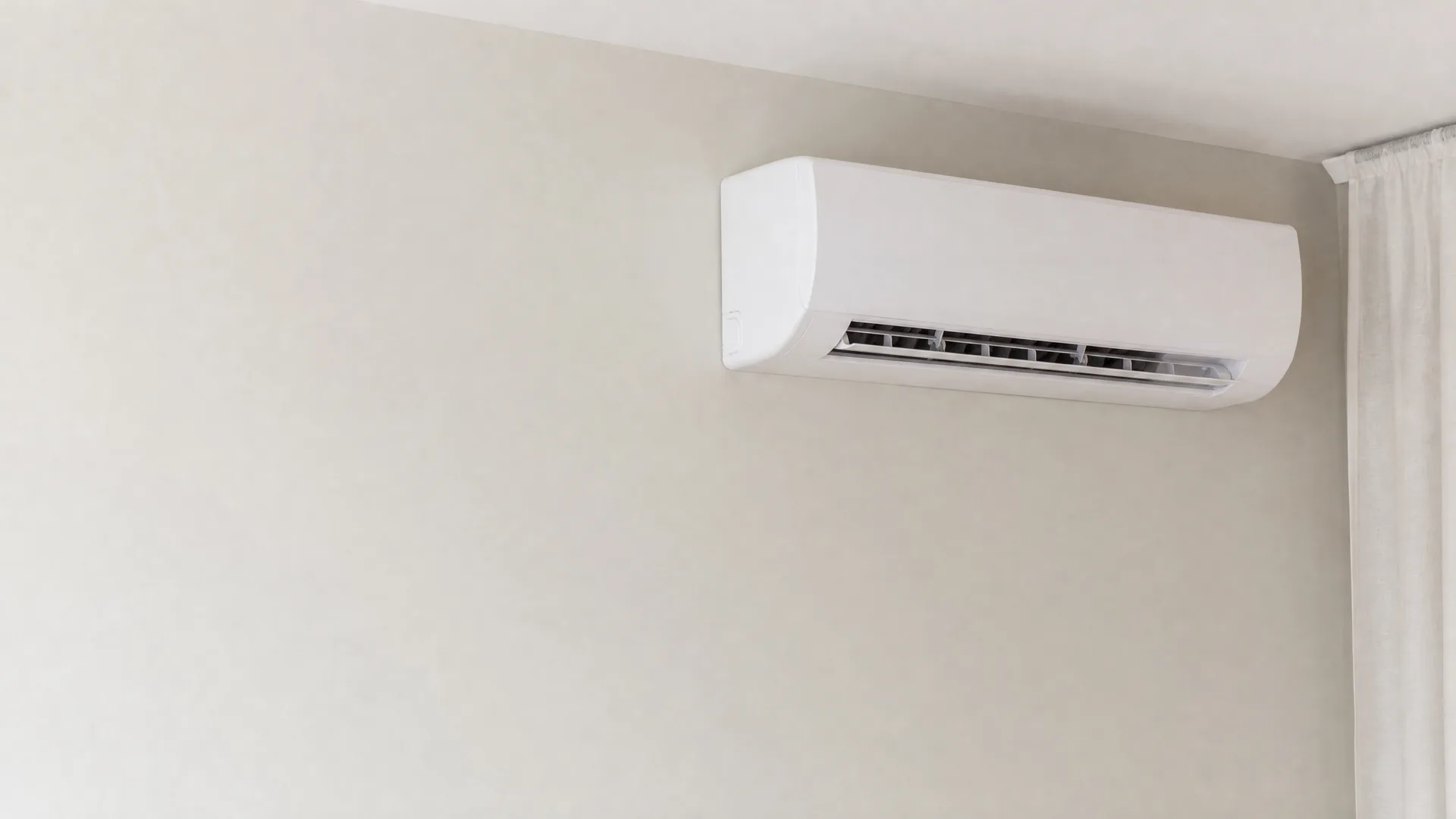
A white wall-mounted mini-split air conditioner installed near the ceiling on a plain beige interior wall.
A mini split like this one keeps up fine on a mild day, holding the room steady without running hard.
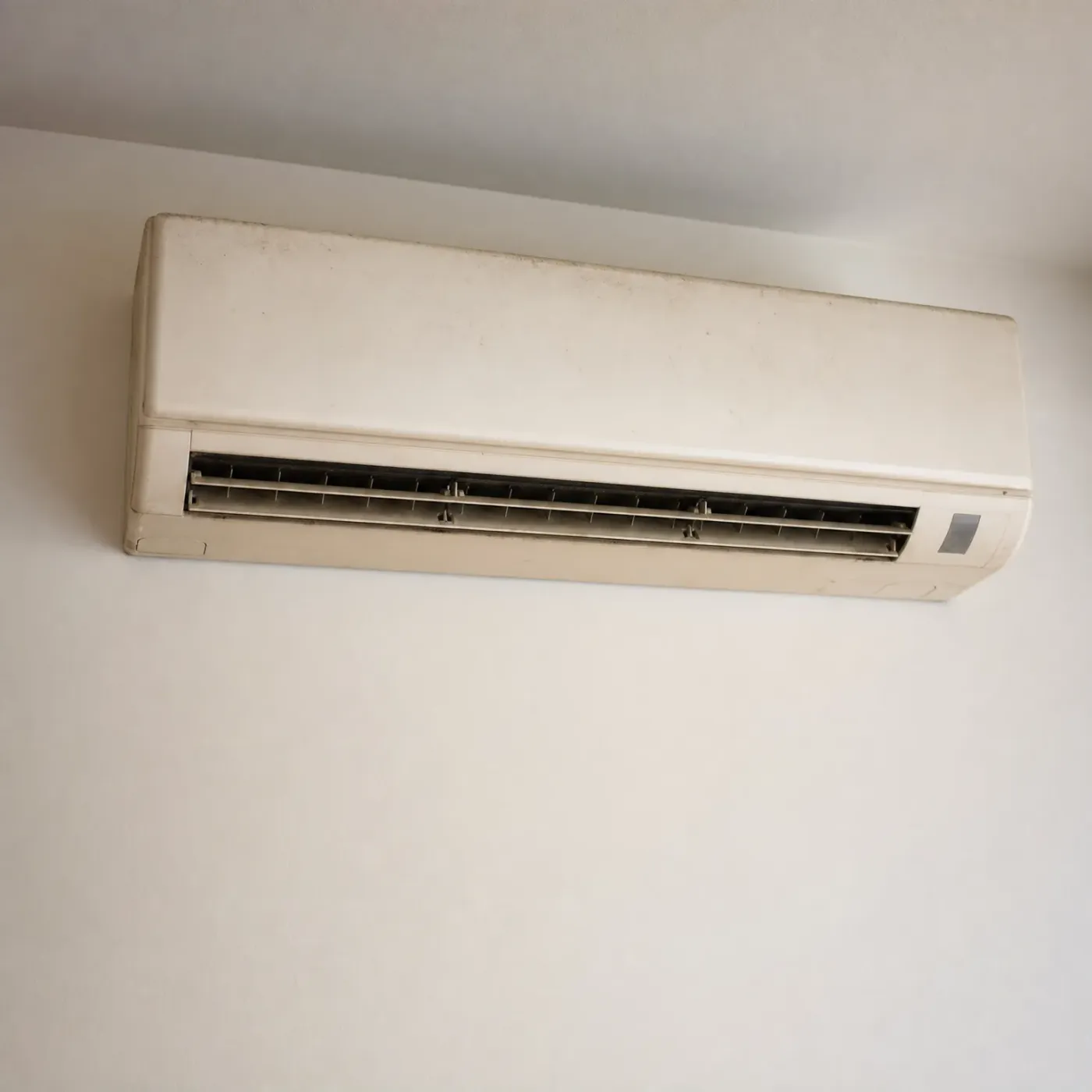
A dusty, discolored wall-mounted mini-split air conditioner unit near the ceiling of a plain beige interior wall.
A unit this worn has likely lost some capacity, and on a cold Minnesota night that matters more than in July.

What happens during a defrost cycle

  • Defrost mode kicks in when frost builds on the outdoor coil, reversing the cycle for a few minutes to melt it off.
  • During defrost the indoor fan usually pauses or slows, so you may feel a short burst of cool air before heat resumes.
  • A backup heat strip or furnace should carry the load during defrost on the coldest nights, since the mini split isn't heating then.
  • The outdoor unit needs clear space around it; snow piled against the coil blocks airflow and cuts capacity.
  • Variable speed compressors ramp up and down rather than switching fully on and off, which is why output drops gradually as it gets colder rather than shutting off at one point.
  • The line set connecting the indoor and outdoor units carries refrigerant, not air, so its length and insulation affect how much heat actually reaches the room.

On a cold, damp Minnesota night, frost forms on the outdoor coil the same way it forms on your car windshield. The mini split has to clear that frost or it can't pull heat from the air anymore. So it reverses itself for a few minutes, running like an air conditioner in the middle of winter, and sends the heat it would have put into your house out to melt the frost off the coil instead. That's why you'll feel a short burst of cooler air indoors when this happens. It's normal, and the unit goes back to heating once the coil is clear.

This is also the moment your backup heat, whether that's a furnace or an electric strip, is doing the real work. The mini split isn't heating your house during those few minutes, so something else needs to be. On a mild night you might not even notice a defrost cycle happen. On a night well below zero, when defrost cycles run more often, that backup heat matters more.

Snow matters here too. If snow drifts against the outdoor unit and packs in around the coil, airflow gets cut off, defrost cycles run longer and more often, and the unit works harder for less heat. Keeping the space around the outdoor unit clear through the winter is part of what lets it do its job on the coldest nights.

Power costs 15.83 cents per kilowatt-hour statewide

At 15.83 cents a kilowatt-hour, running a mini split hard on a January night costs more than running your gas furnace. If gas is backing up your mini split, that's the system working the way it should: electric heat for the easy days, gas for the expensive ones.

EIA-861 2025 statewide residential average

If you're building new or replacing ductwork, a mini split system sized for Minnesota's coldest nights can be your only heat, and you skip the gas line entirely.

Most houses here already have a gas furnace sitting in the basement, and keeping it as backup costs you nothing but the space it takes up.

A wall-mounted mini-split air conditioner indoor unit with a discolored cream plastic casing and dusty outlet vanes, installed high on a plain light-colored interior wall near the ceiling.
Before you get your mini split installation
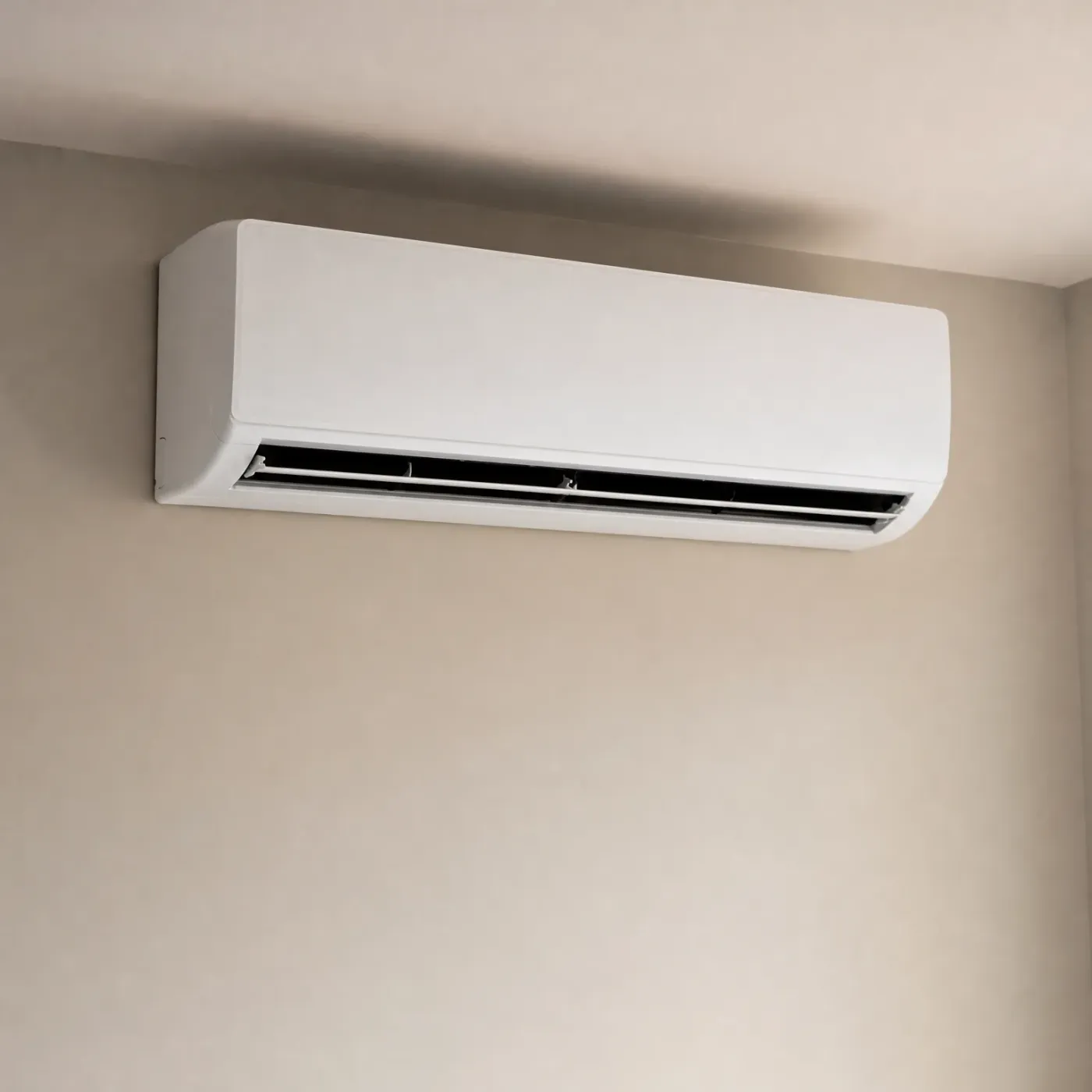
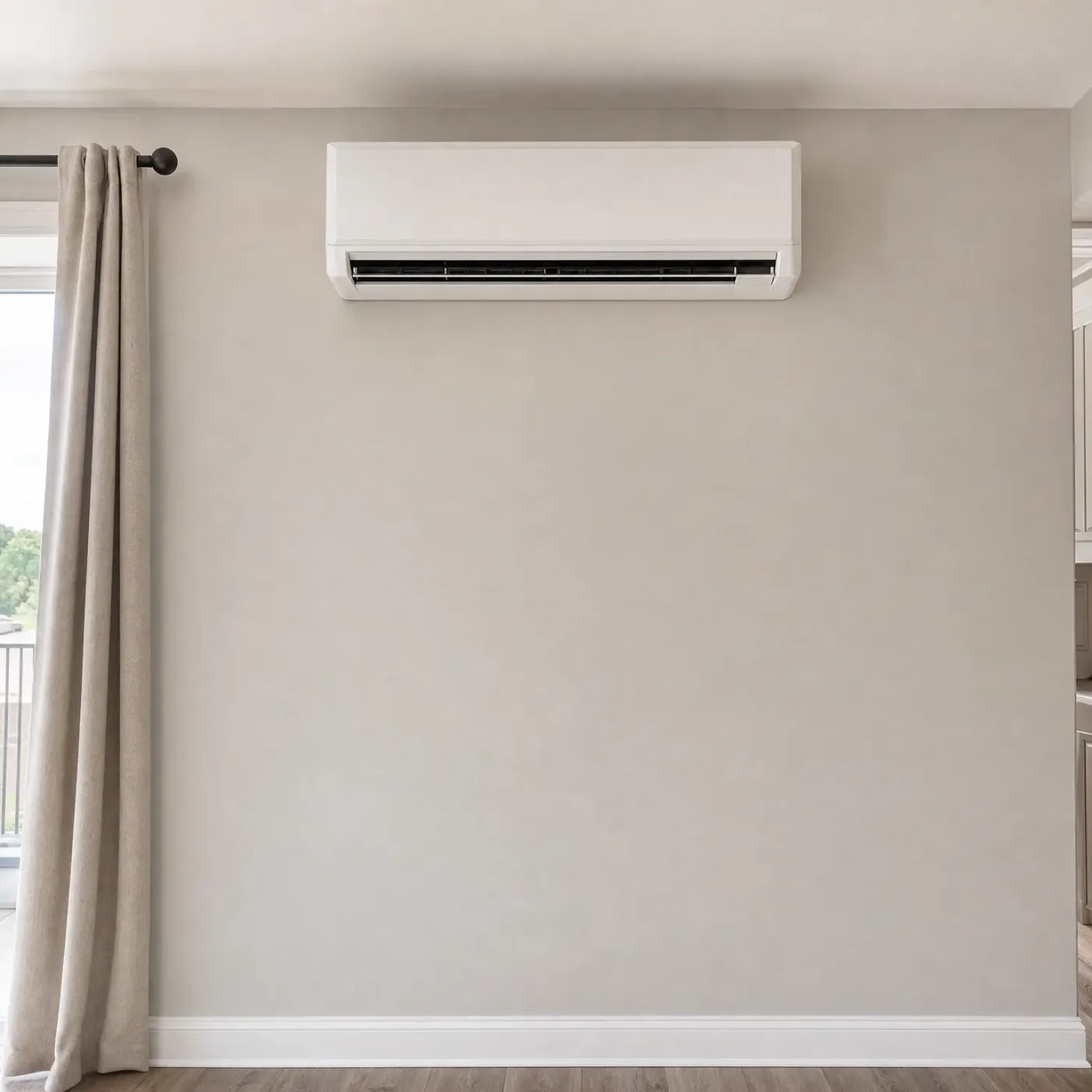
A white wall-mounted mini-split air conditioner installed high on a beige interior wall near the ceiling molding, with a light curtain and curtain rod at the left edge.
After you get your mini split installation
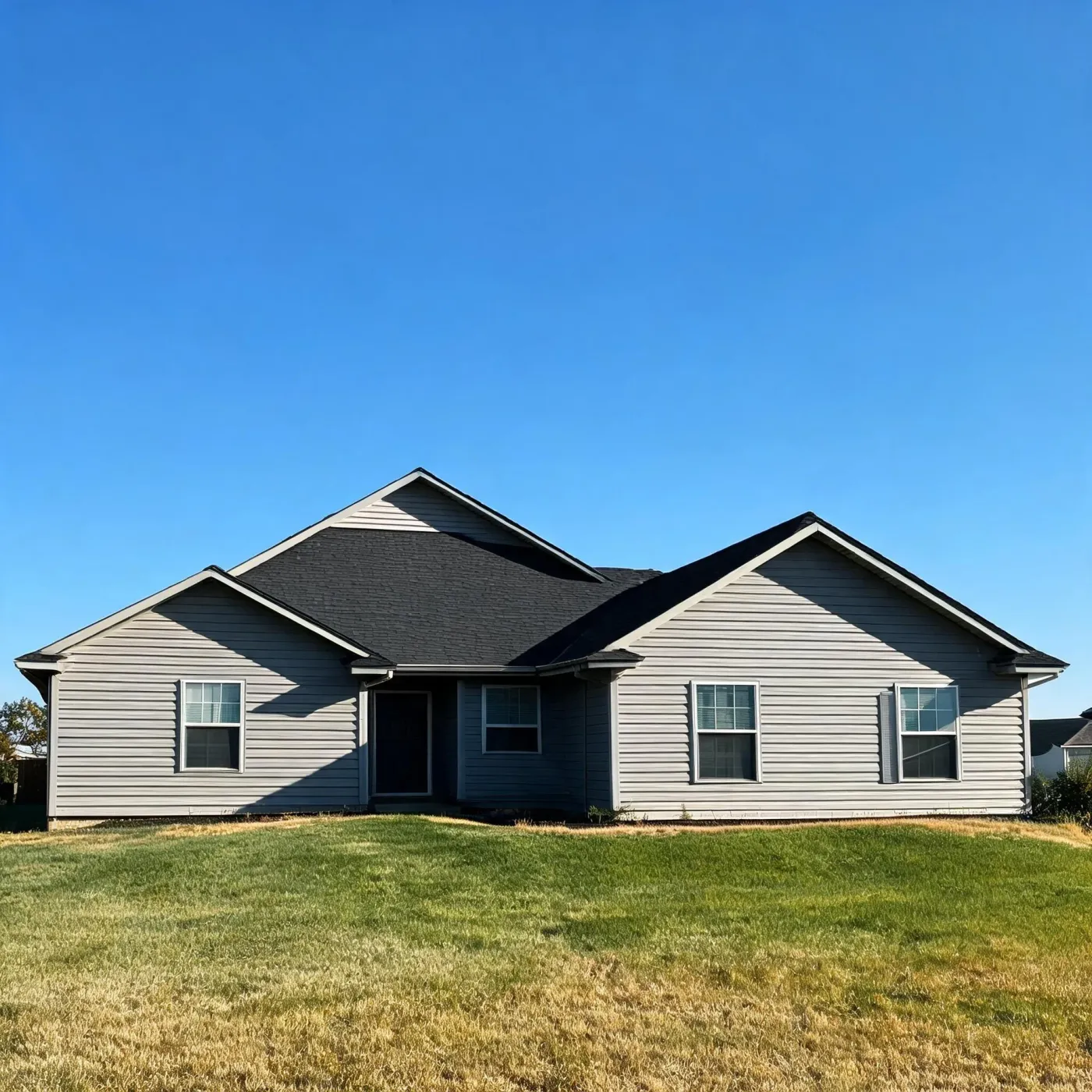
A single-story house with gray vinyl siding, dark shingled gable roofs, and white-trimmed windows, set behind a partly dry green lawn under a clear blue sky.

Summer air here isn't heavy. The average dew point across June, July and August runs 59°F, based on NOAA climate data for Minnesota, and anything under 60 feels dry rather than sticky. That matters for your mini split because less moisture means less work for it. The unit spends less time pulling water out of the air and more time just cooling it, so it reaches the temperature you set and holds there without running long stretches. You'll notice the indoor unit cycling on and off rather than running nonstop on a warm July afternoon, and the air coming out feels cool and clean, not clammy.

NASA POWER T2MDEW county cells weighted by homes

A mini split alone is a hard sell for a Minnesota winter. Paired with the gas furnace already in your basement, it's a solid way to run the house, cooling and shoulder season heat from the mini split, the furnace carrying the coldest stretch. Whether a given unit can go further than that depends on the model, how it was sized, and how the house holds heat, and that's not something to guess at. Sizing a system for this climate, or checking whether backup is set up the way it should be, takes someone who's looked at your house and your equipment, not a general answer. Getting there usually means tracking down contractors who know cold climate systems, calling a few, walking each one through the same details about your house, then sorting through quotes that aren't quite comparable. That part isn't the interesting part of keeping your house running right, and it doesn't have to be the part you do yourself.

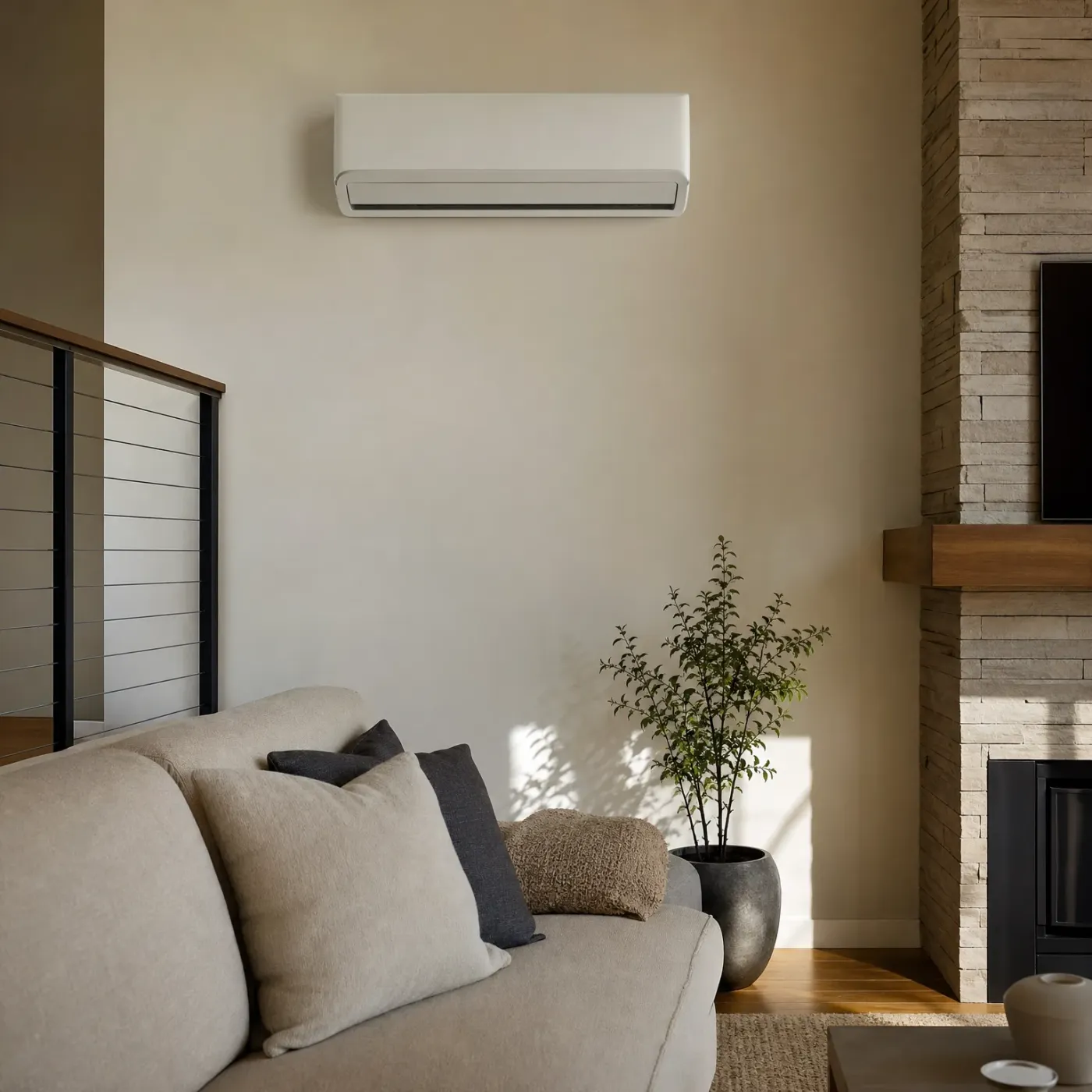
Interior living room with a white wall-mounted mini-split air conditioner high on a beige wall, a light gray sofa with cushions, a potted small tree, a stacked-stone fireplace with wood mantel and mounted TV, and a cable railing at left.

A mini split pro near you

Connect with a pro

Skip the round of in-home estimates for a new mini split.

There's no charge for the request.