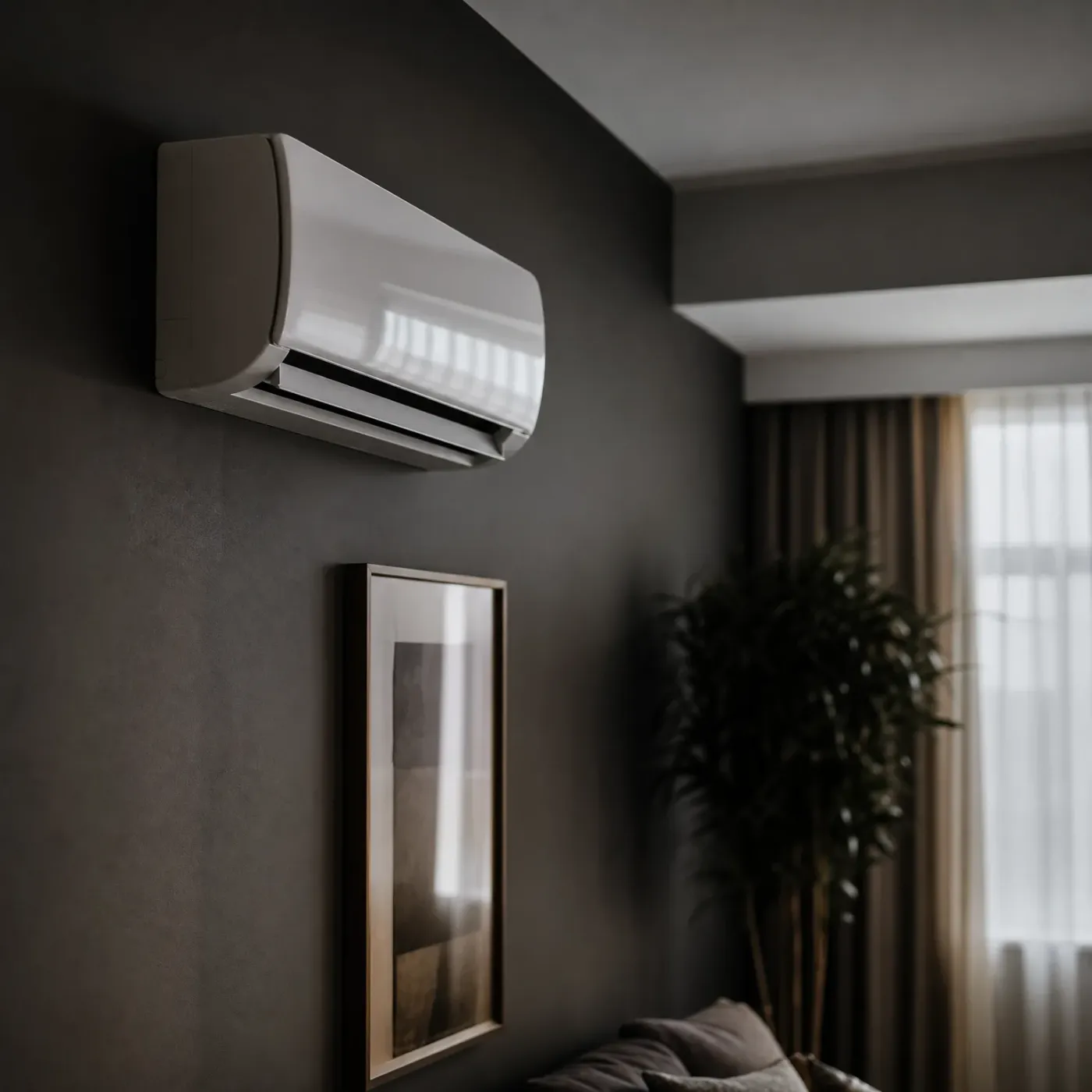
A white wall-mounted mini-split air conditioner on a dark gray interior wall above a framed picture, with a potted plant and curtained window to the right.

A local pro for your mini split installation

Does a mini split lower heating bills in Minnesota

A mini split heats as well as it cools, and in a gas-heat state like Minnesota that raises a real question: does running it instead of your furnace actually save you money. It depends on your setup and what you're paying for electricity versus gas. Below, what decides it, and a local contractor who can look at your home and tell you where you stand.

Find a pro near me

A mini split can lower your heating bill, but in Minnesota it usually works alongside your furnace rather than replacing it. Mini splits heat efficiently by moving heat instead of burning gas to make it, and that efficiency holds up well down to around freezing. Below that, and especially once temperatures drop into the single digits or lower, the unit has to work harder and its output drops off, which is why most homes here keep the gas furnace for the coldest stretches of the winter. Where the savings show up is in fall and spring, and on the milder days in between, when running the mini split instead of firing up the furnace costs less because electricity here is priced about the same as in most places and the mini split uses it efficiently. So the bill usually reflects a mix: lower costs on the mild days, furnace heat on the hard cold ones.

A woman with dark hair in a bun wearing a cream knit sweater sits on a gray sofa in a bright living room, looking off to the side.
A woman wrapped in a knit blanket sits on a gray sofa in a living room, looking toward a bright window with houseplants and an armchair in the background.
A woman in a gray cowl-neck sweater sits on a light sofa with cushions, smiling and looking to the side, with a kitchen and window visible behind her.
A woman with dark hair in a bun, wearing a light linen shirt, sits on a sofa and looks to the side, with a window, houseplants and a kitchen with pendant lights blurred behind her.

Mini Split or Furnace: Which Heats For Less

Running the mini split

  • You're paying for electricity instead of gas, so the savings depend on what your utility charges for each.
  • A mini split holds its efficiency well in cold weather, down to around freezing, so it carries the load on milder days without strain.
  • Once it gets cold enough, the compressor has to work harder to pull heat from outside air, and the savings shrink.
  • It heats only the room or zone it's installed in, so it won't touch the bill for the rest of the house.
  • You get even heat without the furnace cycling on and off, which some homeowners notice more than the dollar amount.

Running the furnace

  • Gas is doing the work it's built for, burning fuel to make heat directly, no matter how cold it gets outside.
  • Your furnace keeps the whole house warm, not just the room the mini split covers.
  • On the coldest nights of a Minnesota winter, the furnace keeps up without losing output the way the mini split can.
  • If gas is cheaper than electric where you live, the furnace may be the less expensive choice to run on those nights.
  • It already heats every room through the ductwork, so there's no zone to think about.
  1. The outdoor unit pulls heat from the outside air itself.

  2. Refrigerant carries that heat inside through the line set.

  3. The indoor head blows warmed air straight into the room.

  4. The furnace kicks in once outdoor temps drop near freezing.

A smiling man in a denim shirt and white t-shirt stands in an open dark doorway of a stucco house, facing a woman with long brown hair and a green jacket seen from behind in the foreground.

What this looks like in your house

Say the mini split is in your living room, where everyone gathers on a January evening. Set it to heat and it carries that one room on its own most days, cycling the furnace down because the thermostat sees less call for it. Your gas bill drops a little. Your electric bill picks up some of that difference. Whether you come out ahead depends on what your utility charges for each, and that varies house to house even within the same town.

The risk is smaller than people expect, since the furnace is still there as backup on the coldest nights. The real question is whether the unit you have is sized and placed right for the room it's heating, and whether it's set up to hand off to the furnace smoothly instead of fighting it. That's a setup question, not a guessing one. A local contractor who installs these in Minnesota homes every winter can look at your specific layout and tell you where a mini split earns its keep and where it won't.

Interior corner with a beige sofa holding a dark green and a light cushion and a textured throw, a potted small-leaved tree beside a white-framed window, and a dark shallow bowl on a wooden coffee table in the foreground.
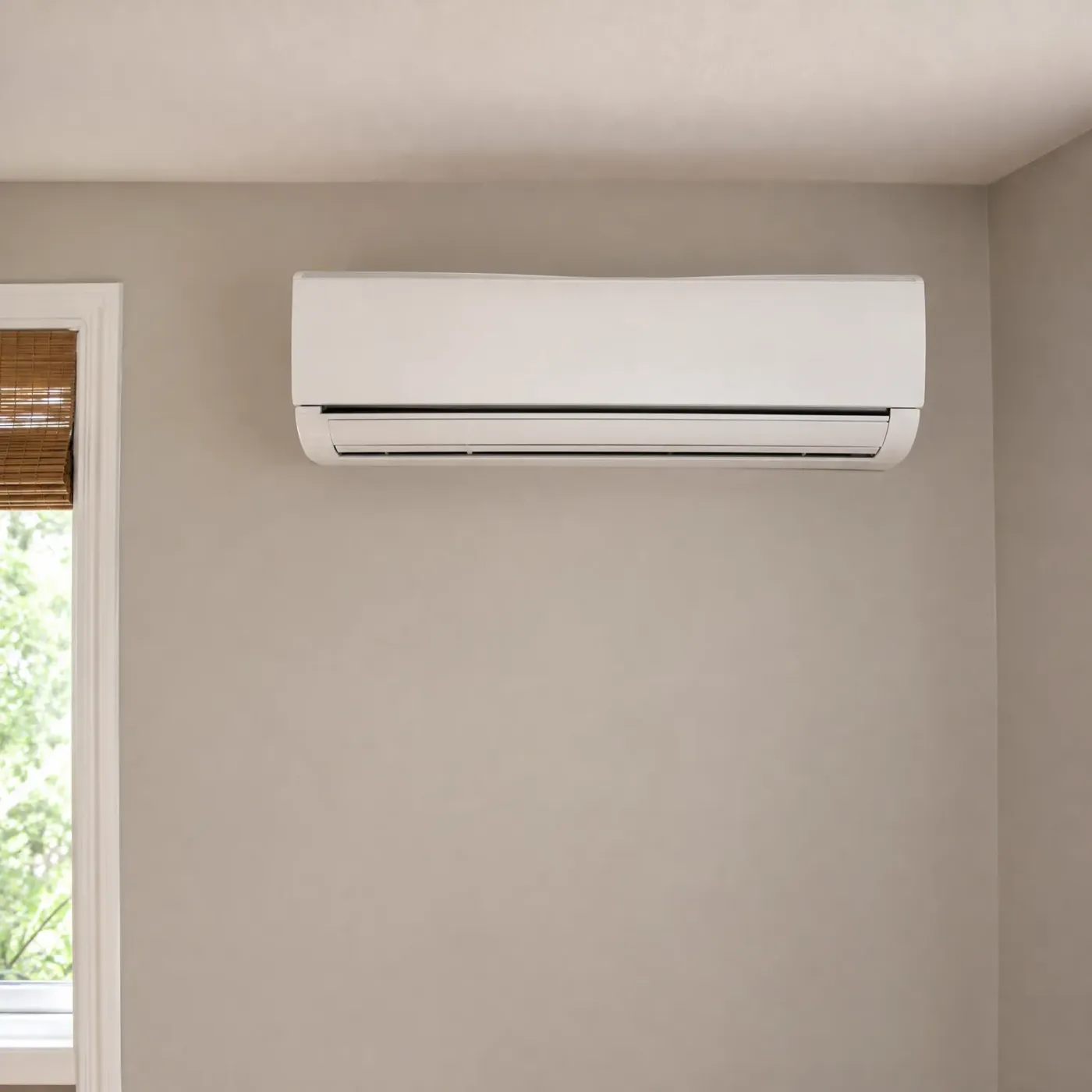
A white wall-mounted mini-split air conditioner installed near the ceiling on a beige interior wall, with a window and bamboo blind at the left edge showing green foliage outside.

Running clean, pulling its weight

A mini split that looks like this is moving heat the way it's supposed to. The coils and vents are clear, so air passes through without the unit working harder than it needs to. That's what keeps the electric cost down on the days it's carrying the room.

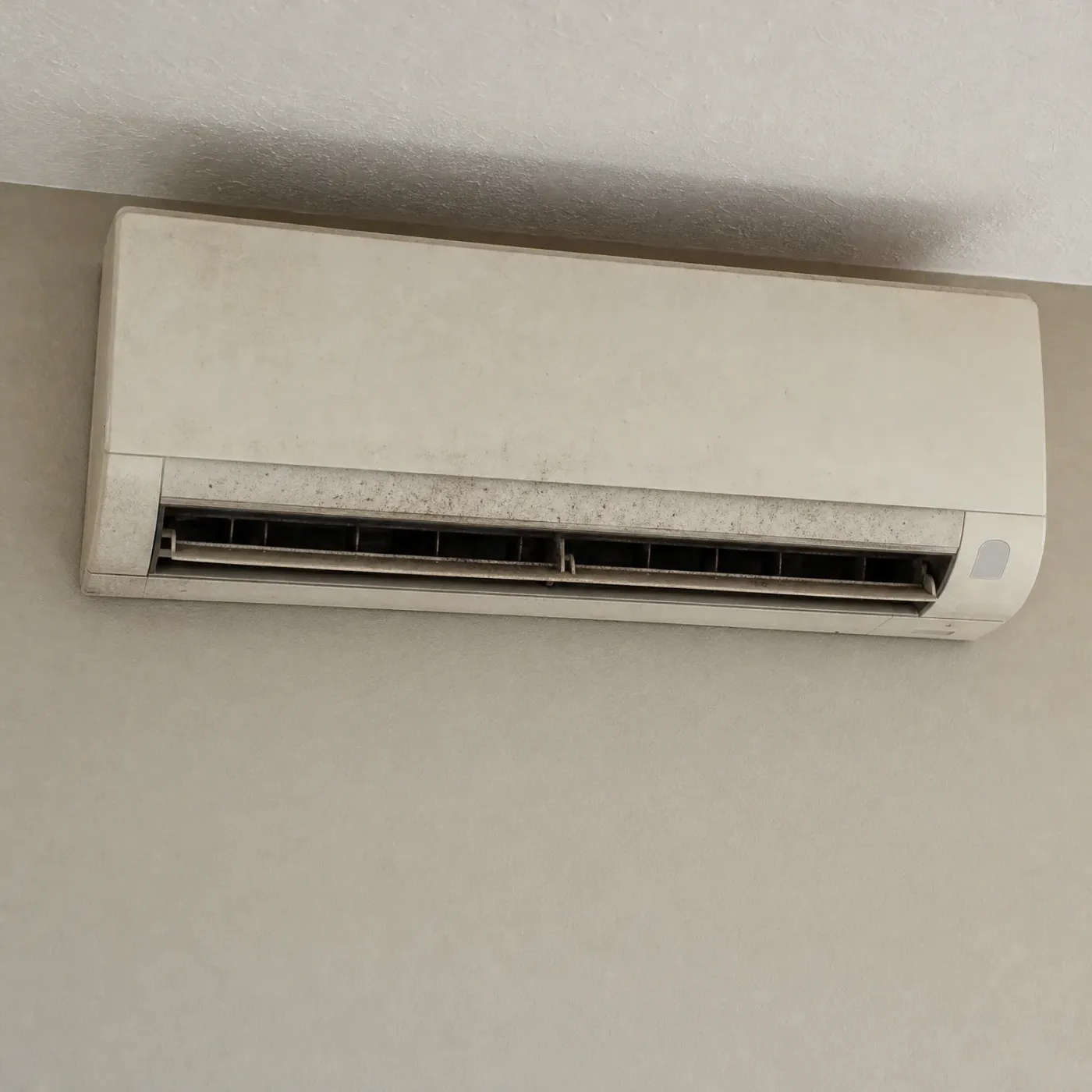
A wall-mounted mini-split air conditioner indoor unit with discolored casing and dusty vents, installed near the ceiling on a plain light-colored wall.

Dirt on the coil, less heat for your money

Dust on the front panel usually means dust on the coil behind it. A dirty coil can't pull heat from the air as well, so the unit runs longer to do the same job. In Minnesota, where it's splitting the load with your furnace, that's power spent without the savings you'd expect.

Power costs 15.83 cents per kilowatt-hour statewide

At 15.83 cents per kilowatt-hour, running the mini split on the coldest nights costs more than it would somewhere with cheaper power. That's the number to weigh against your gas rate when you decide how much of the heating load to hand it.

EIA-861 2025 statewide residential average

A smiling older woman with gray hair in a cream knit sweater stands in a dimly lit kitchen beside a window showing snow outside, with a round loaf of bread on the counter in the foreground.
A woman and a child wrapped together in a knitted gray blanket on a couch, with the child's head resting on her shoulder and a lit table lamp and houseplant in the background.

Get the right pro for your mini split

The math above only tells you so much. Whether the mini split is actually pulling its share in your house, cycling the furnace down the way it should, depends on things you can't see from the thermostat: the charge, the line set, whether the outdoor coil is still moving air the way it did when it was installed. A unit that's lost a little efficiency will quietly lean harder on electricity, or lean on the furnace more than it needs to, and you won't catch that from a utility bill alone. Someone who installs and services these units in Minnesota winters every year knows what to check and what tends to go wrong in this climate specifically. Getting a local, licensed contractor to look at your setup, rather than guessing from averages, is how you find out whether your mini split is actually saving you anything or just splitting the load without saving you much at all.

Where this leaves you

  • A mini split lowers your heating bill in Minnesota when it's sized and installed to carry its share of the load without straining.
  • Below freezing, the furnace still needs to pick up the work, so the savings come from the milder days, not the coldest nights.
  • Whether it pays off comes down to your electric rate against your gas rate, not just the equipment itself.
  • A local installer who works on these systems through a Minnesota winter knows where the charge or the line set tends to fall short.
  • Matching with one contractor instead of several means the person who shows up already understands cold-climate installs, not a general call center.
  • The answer depends on your house, so what you get is someone local to look at your setup and tell you where it stands.

A mini split can lower your heating bill in Minnesota, but it does that alongside your furnace, not in place of it. On the milder days it carries the room it's installed in and lets the furnace sit idle. Once temperatures drop near freezing, the furnace takes the load back, and that's by design, not a sign anything's wrong. What you save over a winter comes down to the gap between your electric rate and your gas rate, and how much of the heating season falls on the mild side rather than the cold side. The equipment matters just as much as the math. A unit that's undersized for the room, or installed with a weak charge or a line set that isn't right, will lean on the furnace more than it should and cost you more to run than it's worth. That's the part a thermostat reading won't show you. It takes someone who's installed and serviced these systems through a Minnesota winter to look at your house and tell you whether yours is set up to actually carry its share. When you request a match through this page, you're connected with one contractor local to your area, someone who works on cold-climate mini splits every season and knows where they tend to fall short, rather than a handful of companies competing for the job. They can tell you, for your house, whether the mini split is pulling its weight or just adding a line to the bill.

At dusk, a dark board-and-batten house with a standing-seam metal roof and lit entry walkway of stone pavers, with two large outdoor heat pump units on a stone-walled pad at right and trees and hills in the background.

Mini Split Installation

A pro who works on mini splits

Step 1 of 3: Equipment
  • A cream chunky cable-knit throw draped over a beige upholstered armchair beside a bright window, with a wooden side table holding a book and a vase of leafy branches at left.
    • Get in touch with a local installer about a new mini split.
    • Describe your mini split job, and a local pro who handles it gets in touch.
  • Living room corner with a gray sofa holding beige pillows and a knit throw, a round wooden coffee table with a dark planter and shallow bowl, a jute rug, a floor lamp, a framed landscape print on the wall, and a window showing trees.
    • Send the request and finding a pro stops being your problem.
    • After this form, you can stop searching for a mini split pro.
  • A living room corner with a cream sofa and cushion, knit throw, wooden coffee table holding a shallow bowl and dark ceramic vase with green foliage, a floor lamp, potted plant in a woven basket, and linen curtains at a window.
    • Describe the project once instead of to every installer.
    • Describe your mini split job once, to one pro.
  • A round reclaimed-wood coffee table with a black metal base sits on a woven rug in front of a cream sofa with cushions, with a lit built-in fireplace and a tall indoor tree in the background.
    • The pro who reaches out is licensed in Minnesota.
    • Only one pro gets your request, so you hear from one company.