Tell us about the job
Takes about a minute. No obligation.
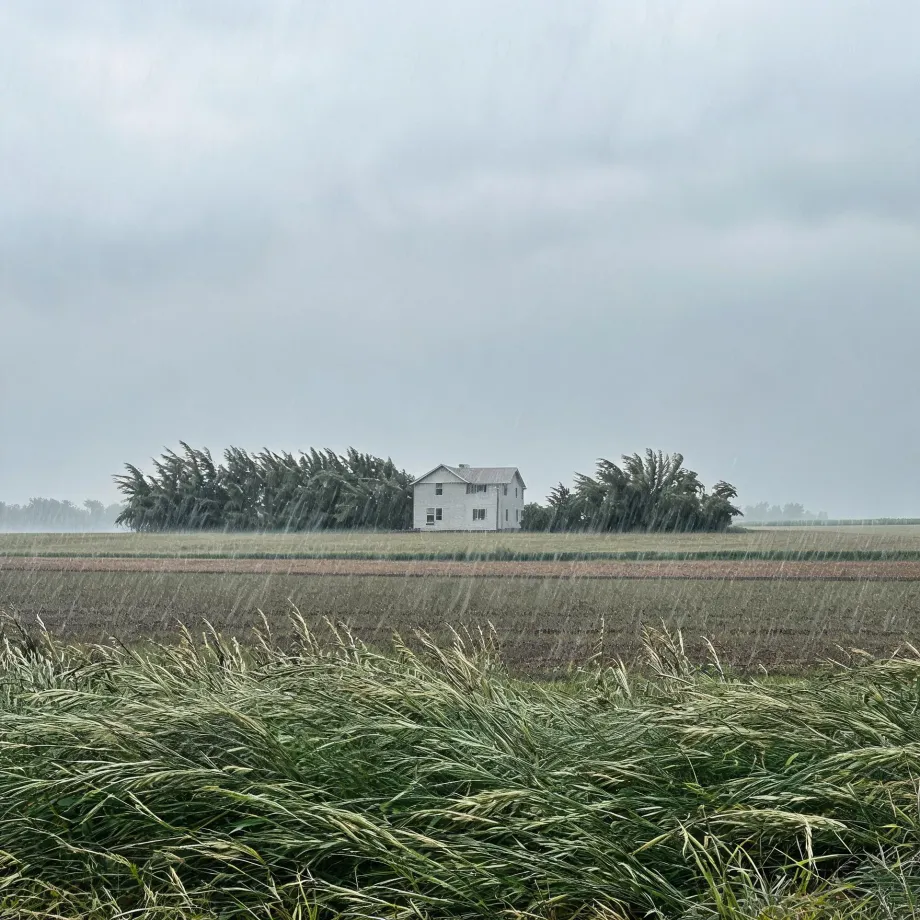
A contractor sizing or installing a mini-split in Chippewa County works out what the local climate actually demands before settling on equipment or placement. 87 severe weather events were recorded in Chippewa County, Minnesota between 2015 and 2024. At roughly the midpoint of counties nationwide, that puts severe weather here as a real but not dominant factor in how hard a system runs over its life. A mini-split that underperforms or fails early is more likely carrying the cost of an undersized head unit or a poor refrigerant charge on the day it went in than accumulating damage from weather load. Contractors quoting a new install here focus on room load calculations and mounting conditions first.
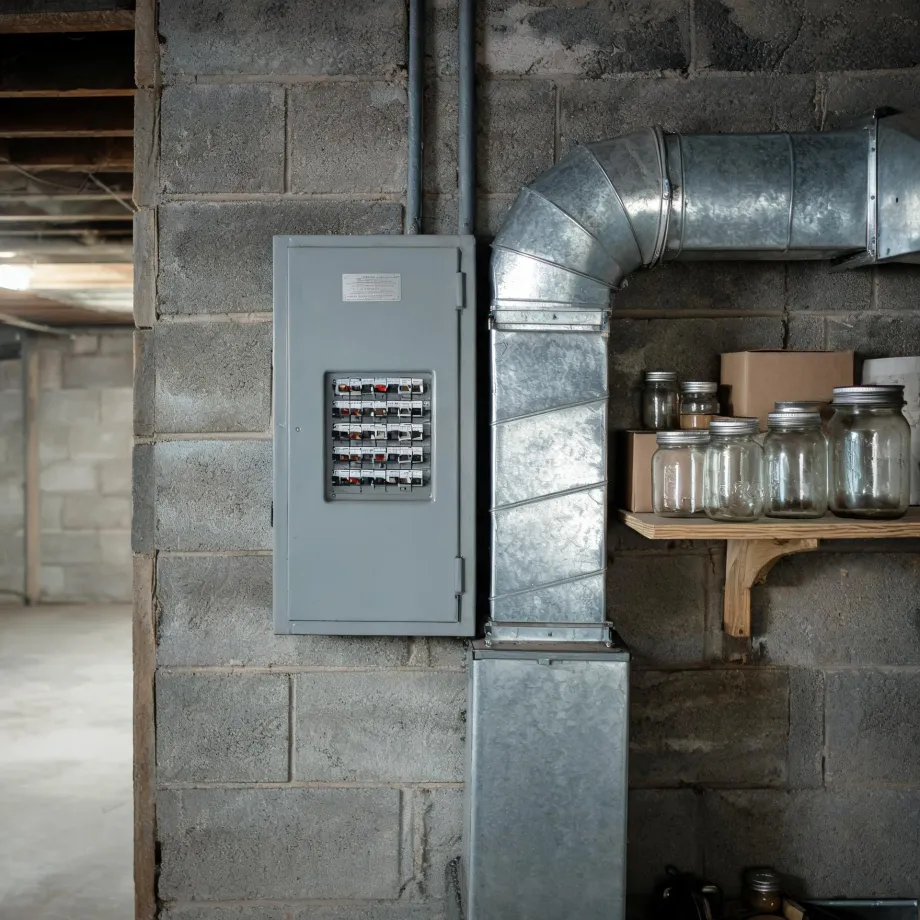
Electrical panels in much of this county's housing stock were sized for whatever was standard when the house went up, and a mini-split draws power on different terms than what those panels were designed around. Half the homes in Chippewa County, Minnesota were built in 1957 or earlier (2020-2024 ACS 5-year). A contractor quoting an installation here checks the panel capacity before settling on a unit, because an undersized service requires an upgrade that changes the scope and the price. The ductwork question is simpler for a mini-split than for a forced-air system, but the electrical question is not.
The Parts of a Mini-split System and What Each One Does
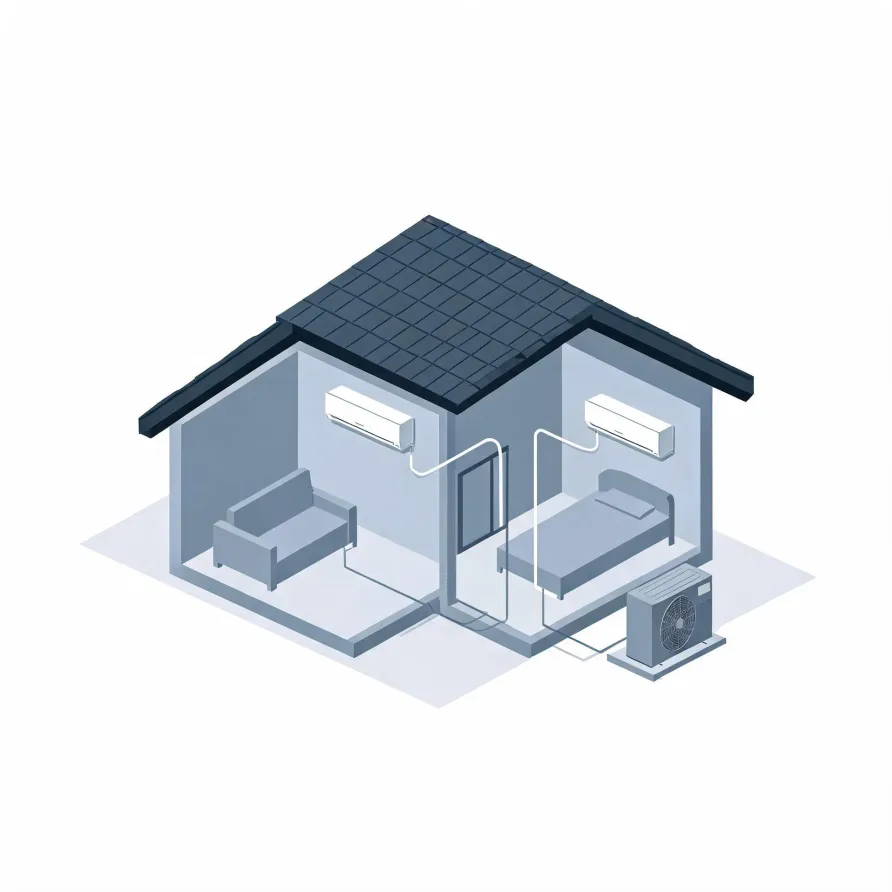
The indoor air handler mounts high on an interior wall, inside the room being conditioned. It pulls room air across a coil and pushes it back out, tempered. Most homeowners notice it first because it is the visible face of the system, sitting where a vent or a window unit might otherwise go.
The outdoor unit sits on a pad or bracket outside the house and holds the compressor and condenser coil. A refrigerant line set runs through a small hole in the wall to connect the two units, and a condensate drain line carries moisture from the indoor handler to the outside.
The drawing beside this text shows the general layout of a mini-split system, and a licensed contractor determines exactly how each piece fits your home.
Get matched in Chippewa CountyChippewa County by the numbers
87 severe weather events were recorded in Chippewa County, Minnesota between 2015 and 2024.
NOAA National Centers for Environmental Information, Storm Events Database, bulk CSV export, events 2015-01-01 through 2024-12-31.Half the homes in Chippewa County, Minnesota were built in 1957 or earlier (2020-2024 ACS 5-year).
U.S. Census Bureau, 2020-2024 American Community Survey 5-Year EstimatesChippewa County, Minnesota holds 5,661 housing units (2020-2024 ACS 5-year).
U.S. Census Bureau, 2020-2024 American Community Survey 5-Year EstimatesOwners occupy 72.3% of the occupied homes in Chippewa County, Minnesota (2020-2024 ACS 5-year).
U.S. Census Bureau, 2020-2024 American Community Survey 5-Year EstimatesMini-Split Installation Rules That Apply in Chippewa County, Minnesota2 sourced standards and codes
Licensing and Legal Requirements in Chippewa County, Minnesota
Minnesota defines a mechanical contractor as a business that installs, repairs or maintains heating, ventilating, cooling or refrigeration systems — the definition that carries the exemption from the residential contractor licence.
Minnesota's residential contractor licence does not reach HVAC work: the licensing section carries its own exemption list, and a mechanical contractor is exempt from the licence requirement by name.
Severe Weather Events in Chippewa County
Chippewa County's climate puts real pressure on heating and cooling equipment year after year. A mini-split sized and installed for local conditions handles that load differently than one spec'd for somewhere else.
87 severe weather events, 2015–2024. Source: NOAA National Centers for Environmental Information, Storm Events Database.