Tell us about the job
Takes about a minute. No obligation.

Before a contractor can confidently name a failed part, they need to know what the system has been running against. 133 severe weather events were recorded in Clearwater County, Minnesota between 2015 and 2024. Severe weather at that rate means compressor stress, refrigerant line fatigue, and outdoor unit wear are real possibilities on any call, not afterthoughts. A technician working a mini-split repair here checks the outdoor unit and its electrical components carefully, because the cumulative load the system has absorbed shapes what they find inside. Age and installation quality still matter, but the weather history in this county gives a contractor a specific lens for reading what failed and why.
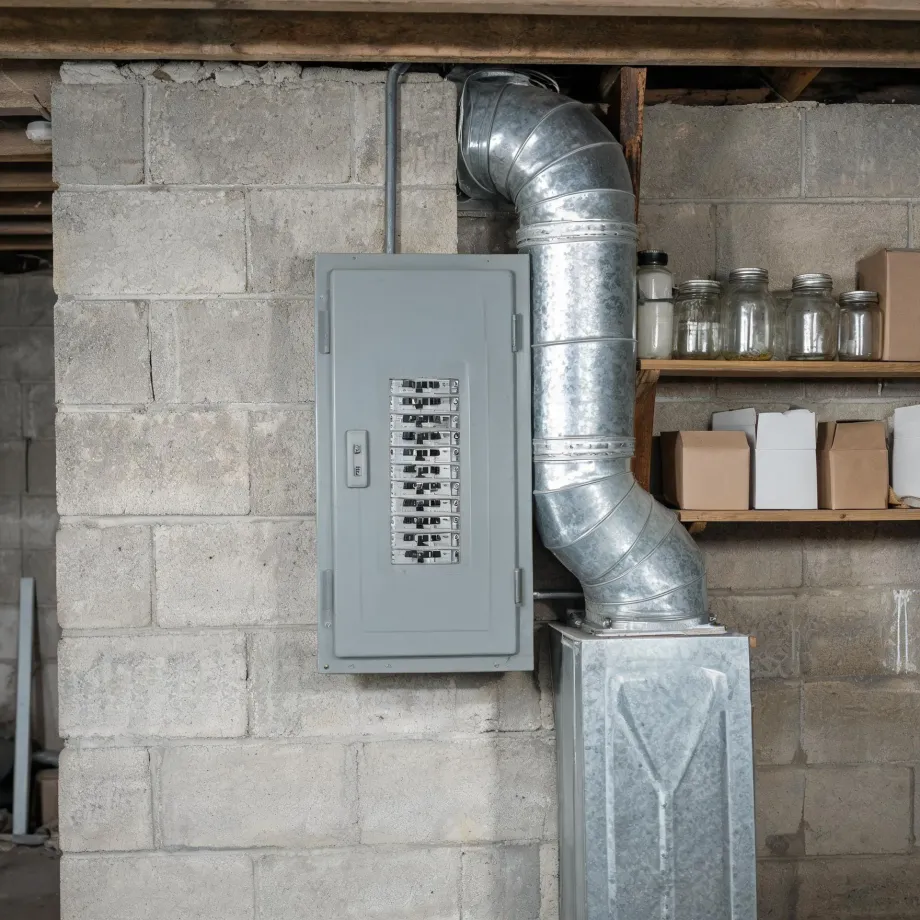
Older electrical infrastructure and original line-set routing shape what a contractor finds once a mini-split is opened for repair in this county. Half the homes in Clearwater County, Minnesota were built in 1980 or earlier (2020-2024 ACS 5-year). Housing built for earlier generations of heating equipment carries that history in its wiring paths, penetrations, and the condition of refrigerant lines that were retrofitted rather than planned. A corroded flare fitting or degraded line insulation can account for the same symptoms as a failed board, and a contractor has to open the system and trace both before the repair scope is clear.
The Parts of a Mini-split a Contractor Checks First
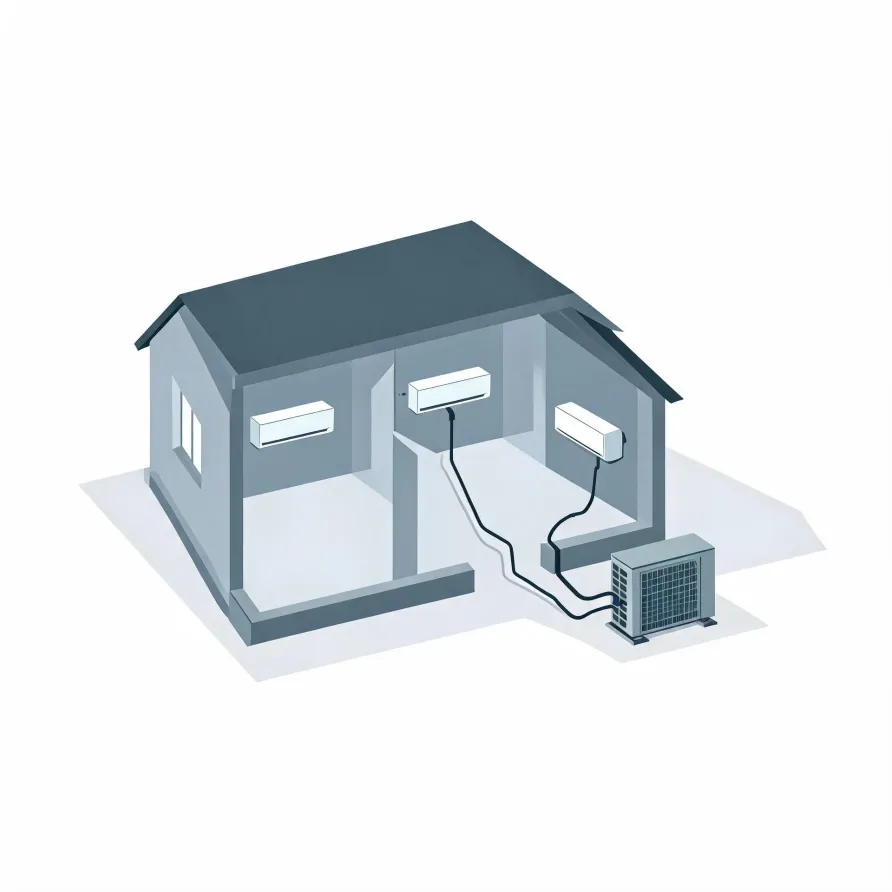
The indoor air handler mounts high on a wall inside the room and is the piece a homeowner notices most. It pulls room air across a coil and pushes conditioned air back out. When that unit is the problem, the signs show up fast: weak airflow, ice on the coil, or air that smells wrong.
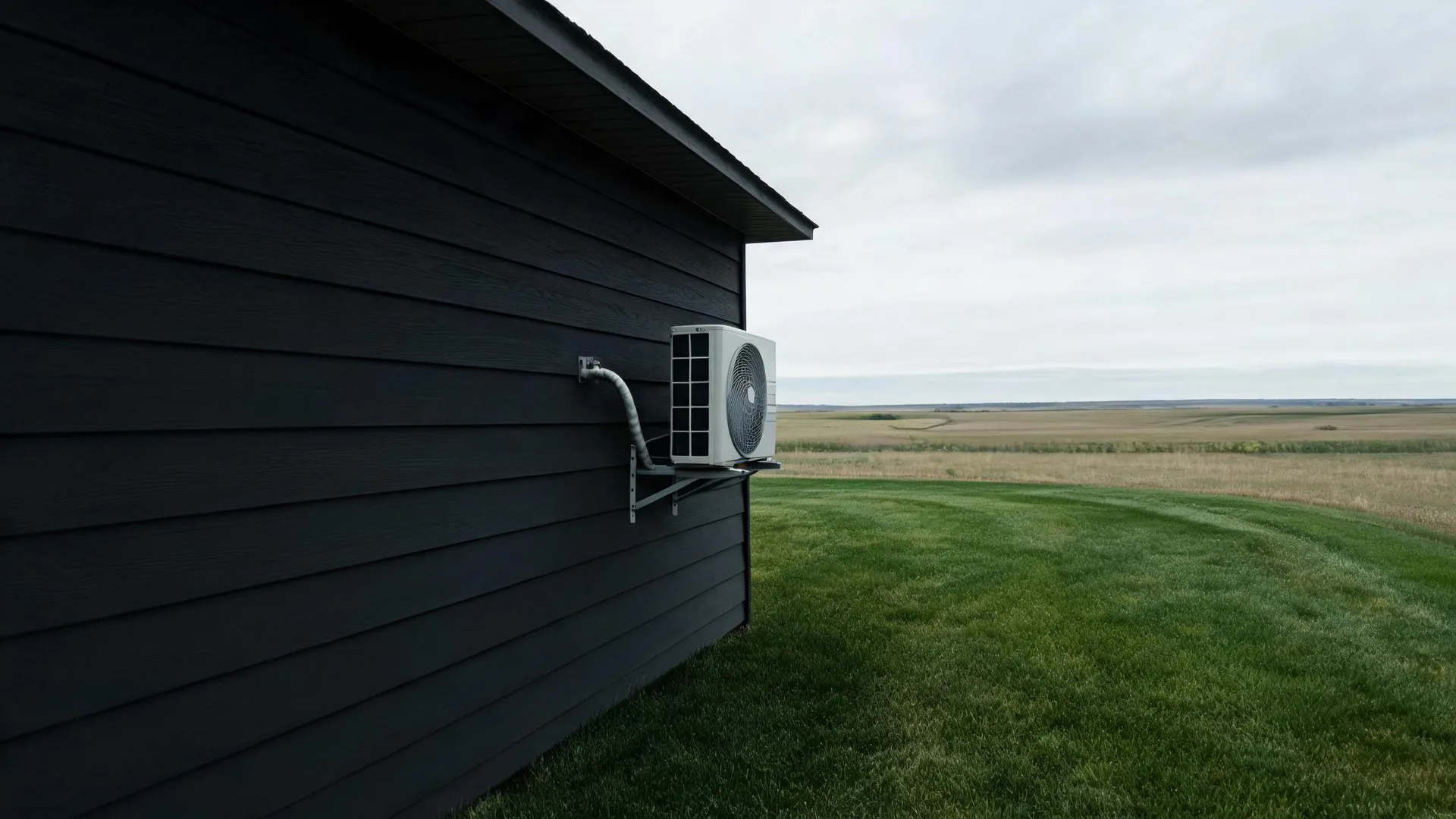
The outdoor condenser sits on a pad or bracket outside the house and carries the compressor, which is where most of the system's mechanical stress lives. The refrigerant line set and the condensate drain run between the two units through a small opening in the wall, and either one can be the source of a fault the indoor unit's behavior first makes visible.
The drawing shows a typical layout, and a licensed contractor determines which components and conditions apply to your specific house.
Get matched in Clearwater CountyClearwater County, by the numbers
133 severe weather events were recorded in Clearwater County, Minnesota between 2015 and 2024.
NOAA National Centers for Environmental Information, Storm Events Database, bulk CSV export, events 2015-01-01 through 2024-12-31.Half the homes in Clearwater County, Minnesota were built in 1980 or earlier (2020-2024 ACS 5-year).
U.S. Census Bureau, 2020-2024 American Community Survey 5-Year EstimatesClearwater County, Minnesota holds 4,468 housing units (2020-2024 ACS 5-year).
U.S. Census Bureau, 2020-2024 American Community Survey 5-Year EstimatesOwners occupy 80.1% of the occupied homes in Clearwater County, Minnesota (2020-2024 ACS 5-year).
U.S. Census Bureau, 2020-2024 American Community Survey 5-Year EstimatesRules & Standards Covering Mini-Split Repair in Clearwater County, Minnesota2 sourced rules and standards
What Clearwater County, Minnesota Requires for This Work
Minnesota defines a mechanical contractor as a business that installs, repairs or maintains heating, ventilating, cooling or refrigeration systems — the definition that carries the exemption from the residential contractor licence.
Minnesota's residential contractor licence does not reach HVAC work: the licensing section carries its own exemption list, and a mechanical contractor is exempt from the licence requirement by name.
Severe Weather Events in Clearwater County, Year by Year
Weather stress accumulates inside equipment. In Clearwater County, the range between the coldest and hottest conditions a mini-split must handle shapes how hard the system works and where it fails first, which makes local weather history a direct input to any honest conversation about repair.
133 severe weather events, 2015–2023. Source: NOAA National Centers for Environmental Information, Storm Events Database.