Tell us about the job
Takes about a minute. No obligation.
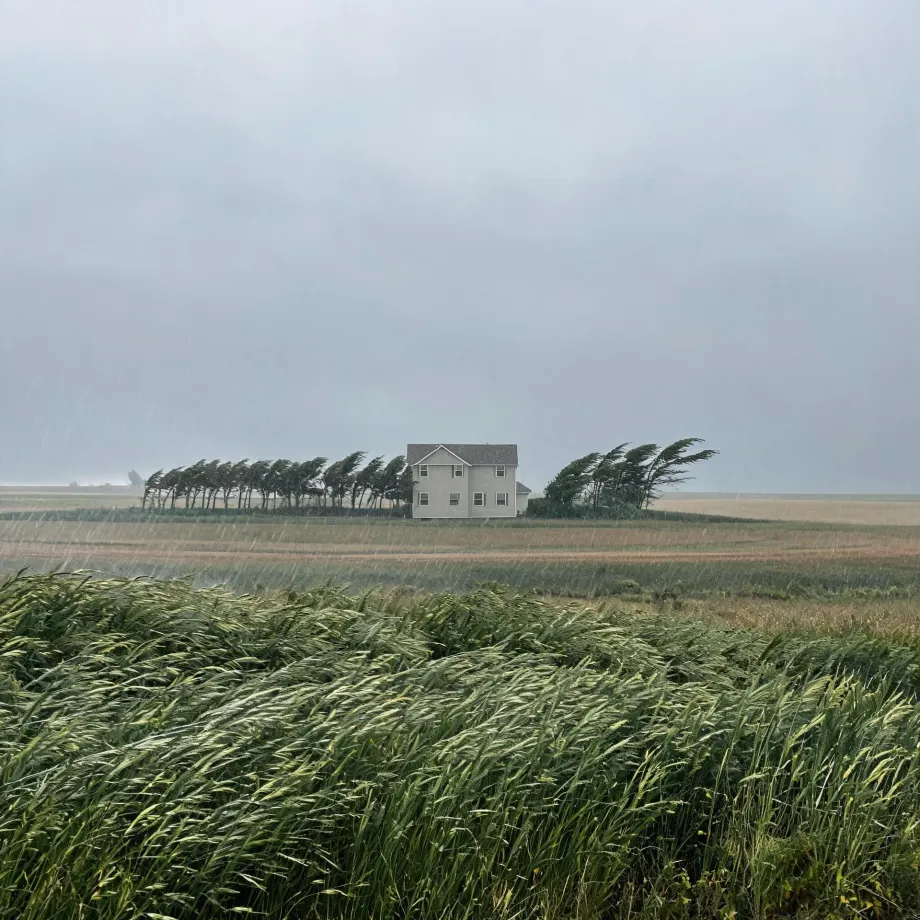
A mini-split in Wabasha County has been running against a steady background of severe weather, not the occasional hard season. 135 severe weather events were recorded in Wabasha County, Minnesota between 2015 and 2024. At that rate, the stress on a system is cumulative, and a refrigerant line, a capacitor, or a contactor that fails here has likely been working harder for longer than the same part in a quieter area. A contractor quoting a repair has to establish how much of that load the system has absorbed before they can say whether a single part replacement is the right fix or whether the repair scope needs to go further.
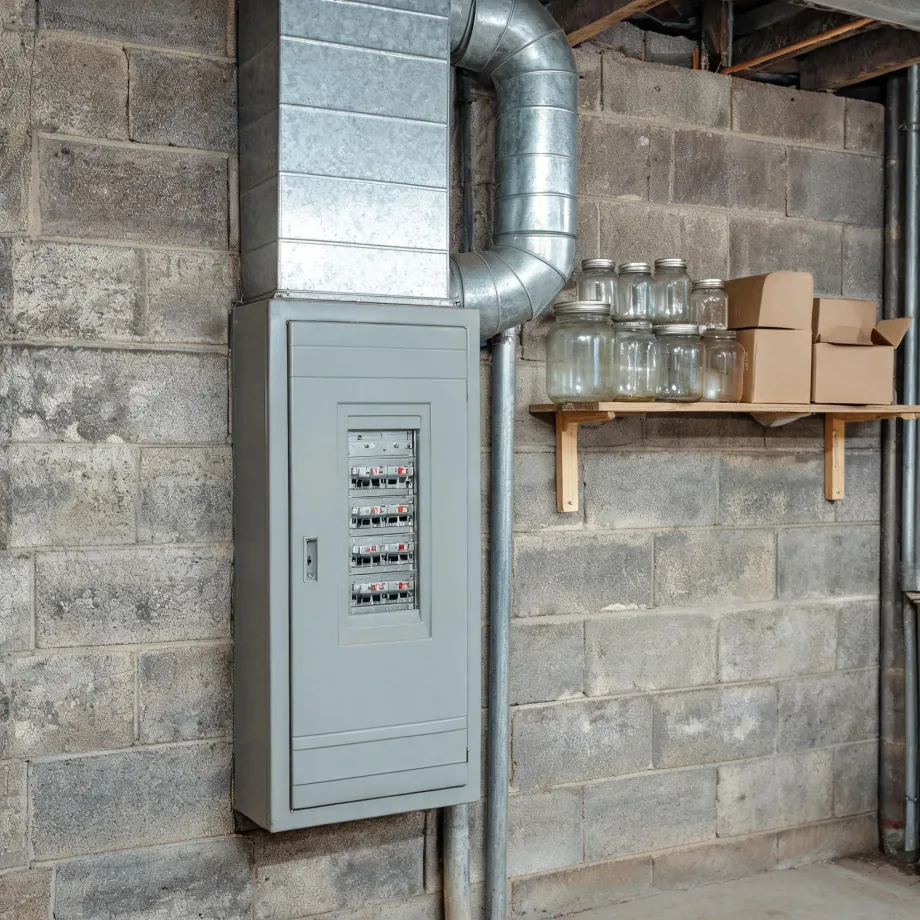
Older housing stock tells you something about what a contractor is likely to find once a mini-split is open, but it does not predict the failure. Half the homes in Wabasha County, Minnesota were built in 1976 or earlier (2020-2024 ACS 5-year). A system installed into a house of that vintage has often run through one or two refrigerant transitions, and the components it depends on may no longer have the supply depth of current equipment. When a repair call comes in, the question a contractor is answering is whether the failed part is still made in a form that fits, and what the lead time looks like if it is not.
The Parts of a Mini-split a Contractor Checks During Repair
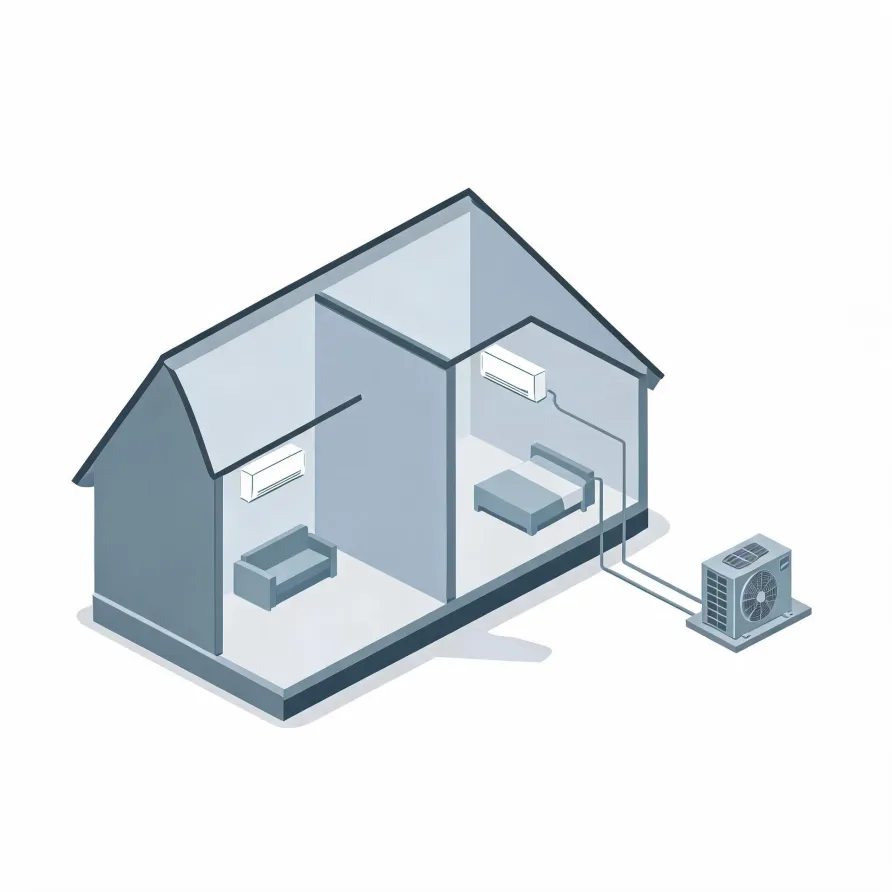
The indoor air handler mounts high on a wall inside the room and is where most noticeable problems show up first: weak airflow, odd smells, ice, or error codes on the display. The outdoor unit sits on a pad or bracket outside and houses the compressor and condenser coil, which are common sources of failure when the system stops cooling or heating properly.
A refrigerant line set runs between the two units through a small hole in the wall, carrying the refrigerant that makes the whole system work, and a fault here often shows up as reduced output rather than a hard stop. The condensate drain line, which carries moisture away from the indoor unit, is another piece a contractor checks early when water or humidity problems appear.
The drawing shows a typical mini-split layout, and a licensed contractor determines which components and conditions apply to your specific home.
Get matched in Wabasha CountyWabasha County by the Numbers
135 severe weather events were recorded in Wabasha County, Minnesota between 2015 and 2024.
NOAA National Centers for Environmental Information, Storm Events Database, bulk CSV export, events 2015-01-01 through 2024-12-31.Half the homes in Wabasha County, Minnesota were built in 1976 or earlier (2020-2024 ACS 5-year).
U.S. Census Bureau, 2020-2024 American Community Survey 5-Year EstimatesWabasha County, Minnesota holds 10,291 housing units (2020-2024 ACS 5-year).
U.S. Census Bureau, 2020-2024 American Community Survey 5-Year EstimatesOwners occupy 83.3% of the occupied homes in Wabasha County, Minnesota (2020-2024 ACS 5-year).
U.S. Census Bureau, 2020-2024 American Community Survey 5-Year EstimatesCodes & Standards Governing Mini-Split Repair in Wabasha County, Minnesota2 sourced rules and standards
Licensing Rules for HVAC Work in Wabasha County, Minnesota
Minnesota defines a mechanical contractor as a business that installs, repairs or maintains heating, ventilating, cooling or refrigeration systems — the definition that carries the exemption from the residential contractor licence.
Minnesota's residential contractor licence does not reach HVAC work: the licensing section carries its own exemption list, and a mechanical contractor is exempt from the licence requirement by name.
Severe Weather Events in Wabasha County
Extreme weather puts real strain on heating and cooling equipment, and Wabasha County gets its share of hard conditions. How often that happens here shapes how hard a mini-split has to work and how soon repair needs tend to show up.
135 severe weather events, 2015–2024. Source: NOAA National Centers for Environmental Information, Storm Events Database.