

Running clean
A mini split that gets checked on a schedule looks like this: coil clear, vents clean, air moving steady. It keeps the room even through a July afternoon and holds its own when the temperature drops well below zero in January.
Describe your mini split job, and a local pro who handles it gets in touch.
Get matchedA mini split tune-up covers the things that let the system keep up with Minnesota winters and warm summer stretches without strain. A contractor checks the refrigerant charge, cleans the indoor coil and blower wheel, clears the condensate drain, and inspects the outdoor unit for ice buildup or blocked airflow, since a mini split that runs heat all winter depends on that outdoor coil staying clear to pull warmth from the air even when it's cold out. Electrical connections and the thermostat or remote sensor get checked too, since a sensor reading wrong can run the system longer than it needs to. None of this is dramatic work. It is the kind of small, regular attention that catches a failing capacitor or a low charge before it turns into a system that won't heat or cool at all. For a household that deals with small problems early, a tune-up is how you keep ahead of the one Minnesota day you need the system to just work.
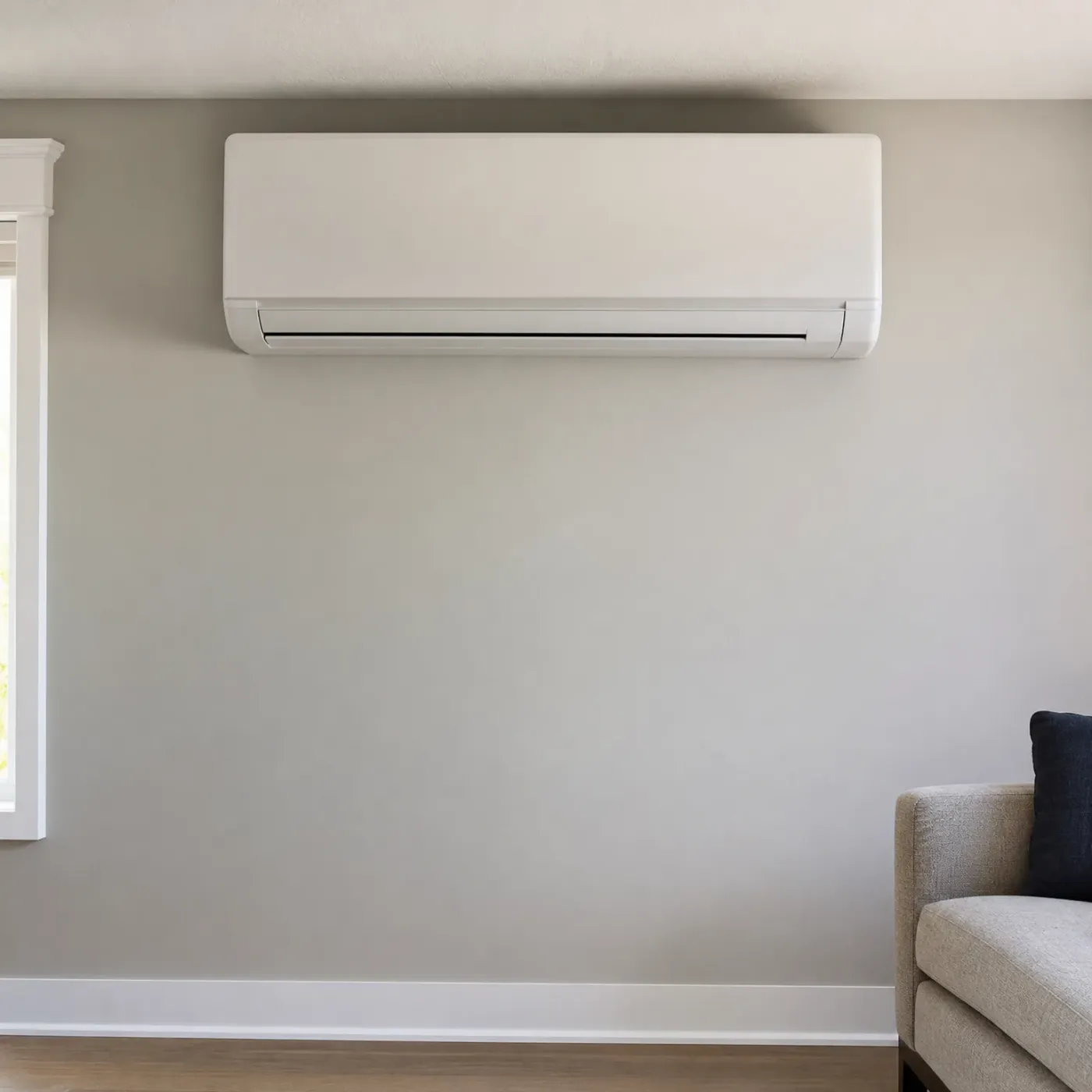
A mini split that gets checked on a schedule looks like this: coil clear, vents clean, air moving steady. It keeps the room even through a July afternoon and holds its own when the temperature drops well below zero in January.
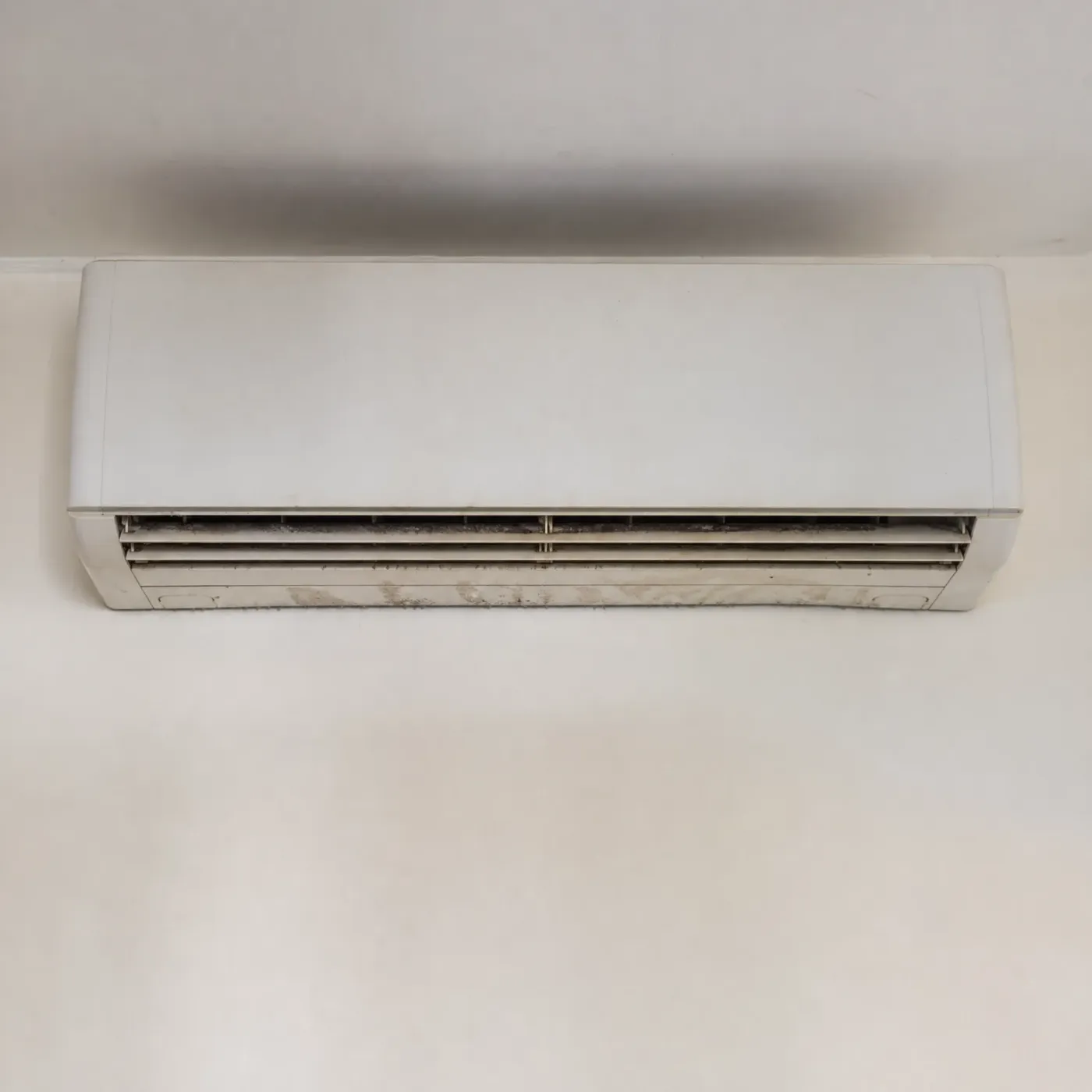
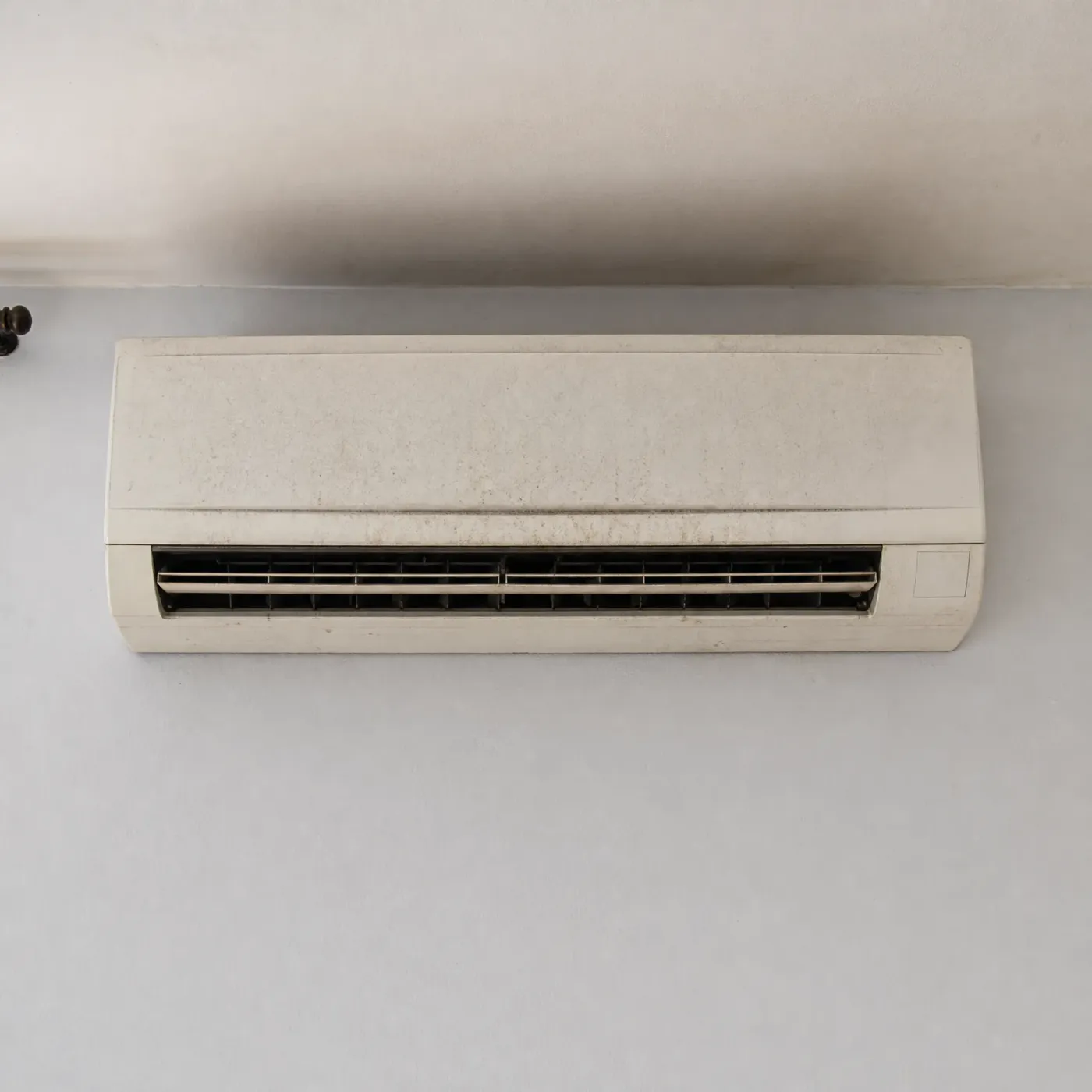
Dirt and mold along the vents and lower casing mean the coil underneath is likely coated too. The unit still runs, but it moves less air and works harder to do it, straining through a Minnesota winter instead of handling it.


The indoor coil is what the refrigerant passes through to pull heat out of the air in summer and push it in during winter. Dust and pet hair settle on those fins over time, and once they do, the coil cannot transfer heat the way it should. A contractor cleans the coil and the blower wheel behind it because a blocked coil forces the system to run longer to reach the temperature you set. In a Minnesota winter, with the unit working harder to keep up as it gets colder outside, that strain shows up first as higher power use, then as wear on the compressor.
A mini split pulls moisture out of the air it cools and drains it off through a small condensate line. If that line clogs, water backs up into the unit instead of draining outside, and it can leak into the wall or ceiling where the indoor head is mounted. Checking and clearing that line is part of a tune-up because a clog does not announce itself until water is already somewhere it should not be. This matters less in January, when the unit is heating and pulling less moisture, and more across the warm, humid stretches of a Minnesota summer when the system runs steady for hours.




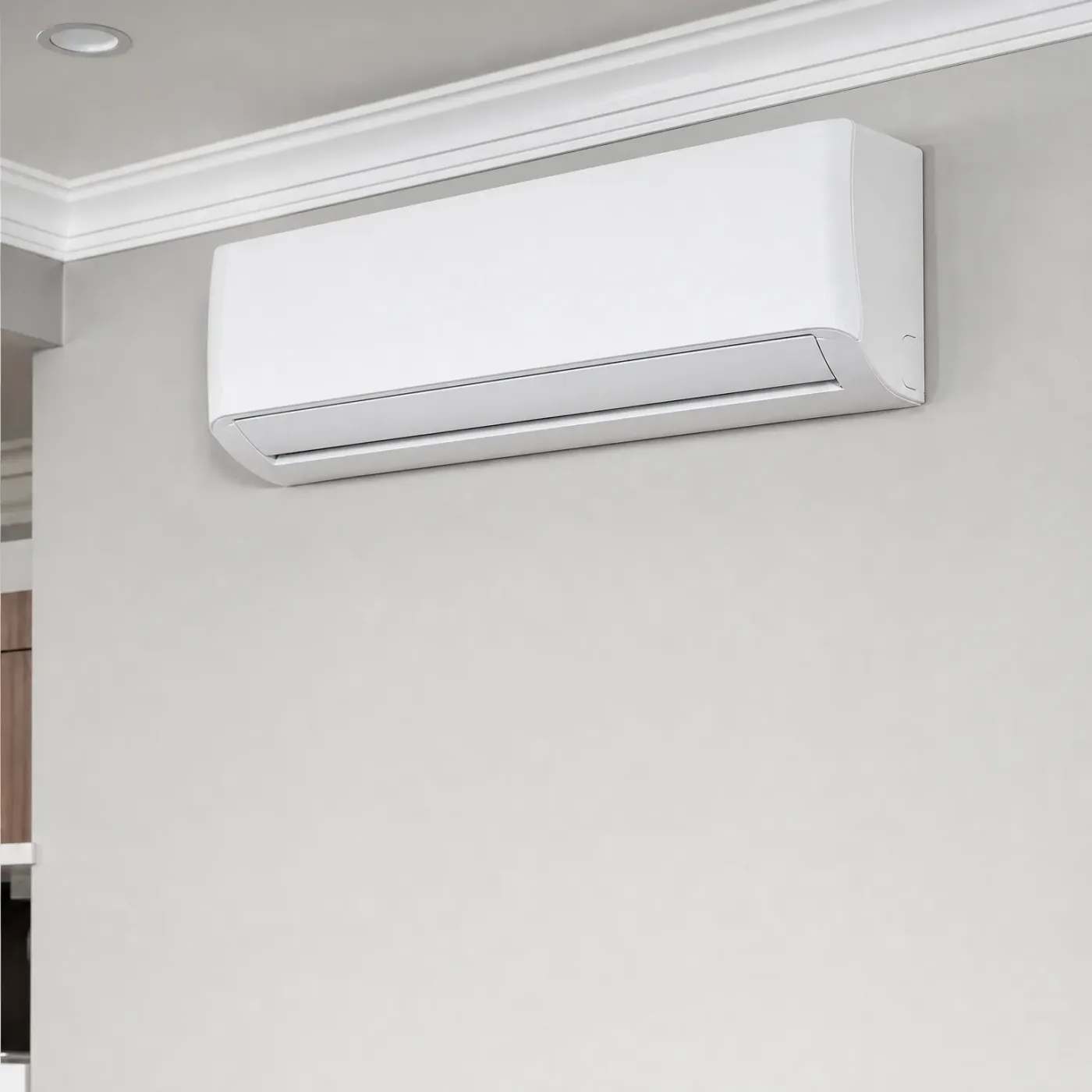
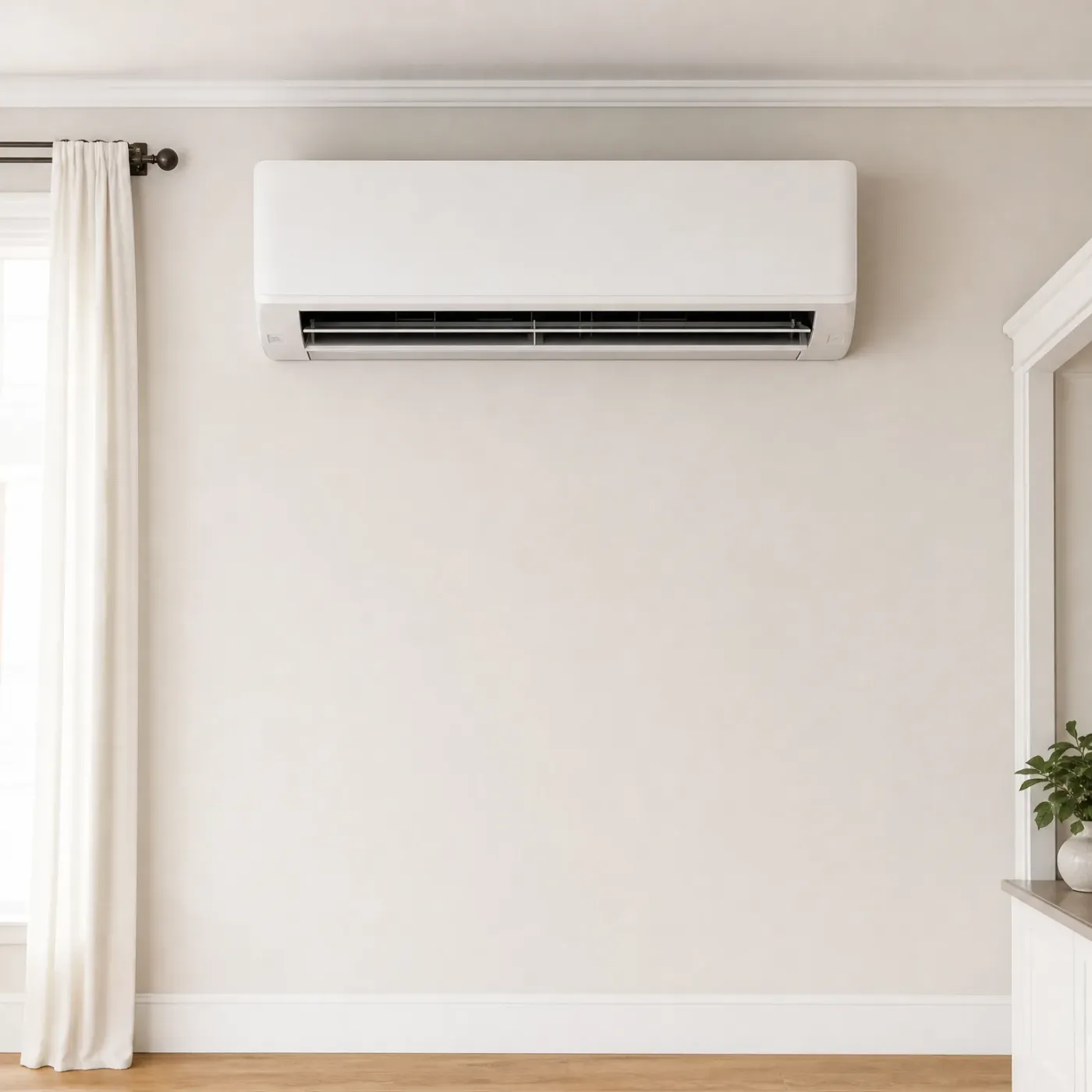
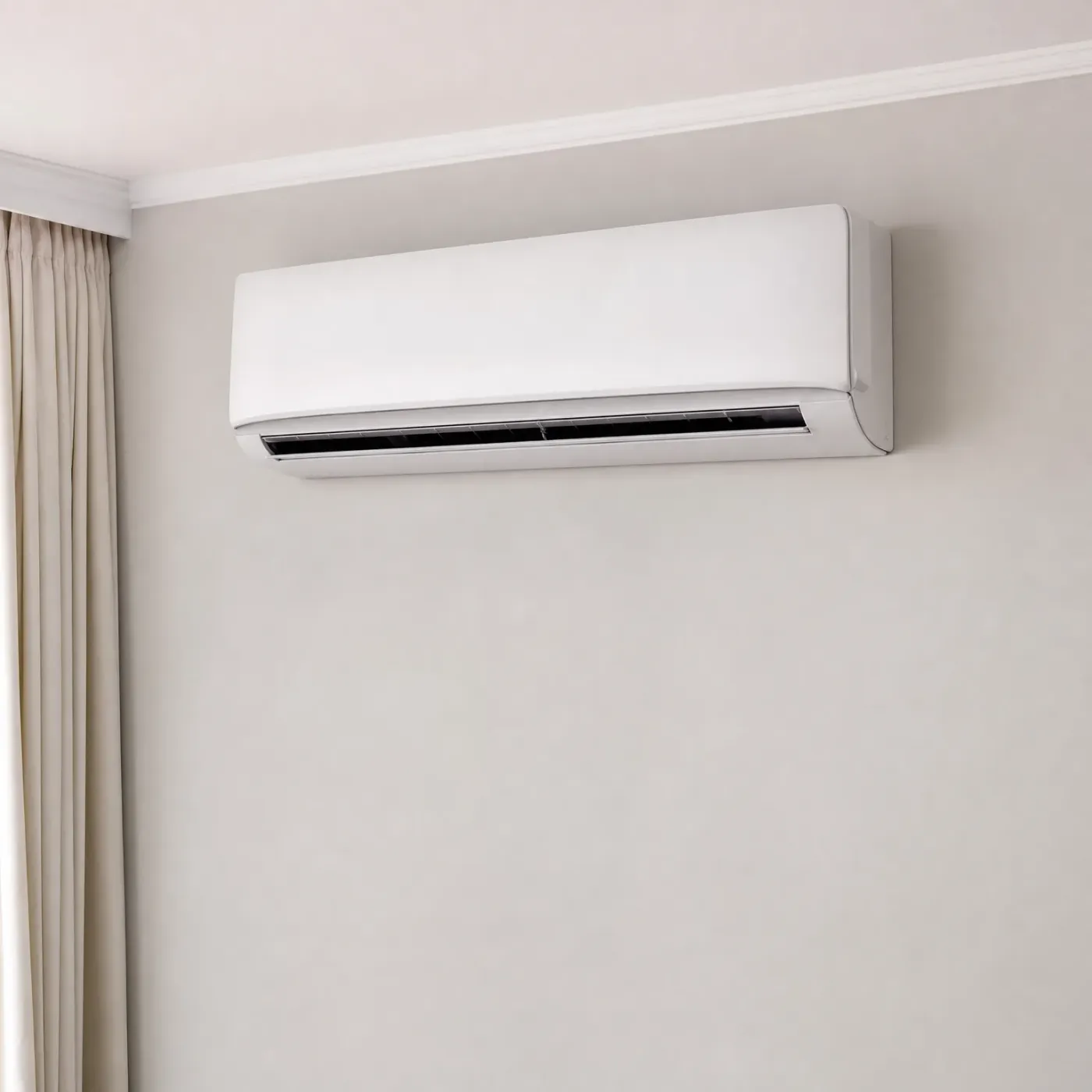
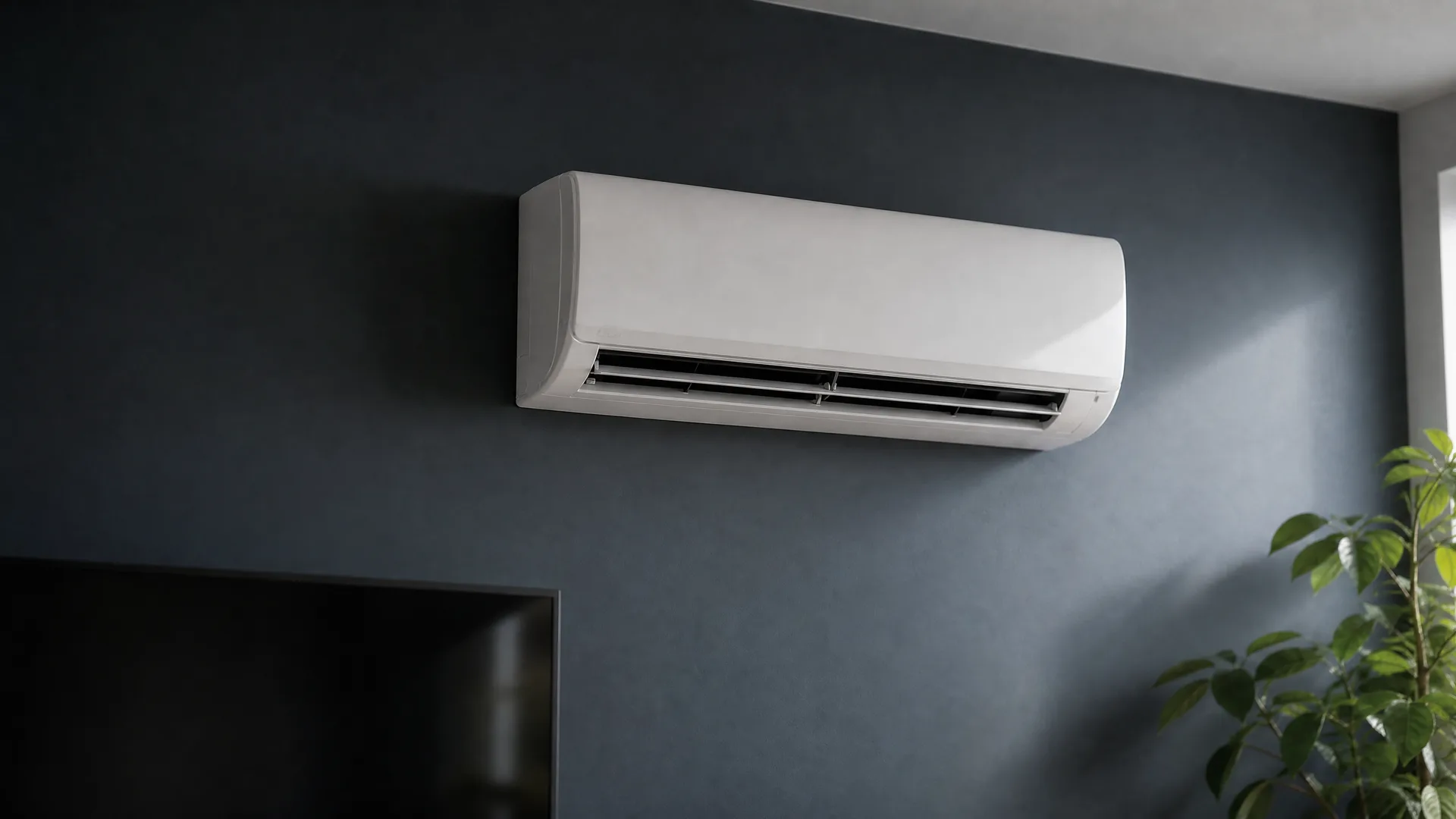
This is what a clean mini split looks like. The casing is bright, the vents are open and clear, and air moves through the room without effort. Behind that panel the coil is clean enough to do its job, so the unit holds the room's temperature through a muggy stretch or a cold snap without running longer than it should.
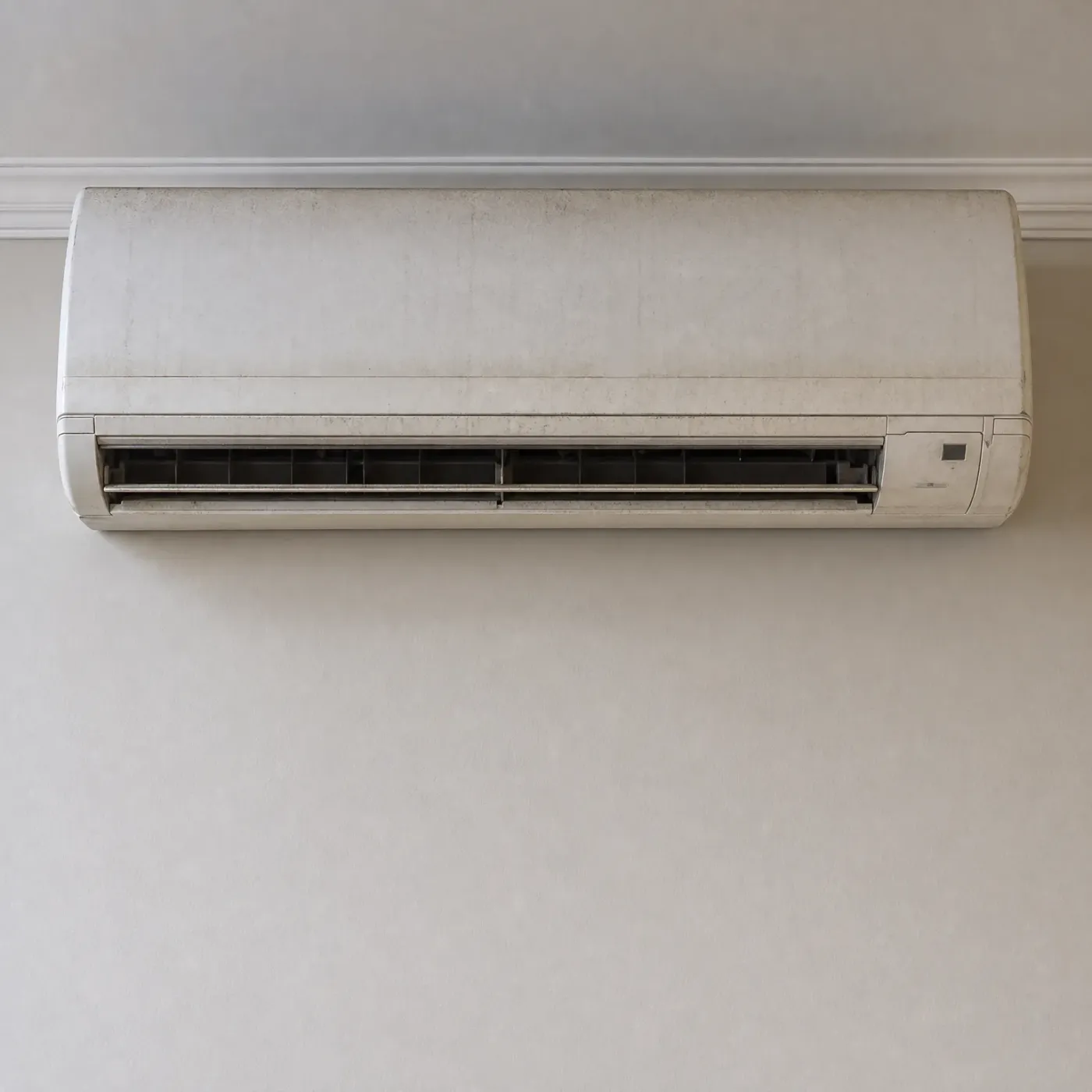
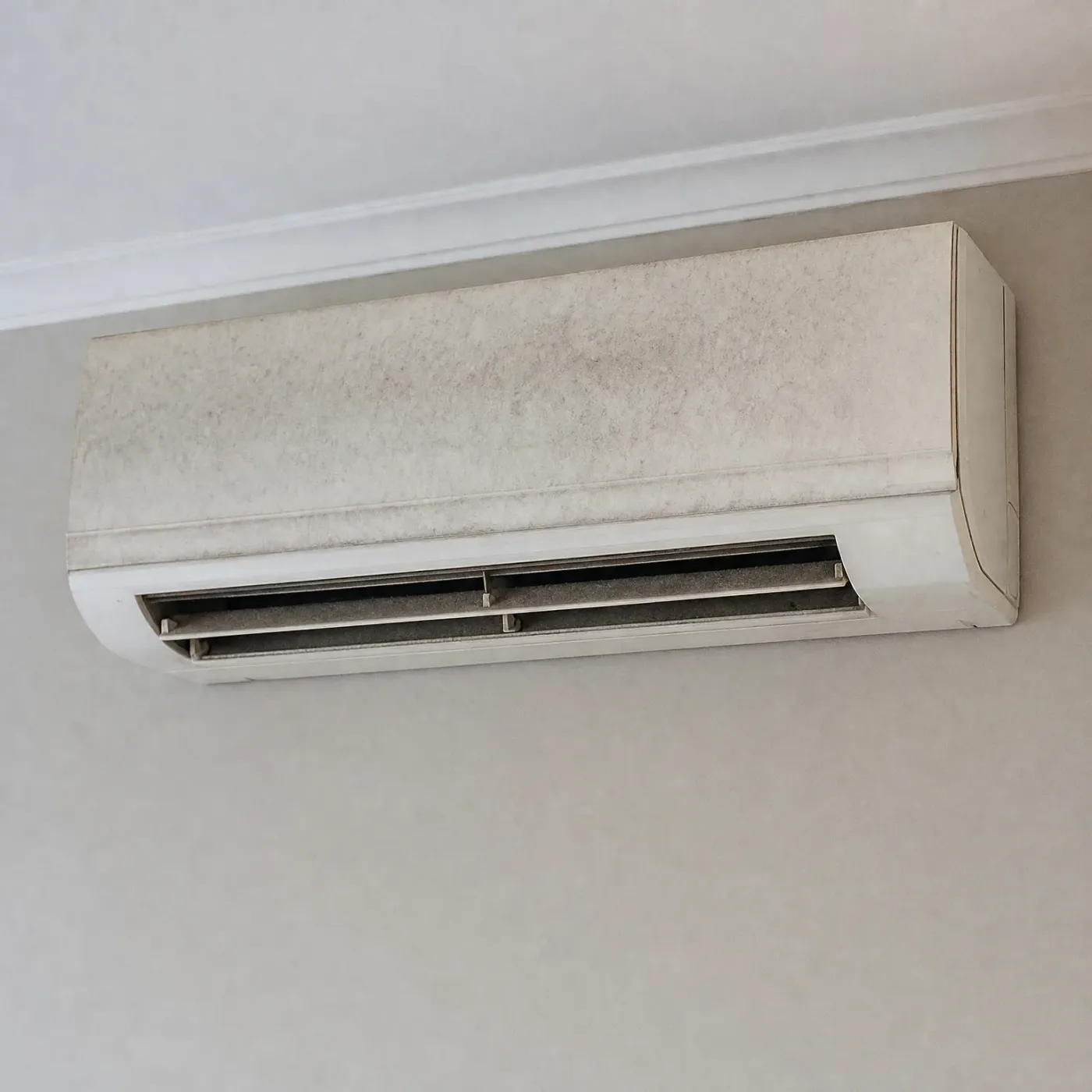
This unit has gone too long without a look. The casing has yellowed and the vents are coated with the same dust sitting on the coil behind them. Airflow drops as that buildup thickens, so the unit runs longer to do the same job, and whatever small problem started this will not fix itself.
Minnesota winters push a mini split's outdoor unit hard, sitting out in snow and well below zero temperatures while the indoor head gets most of the attention. A reader who's careful about catching small problems early wants to know the outdoor half isn't getting skipped over.
A contractor looks at the outdoor condenser as part of the same visit. That means clearing leaves, grass clippings, or ice buildup away from the cabinet so air can move through the coil fins. It means checking that the unit sits level and the mounting is still solid, since ground shift and freeze-thaw cycles can tilt a pad over a Minnesota winter. The fan motor gets checked for noise or wobble, and the refrigerant lines running to the indoor head get inspected for damage where they pass through the wall. An outdoor coil packed with debris cannot shed heat in summer or pull it in during winter, so this part of the tune-up matters as much as anything done inside.
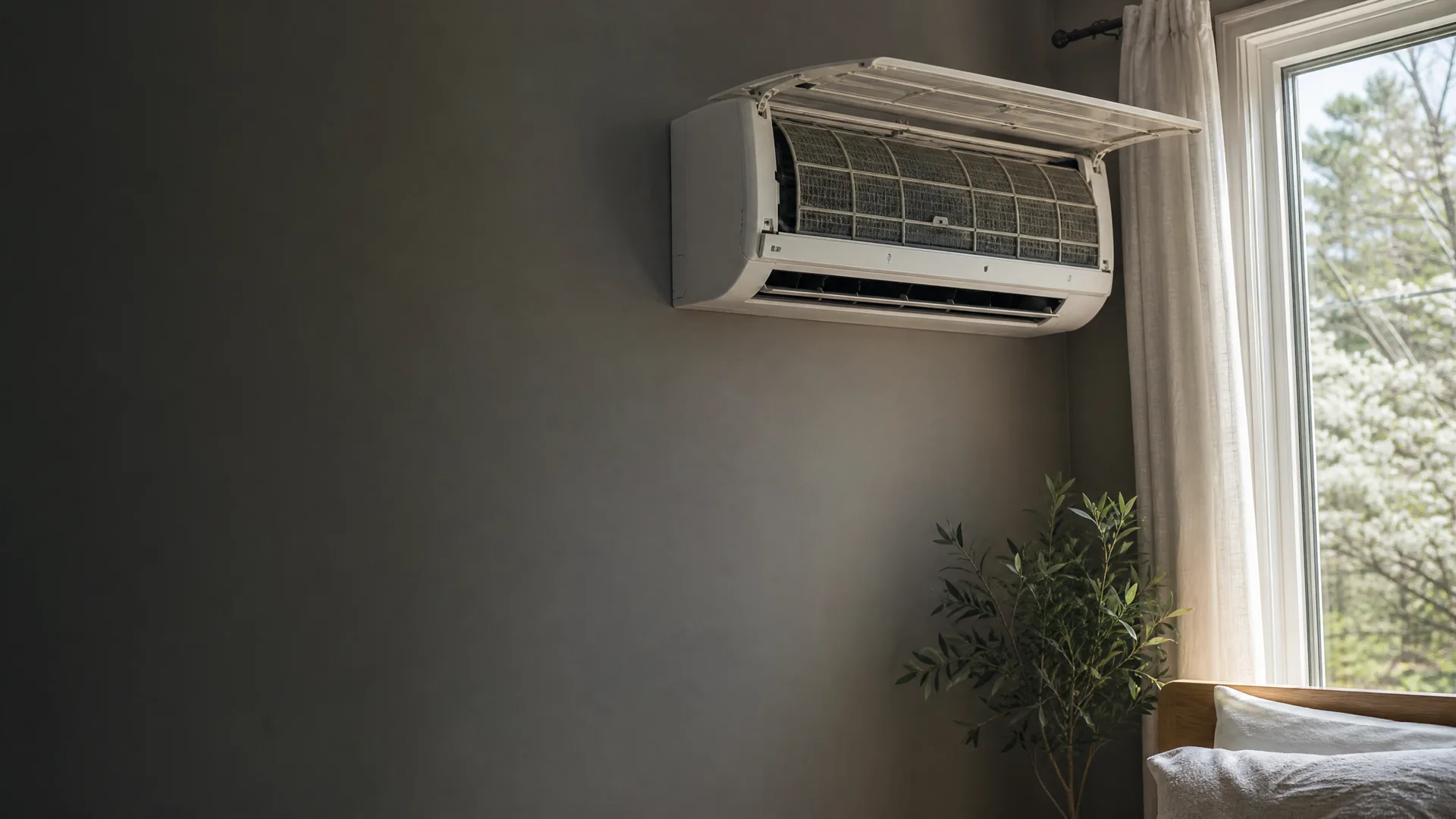
You pull a chair over to the mini split mounted above the dresser, the one in the spare room that caught the afternoon sun most of March. It's a mild day, warm enough you had the window cracked, and you noticed the airflow felt weaker than it should. You pop the front cover up and there it is, the filter screen gray with dust, the kind that's been building for a while. You hold it up to the light from the window and can barely see through the mesh. You set it on the dresser and reach for a rag, already thinking about who you'd even call to look at the rest of it, the coil behind the screen, whatever else might need eyes on it before the warm stretch sets in for good.
Send the request and finding a pro stops being your problem.
There's no charge for the request.
A tune-up catches a dirty filter or a low refrigerant charge before either one forces the system to run harder than it should. Left alone, the same problem costs more to fix and more to run with every month that passes.
Skip the checkup and the unit still runs, for a while. It loses a little capacity in July, a little more in January, and by the time it won't keep up at all, the smaller problem that caused it is long past being a small one.
At 15.83 cents per kilowatt-hour, a mini split pulling extra current because of a dirty filter or a low charge shows up on your bill before it shows up as warm air. Keeping it clean is what keeps that draw down.
EIA-861 2025 statewide residential average
If a tune-up covers one indoor head, a multi-zone system has more than one coil, filter and drain to check, and each zone pulls its own refrigerant charge. A contractor working through a multi-zone setup checks the outdoor unit once, since it's shared, but goes through every indoor head the same way: filter, coil, blower wheel, drain. A house with three zones takes longer to get through than a house with one, simply because there's more equipment to look at.
A single-zone mini split is the simpler visit. One indoor head, one outdoor unit, one refrigerant line set to check for the right charge. The contractor cleans the one coil, clears the one drain, checks the one filter, and looks over the outdoor unit the same as always. There's less ground to cover, so there's less that can be missed. If this is the only mini split in the house, this is the whole visit, not a piece of a longer one.
A gauge set at the service port tells a contractor the refrigerant charge, which matters more than how the air feels on your hand. The blower wheel comes out for a wipe down, since dust buildup there throws the airflow off and makes the unit louder than it should be. The drain line or condensate pump gets flushed, because water needs a clear path out instead of finding its way into the wall. Every electrical connection at both the indoor head and the outdoor unit gets checked and tightened, since a loose one is enough to shut the system off without warning. The line set between the two units gets a look for worn or cracked insulation, since exposed line loses efficiency fast once temperatures drop. The drain pan and filter housing get checked too, for cracks or the kind of mineral buildup that lets water slip past where it's supposed to collect. None of this takes a special occasion. It's what a contractor goes through on a standard visit, in an order that catches the small failures before they turn into a service call.

Minnesota summers don't sit heavy on you the way they do further south. Average dew point across June, July and August runs 59°F, according to NOAA climate data, which is the comfortable end of the scale. Your mini split isn't fighting moisture out of the air all summer the way units in muggier states do, so the coil doesn't load up with the damp grime that comes from wringing humidity out of thick air. That's less for a dirty coil or clogged drain to hide behind. A tune-up still matters, but what it's mostly catching here is dust, a filter that's gone a season too long, or a refrigerant charge that's drifted, not moisture damage.
NASA POWER T2MDEW county cells weighted by homes

A mini split tune-up covers the refrigerant charge, the coil, the filters, the drain, and the outdoor unit, because all of them have to be right for the system to hold a room through a Minnesota winter or a warm July stretch. Catching a dirty filter or a slipping charge early is what keeps the unit running the way it did when it was new, instead of letting it limp through the season on more current and less airflow.
If you've read this far, you're probably the kind of person who'd rather deal with a weak airflow or a staining wall now than wait for the unit to quit on a cold morning. That instinct is worth acting on. Send in your information and you'll be matched with a contractor who services mini splits in your area, and they'll reach out to go over what your system needs.

Get the right pro for your mini split