Why your mini split blows cold air in Minnesota

Step 1 of 3: Equipment

A mini split blowing cold air when it should be heating usually means it's stuck in the wrong mode or it's losing the fight against the cold outside. Set to heat but still feel a cool draft, check the remote first. Many units default back to fan or cool mode after a power blip, and that alone will leave you standing in front of a vent that feels like winter instead of relief from it. If the mode is right and it's still cold, the outdoor unit may be icing over. In Minnesota's winters, frost builds on the outdoor coil, and the system has to run a defrost cycle to clear it. During that cycle it blows cold air on purpose, for a few minutes, before switching back. If that cold air lasts longer than a few minutes, or never warms back up, something in the defrost control or the refrigerant charge likely needs a look.

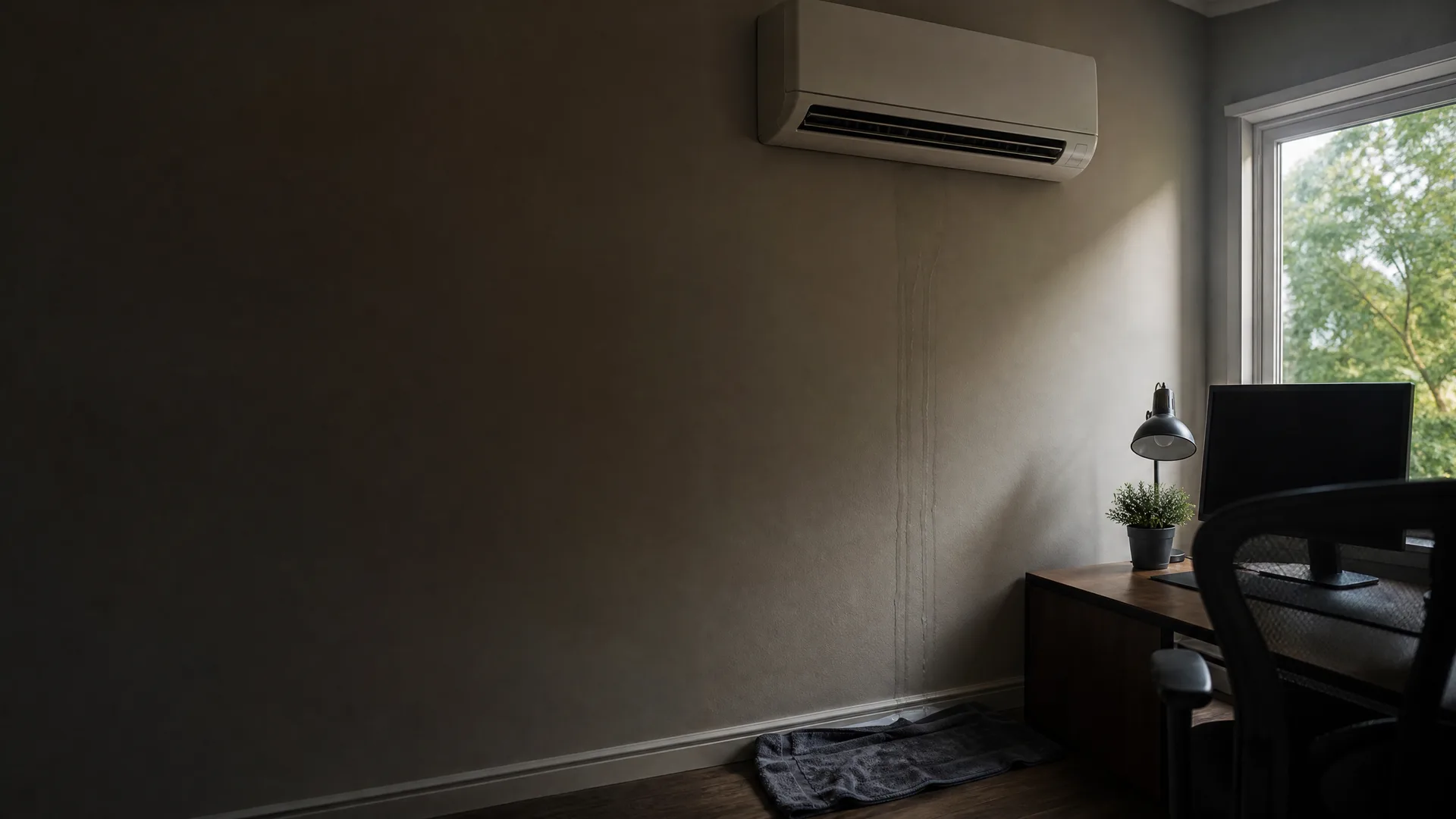
A dim room with a wall-mounted mini-split air conditioner above a faint vertical stain running down the wall, a folded grey towel on the wood floor at the baseboard, and a desk with monitor, lamp, small plant and office chair by a window.

You're at the desk working through the afternoon when you feel it under your feet before you see it. The carpet by the wall is damp. You look up and there's a wet streak running down the wall under the indoor unit, following the line of the bracket down to the baseboard. You grab a towel and lay it under the drip, same as you did the last time something leaked. Outside it's a warm, dry Minnesota afternoon, nothing like the humidity people complain about further south, which makes the water on the wall feel out of place. The unit is still running, still blowing air, just not doing what it's supposed to.
Wrong Mode or Losing to the Cold

Mode and settings

  • The remote shows a snowflake instead of a sun, which means it's actually set to cool even if someone meant to switch it over.
  • Some remotes need the mode button pressed more than once to cycle past fan and dry before landing on heat.
  • A thermostat set below room temperature will call for cooling no matter what the indoor unit is doing.
  • A dead remote battery can leave the unit locked on whatever mode it last ran, often cool from last summer.
  • Timer or schedule settings from warm weather can still be active and override a manual mode change.

Losing against the cold

  • Below a certain outdoor temperature, the outdoor unit can't pull enough heat from the air, so what little it moves feels cold at the vent.
  • Frost building up on the outdoor coil blocks airflow, and the unit can struggle to heat even while it's running.
  • A clogged or iced outdoor unit forces the system to work harder for less heat, which shows up as cooler air inside.
  • A refrigerant leak drops the system's heating capacity, so the air coming out never gets properly warm.
  • Snow or ice packed around the outdoor unit's base restricts airflow and cuts into how much heat it can deliver.
A woman in a cream cowl-neck sweater sits by a window with snow outside, in a dimly lit living room with a sofa, lit lamp, mirror, candles and a fireplace.
A woman in a gray turtleneck sweater sits beside a large window looking out at snow-covered evergreen trees, in a dimly lit living room with a lit fireplace, lamps, couch and houseplant.
A woman in a cream turtleneck sweater stands beside a large window with snow-covered ground and bare trees outside, in a dimly lit living room with lamps, a sofa and framed art.
A woman in a grey cowl-neck sweater stands indoors near a window, looking out at falling snow, with a lamp, framed picture and couch in the warmly lit room behind her.

The indoor fan isn't the thing making heat. It just moves air across a coil that's carrying warm refrigerant, and that refrigerant got warm by pulling heat out of the air outside your house. That's why the fan waits a minute or two after you turn the heat on. It's giving the coil time to warm up so it's not pushing cold air at you right away. Once the outdoor temperature drops far enough, the outdoor unit has to stop and run a defrost cycle to clear frost off its coil, and during that stretch the system can feel like it's blowing cool air even though it's still trying to heat your house. Cold outside air just doesn't carry as much heat to begin with, so in a hard Minnesota freeze the whole process slows down and the air at the vent runs cooler than normal. A dirty or iced-over outdoor coil makes that worse, and so does a refrigerant charge that's run low. Either one leaves the system working without the heat to show for it.

How a mini split actually heats

  • A mini split in heat mode warms refrigerant inside the indoor coil, so the fan should only run once that coil is actually warm.
  • Most units hold the fan off for a minute or two after a call for heat so they're not blowing cold air across the room first.
  • Below a certain outdoor temperature the outdoor unit has to run a defrost cycle, during which it may briefly act like it's blowing cool air even though it's heating.
  • The outdoor unit pulls heat from the outside air even in cold weather, and in a hard Minnesota freeze that process slows down and the indoor air feels cooler than it should.
  • A dirty outdoor coil or a coil caked in ice cuts how much heat the refrigerant can pick up before it ever reaches the indoor unit.
  • A refrigerant charge that's low makes the whole cycle work harder for less heat, and the air at the vent ends up barely warm instead of hot.
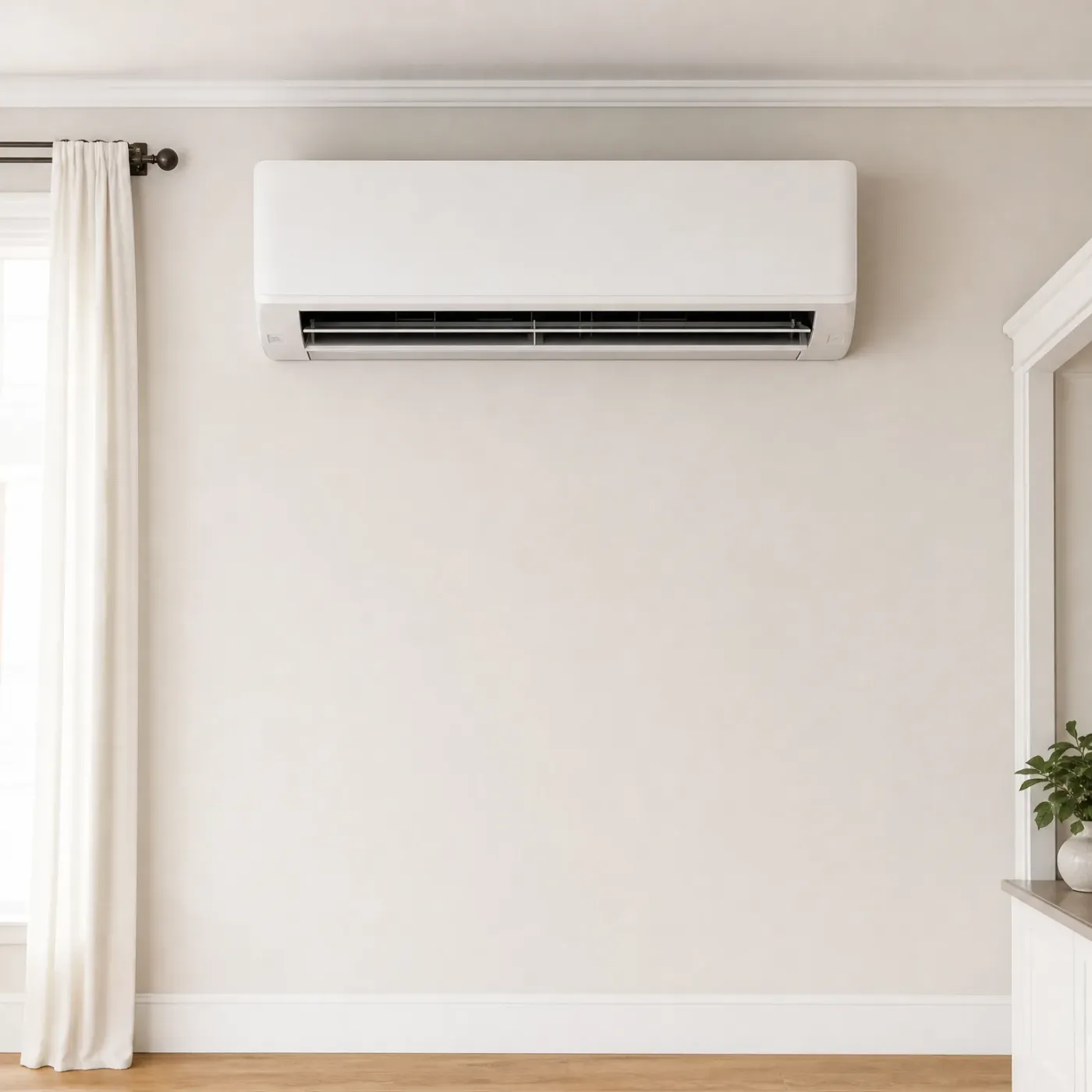
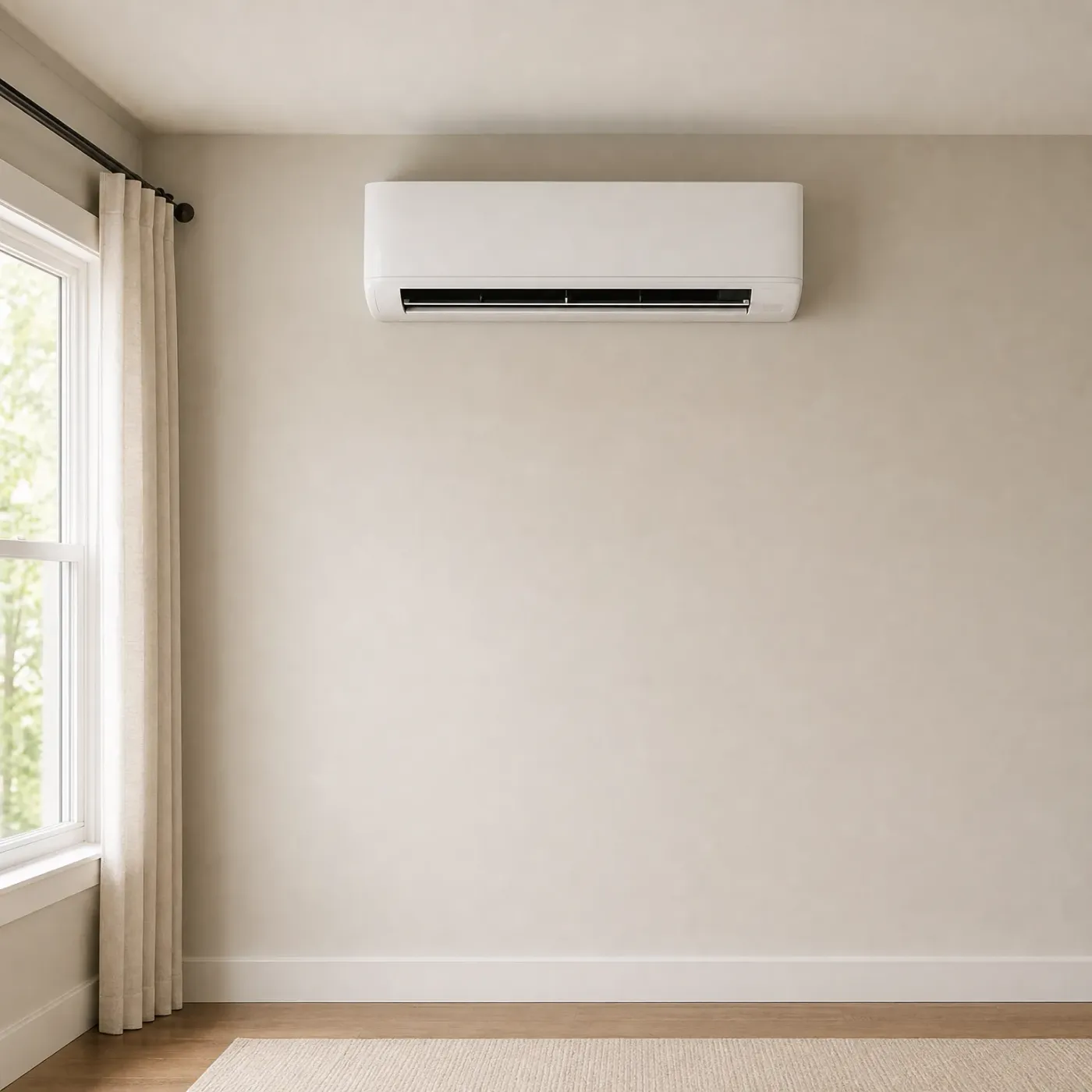
A white wall-mounted mini-split air conditioner on a beige interior wall, with a cream curtain and window at left, a potted plant on a ledge at right, and a wood floor below.
Running clean, the coil behind this panel heats up fast and the fan only turns once it has.
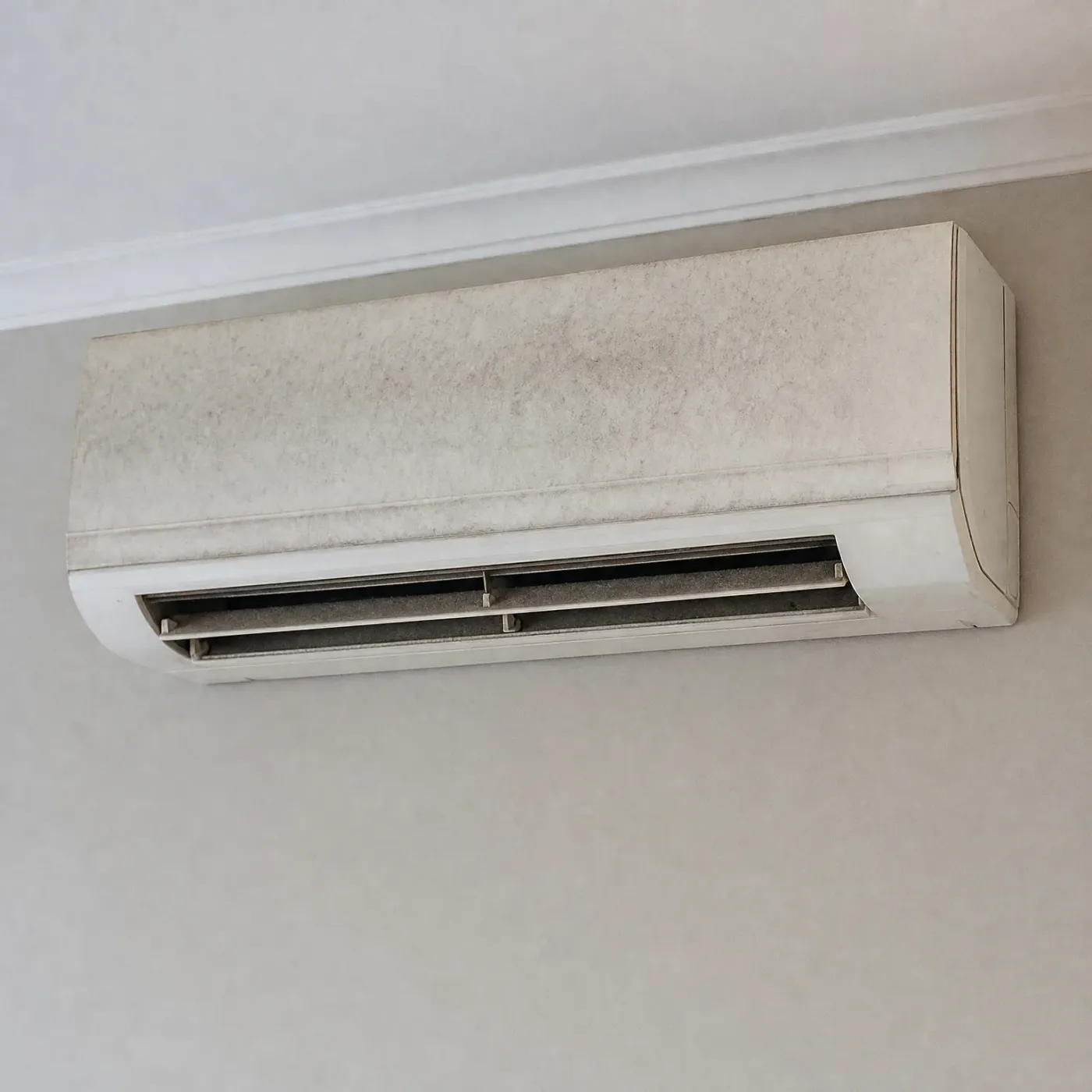
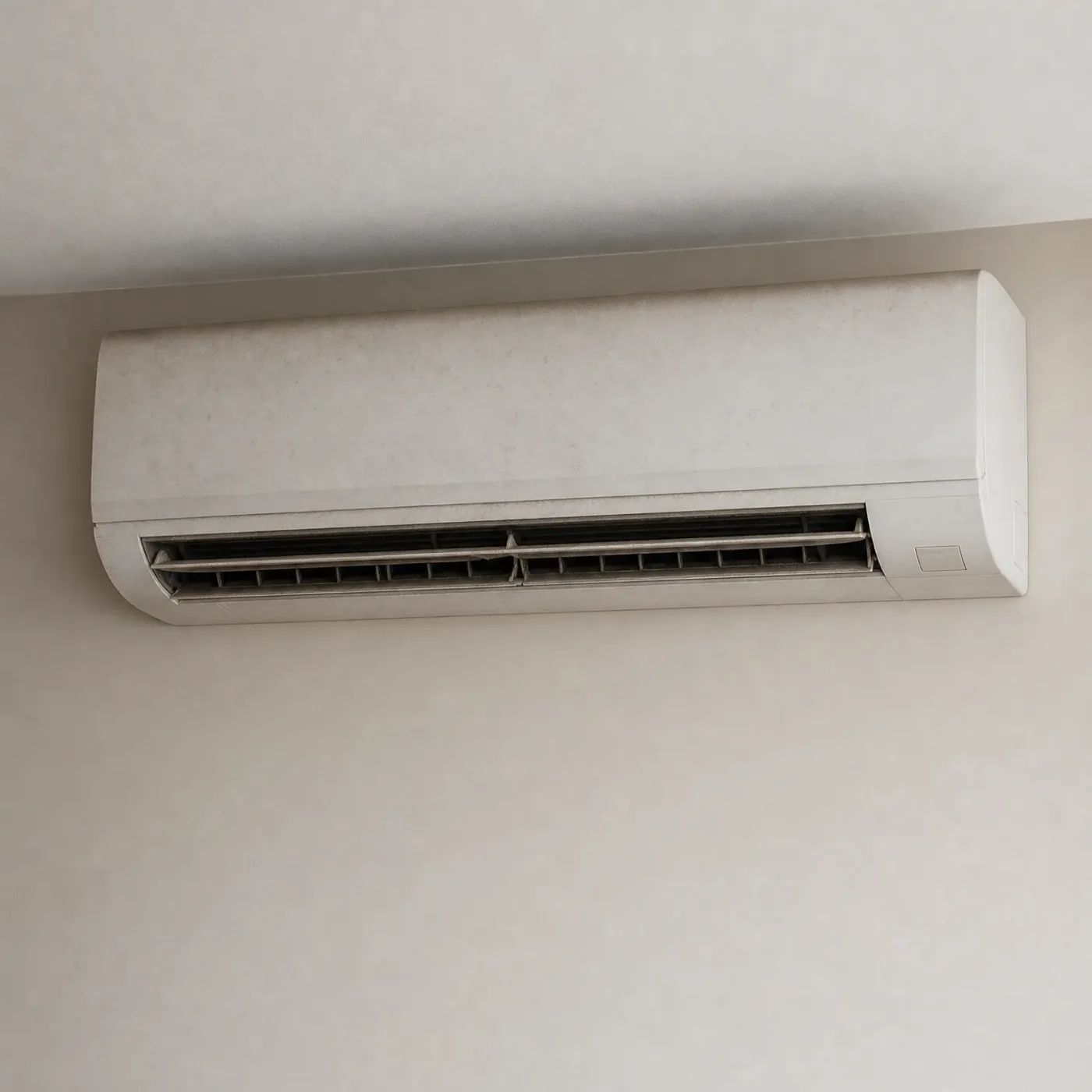
A dusty, discolored white wall-mounted mini-split air conditioner unit installed high on a plain interior wall below a white ceiling molding.
Caked in dust like this, the coil can't hold heat long enough, so the fan blows cold before it catches up.

Is your mini split keeping up with a Minnesota cold snap

You turn the thermostat up and the air coming out still feels cool, or it takes a long time to warm the room at all. Maybe the outdoor unit is caked in ice or buried after a snowfall. Maybe you notice the indoor unit running almost constantly without the room ever quite catching up. If gas heat is your main source and the mini split handles a bonus room or an addition, that room is the one that stays cold while the rest of the house is fine. Left alone through a hard winter, a unit struggling like this can ice over completely or strain parts that weren't built to run flat out for weeks.

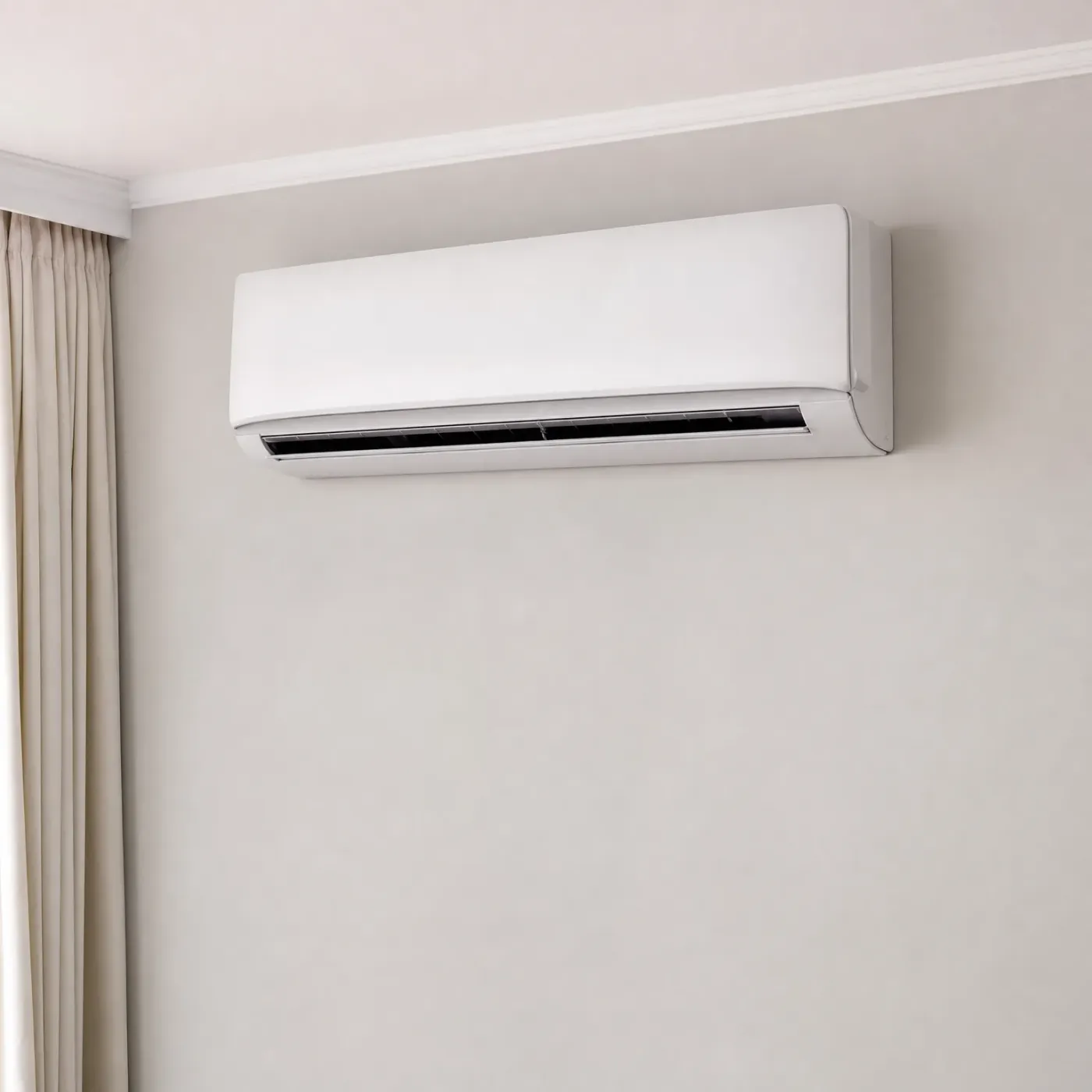
A white wall-mounted mini-split air conditioner near the ceiling of a room with light gray walls, white crown molding, and a beige curtain at the left edge.

Clean and clear

The coil behind this panel is free of dust, and the wall under the unit is dry. The outdoor unit outside has room to pull in cold air without fighting through ice or snow piled against it. Heat moves through the system the way it's supposed to.

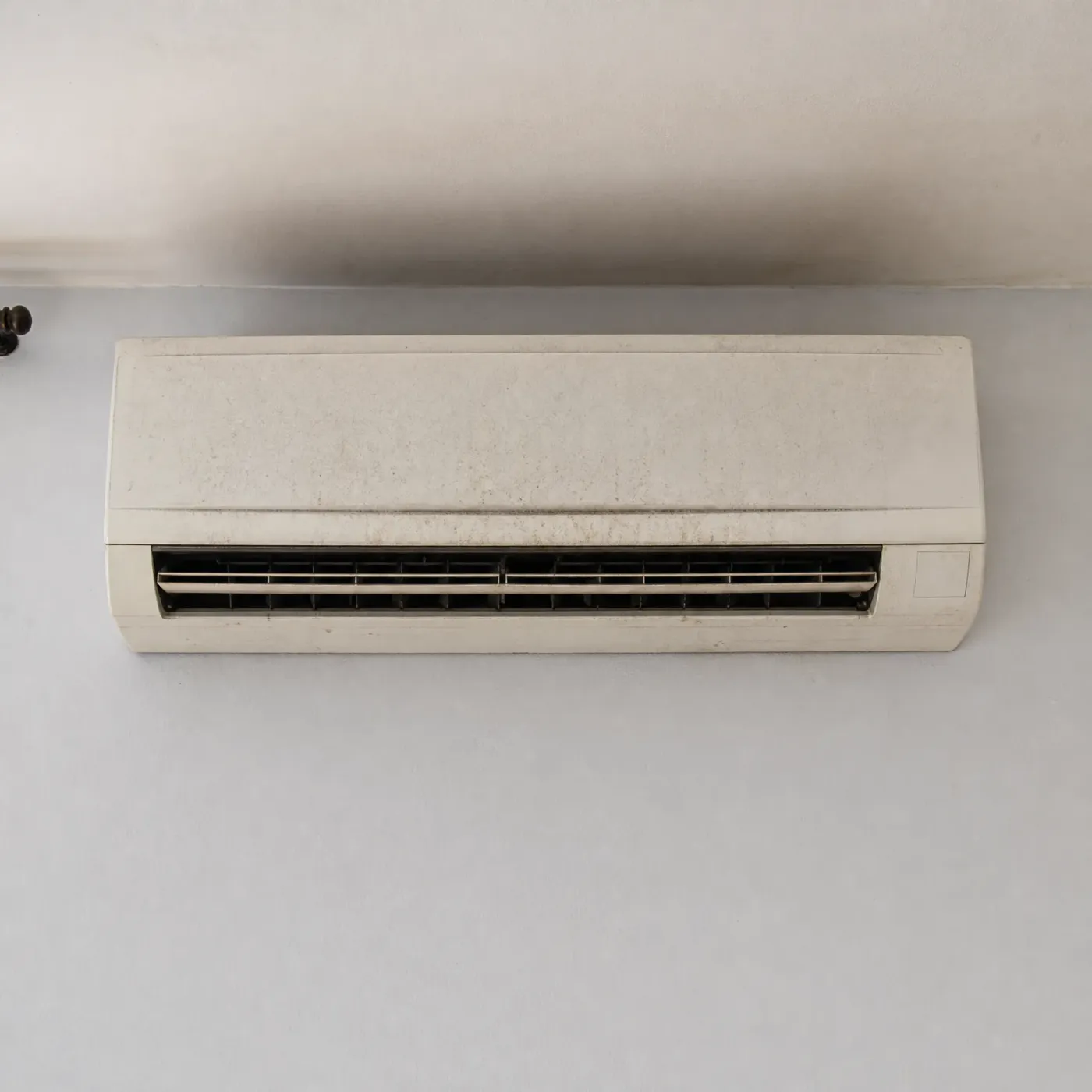
A dusty beige wall-mounted mini-split air conditioner indoor unit installed high on a plain light-colored wall below the ceiling.

Dirty and streaked

Dust and grime cover the face of this unit, and the wall above it has gone dark where moisture has been sitting against it. A coil this soiled can't hold heat long enough before the fan kicks on, so what you feel is a cold draft instead of warm air.

A white wall-mounted mini-split air conditioner indoor unit installed near the ceiling on a plain light-colored wall, with its horizontal outlet vent and louvers visible.
Before you get your mini split repair
A white wall-mounted mini-split air conditioner on a beige interior wall, with a curtained window on the left and wood flooring with a light rug below.
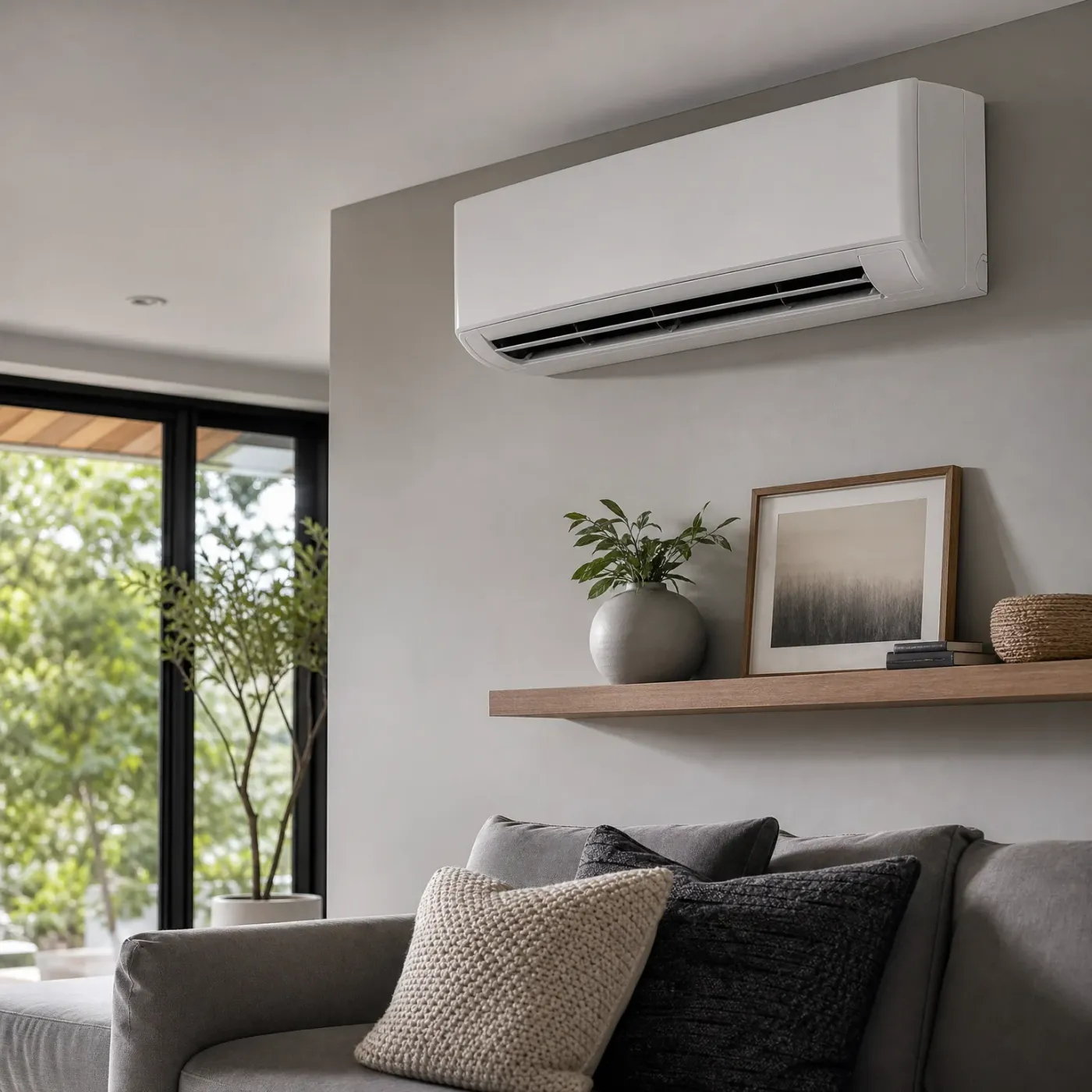
After you get your mini split repair
A white wall-mounted mini-split air conditioner near the ceiling of a living room with a gray sofa, knit cushions, a wooden floating shelf holding a plant in a round vase, a framed print and a woven basket, and a large window showing green trees.

Get the right pro for your mini split

Send the request today and let a mini split pro reach out to you.

A local pro who knows mini splits gets your details and gets in touch.

Get a mini split pro

Asking costs nothing, and the choice to hire stays yours.

Power costs 15.83 cents per kilowatt-hour statewide

At 15.83 cents a kilowatt-hour, a mini split that's stuck blowing cold air is still drawing power the whole time it runs, just not warming your room for it. Letting it run that way through a Minnesota winter adds up on the bill without any heat to show for it.

EIA-861 2025 statewide residential average

Why the fan runs cold

  • A defrost cycle reverses the system briefly to melt ice off the outdoor coil, and the indoor fan can blow cool air during that time.
  • The outdoor unit shifts into defrost on its own when frost builds up, usually for ten minutes or less before heat resumes.
  • A compressor that's struggling in deep cold takes longer to bring the refrigerant up to heat, so the fan runs on cooler air while it catches up.
  • Short cycling, where the unit shuts off and restarts over and over, keeps the coil from ever reaching full heat before the fan kicks on.
  • A low refrigerant charge means the indoor coil can't hold enough heat, so the air coming out stays lukewarm or cool no matter what the thermostat says.
  • Some units pause the compressor during a defrost cycle but leave the fan running, which is what you're feeling as a cold draft.

A mini split heats by moving warm refrigerant through the indoor coil, and the fan is only supposed to push air once that coil has caught up. In a Minnesota winter, frost builds on the outdoor coil fast enough that the system has to stop and deal with it. It reverses itself for a few minutes, sends hot gas outside to melt the ice off, and during that stretch the indoor side has nothing warm to blow. On some units the fan keeps turning anyway, so what you feel at the vent is that defrost cycle, not a broken system. Deep cold asks more of the compressor too. It has to work harder to bring refrigerant up to temperature, and if it's struggling, the coil stays cooler longer while the fan is already running. A unit that short cycles, shutting off and restarting instead of running a full heating cycle, never gives the coil time to get properly warm before the fan kicks back on. And if the refrigerant charge has dropped low, the coil can't hold enough heat no matter how long the system runs, so the air stays lukewarm or cool regardless of what the thermostat is set to. Some of this is the system doing what it's built to do. Some of it is a sign something underneath needs attention.

A bearded man in a plaid flannel shirt sits indoors looking out a window at snow-covered trees, with a steaming mug on the sill and wooden kitchen shelves behind him.
A smiling man in a dark blue T-shirt sits on a light gray sofa in a living room with a wooden shelf and window behind him, with a laptop edge visible in the foreground.
A two-story cream-colored house with horizontal siding and a gray hipped roof, flanked by large green trees and shrubs, with a concrete walkway crossing a lawn to a wet street in the foreground.

The cold air problem shows up in winter, but summer here explains why the outdoor unit works harder than people expect. Minnesota summers run a dew point around 59°F, which is on the dry side, not the thick, sticky air you get further south. That matters because a mini split pulling double duty, cooling through summer and heating through winter, doesn't get much of a break from the moisture load in July. By the time cold weather hits, any dust on the coil or strain on the outdoor unit from a hard summer can already be working against it, which shows up later as a weak heat cycle and that cool draft at the vent.

NASA POWER T2MDEW county cells weighted by homes

A woman stands in the open doorway of a white stucco house holding the dark door, facing a man in a black cap and shirt seen from behind in the blurred foreground, with a potted flowering plant beside the entry.

Cold air from a mini split has a reason behind it

A mini split blowing cold air when you want heat is telling you something specific: wrong mode, a coil that can't hold heat, ice on the outdoor unit, or a defrost cycle doing its job. Each of those points to a different fix, and by now you've got a sense of which one matches what's happening at your place.

You don't have to land on the exact cause yourself. Send in what you've noticed and a contractor who works on these systems gets matched to your situation and reaches out to you. From there, figuring out which of these it is stops being something you have to carry.

A dark ceramic mug on a round wooden table beside a light grey sofa with a woven cushion and knit throw, with a window, potted plant, floor lamp and wooden cabinet blurred in the background.
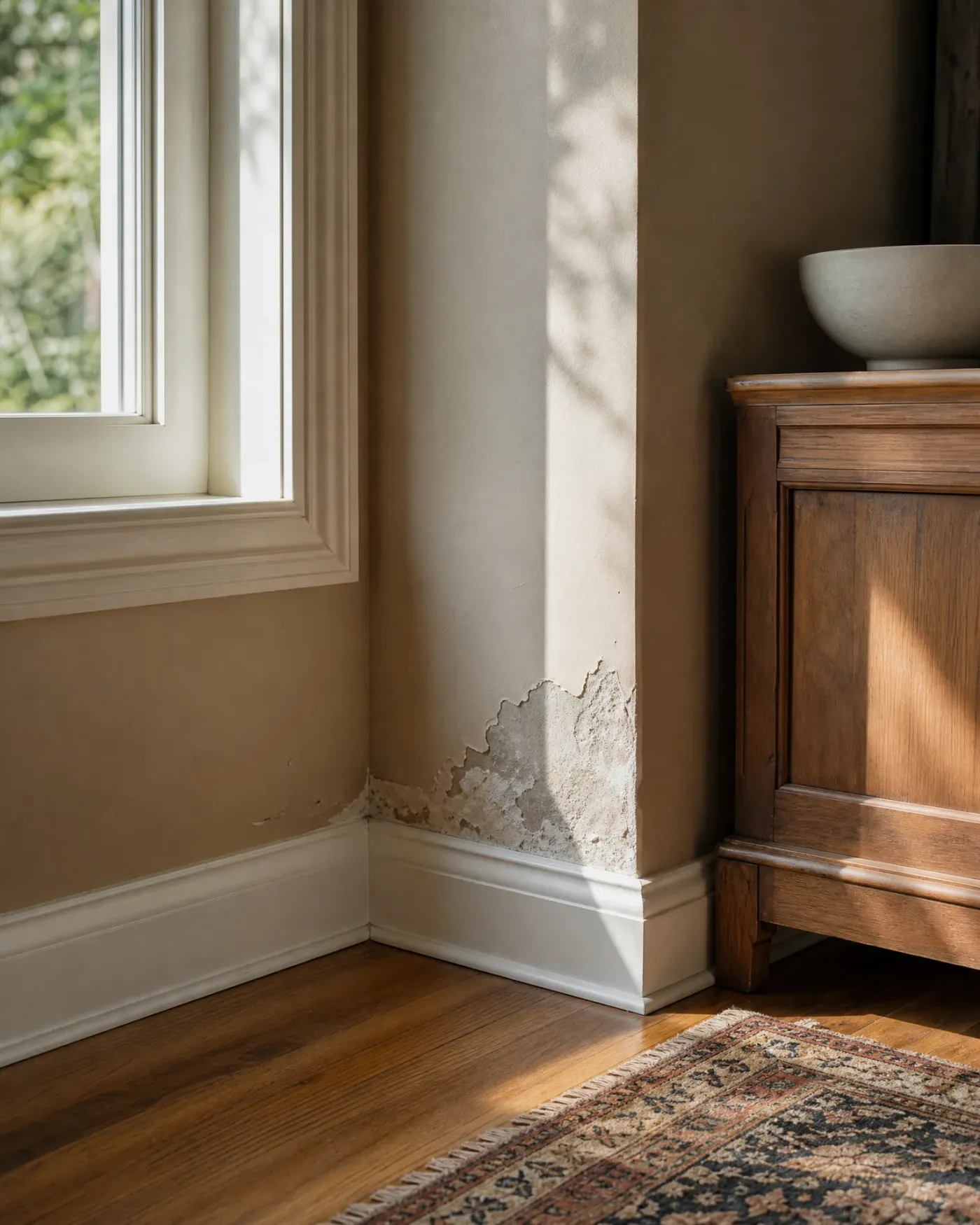
Interior room corner with sunlight from a window, showing peeling paint and damaged plaster on the wall above a white baseboard, a wooden cabinet with a pale bowl on top, hardwood floor and a patterned rug.
Interior corner of a room with tan walls, white profiled baseboard and window trim, a wood-plank floor in sunlight, and green foliage visible through the window.
An empty room corner with cream walls, white baseboard, two windows with deep sills showing green foliage outside, and a wood plank floor lit by sunlight.
Empty room corner with beige walls, white beadboard wainscoting, chair rail and baseboard, a window with green foliage outside, and sunlight casting leaf shadows on the wall above a wood floor.
Sunlit room corner with a multi-pane window, beige walls, white baseboard, wood floor with a woven rug, and a dark wooden cabinet holding a ceramic table lamp below a framed picture.

A pro who works on mini splits

Get the mini split repair search off your mind today.

Connect with a pro

No fee to send it, and nothing to sign.