Light frost, melts on its own
A thin white coating on the coil that clears during the unit's normal defrost cycle is nothing to worry about. It should be gone within an hour or two.
Ice on your mini split's outdoor unit in winter is normal up to a point. The unit pulls heat out of cold outside air, and moisture in that air freezes on the coil as it does. Minnesota winters give it a lot of cold, damp air to work with, so some frost is expected, and most units run a defrost cycle on their own to melt it off every so often. The problem is when the ice builds up faster than it melts, or when it doesn't go away between cycles. That usually points to something keeping the coil from doing its job right: low refrigerant, a fan that isn't moving enough air, a dirty coil, or a defrost sensor that isn't telling the unit to kick into defrost when it should. Left alone, a unit fighting ice like this loses heating power and has to work harder to make the heat you're getting, right when you need it most.
A mini split runs a defrost cycle on its own, reversing briefly to melt that coating before it builds into a real problem.
Ice that keeps coming back, or spreads past the coil onto the lines and the ground below, means the defrost cycle isn't keeping up with a problem underneath it.




If the outdoor unit ices over and stays that way, your mini split loses its grip on the cold air outside and can't pull heat from it the way it needs to. You'll notice the room it serves running cooler than you set it, or the unit running long stretches without catching up. On a January night in Minnesota, that's not a small thing to lose. If the mini split is your only heat in that room, a stuck defrost cycle leaves you without a backup while the ice keeps building on the coil and the lines underneath it.
Ice that doesn't clear adds weight and strain to parts not built to carry it. The coil can bend under it, the fan blades can catch on a buildup near the housing, and water from melting ice can get into electrical connections it was never meant to reach. Left alone through a Minnesota winter, that's months of refreezing and thawing on the same stressed parts. A repair now means looking at a coil and a defrost control. Left too long, it can mean a compressor that's been running against a block of ice for weeks.


A thin white coating on the coil that clears during the unit's normal defrost cycle is nothing to worry about. It should be gone within an hour or two.
Thick ice, ice on the lines or ground, or a unit that stays frozen between defrost cycles means something underneath isn't working right.
You've watched the outdoor unit go through its defrost cycle, the ice clears for a bit, and then it's back. If it were working the way it's supposed to, that cycle would keep the coil clean through the worst of a Minnesota winter. When it doesn't, something is making the unit lose ground faster than the defrost cycle can recover it.
The defrost cycle works by reversing the system briefly to send warm refrigerant through the outdoor coil. If the charge is low, that warm refrigerant can't carry enough heat to melt what's built up, so the ice comes back faster than the cycle clears it. The same thing happens if the defrost sensor or control board is misreading the coil's temperature and cutting the cycle short, or running it too rarely. A blocked coil, from ice already packed into the fins, makes it worse, because the warm refrigerant can't reach the parts still frozen. None of this clears on its own. A contractor needs to check the charge and the controls to find which one is failing.

Summer here isn't the problem, but it sets up what winter asks of your mini split. NOAA's data puts the average summer dew point across Minnesota at 59°F, which is on the dry side as these things go. That means your mini split isn't fighting heavy, wet air all summer, so the coil and the defrost drain aren't dealing with much moisture load during the warm months. The trouble comes later, when winter air is cold and damp and that coil has to pull heat from it anyway. If you're seeing ice that won't clear, it's worth having someone look at the unit instead of guessing. That usually means calling a few contractors, explaining the ice pattern each time, and sorting through different quotes before you even get someone out there.
NASA POWER T2MDEW county cells weighted by homes
A mini split that keeps icing up through a Minnesota winter usually has something specific going wrong with it, a low refrigerant charge, a defrost sensor that's stopped reporting right, or a fan motor that's slowed down and can't move enough air across the coil. Figuring out which one takes someone who can open the unit up and test it, not just watch it from the window. You could start calling contractors yourself, explaining the ice, the room temperature, how long it's been happening, then doing it again for the next company and the one after that while you compare what each one quotes you. Or you can hand that off now, while the unit is still running enough to limp through, rather than waiting until it quits in the middle of a cold snap and you're choosing whoever can come fastest. The part behind the ice isn't going to fix itself before spring.
A mini split low on charge can't move enough heat to keep the coil above freezing between defrost cycles, so ice builds faster than the unit can clear it. This isn't something you top off like a car. The lines have to be checked for the leak that let it drop in the first place, then recharged to the amount that unit calls for. Low charge also makes the compressor work harder than it should, all winter, every time it runs.

The outdoor fan pulls cold air across the coil so the unit can draw heat from it. If that motor has slowed down or the blades are dragging, less air moves, the coil runs colder than it should, and frost forms faster than the defrost cycle can keep pace with. You might notice the fan sounds different than it used to, or barely turns when you'd expect it spinning hard against a Minnesota wind.
A mini split that's icing up and running its defrost cycle more often pulls more power doing it, and at 15.83 cents a kilowatt-hour that shows up on your bill before you even notice the ice. Getting it fixed brings both back down.
EIA-861 2025 statewide residential average
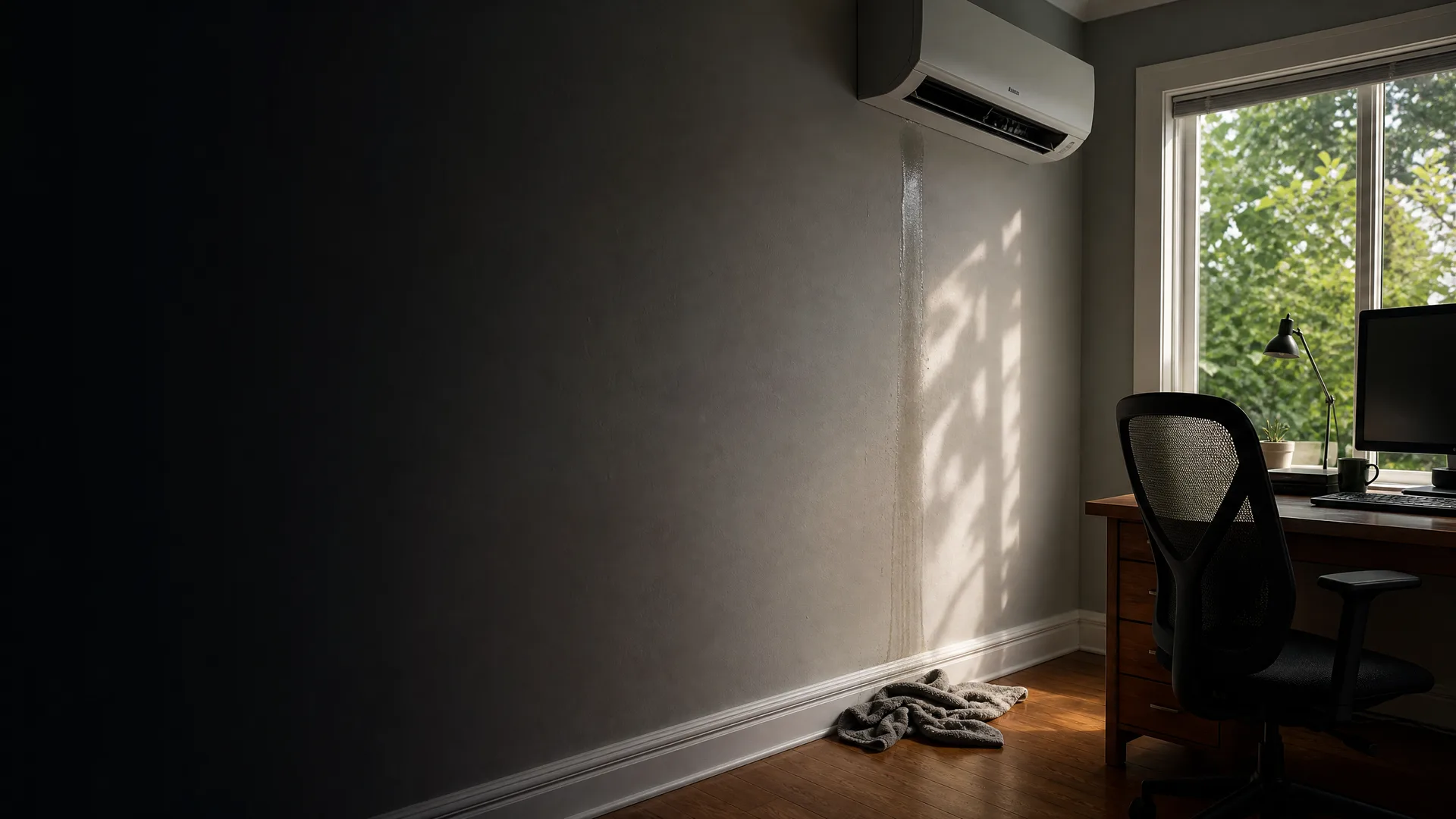
You're at the desk in the home office on a July afternoon, the window bright, and you notice the wall under the mini split has a wet streak running down it. You grab a towel and set it on the floor where the water's pooling. The air out of the unit still feels fine on your face, and outside the sky is clear, nothing close to a storm. You wipe the wall down and the streak comes back within the hour, a thin line of water tracking the same path, and the towel is damp again by the time you check it.

A little frost in a Minnesota winter is just the unit doing its job. Ice that keeps building back, or spreads down the lines, means something inside has stopped working the way it should, and no amount of waiting will fix that. You already know which one you're looking at by now.
Once you've seen enough, the next step isn't more watching. It's getting someone qualified to look at the unit itself, rather than spending evenings searching for who does this work nearby, calling a few, and explaining the same ice and the same noises to each one. Share what you've noticed once, and a contractor who handles mini splits in Minnesota winters will reach out to you directly about it.


Matched to your mini split job