
Why your mini split leaks water in a Minnesota winter
That water on the floor or dripping from the indoor unit usually means ice built up on the outdoor unit and then melted. In a Minnesota winter, the outdoor coil can frost over as it pulls heat out of cold air, and the unit is supposed to run a defrost cycle to clear it. When that cycle doesn't fire right, or the condensate drain line is frozen or blocked, the melt has nowhere to go but down into the indoor unit and out onto your floor. It can also mean the drain line itself froze solid somewhere between the unit and the outside, backing water up. Either way, it's not a sign to just mop up and wait. Left alone, a blocked drain or a bad defrost cycle keeps sending water where it shouldn't go, and that water sitting near electrical parts is the real risk.
Power costs 15.83 cents per kilowatt-hour statewide
That defrost cycle runs on electricity, not gas, since a mini split has no other way to melt the ice off the coil. At 15.83 cents a kilowatt-hour, a unit defrosting properly costs you little. One that's icing up over and over because of a bad sensor or low refrigerant runs that cycle far more than it should, and you pay for every extra round.
EIA-861 2025 statewide residential average




Why is water dripping from my mini split right now
You probably noticed it near the indoor head: a drip on the wall, a damp spot on the floor, maybe a slow drive you can hear if the room is quiet. Outside, the unit may have a thick crust of ice around the bottom or along the coil fins instead of the light frost that melts off on its own. If the water keeps showing up night after night, it's not drying out between cycles, and that ice is also blocking airflow the unit needs to heat your home. Left alone through a Minnesota winter, that means less heat reaching the room and water finding its way into the wall or floor underneath.


How the defrost cycle actually works
- The defrost cycle reverses the refrigerant flow, sending hot gas through the outdoor coil to melt ice off it.
- While defrosting, the outdoor fan stops, so heat goes to melting the coil instead of blowing away.
- Meltwater is supposed to drain out the base pan through a small hole, not run back toward the indoor unit.
- A drain hole clogged with dirt or iced shut forces that water to back up and find another way out.
- The indoor unit has its own condensate pan and drain line under the coil, and a clogged or sagging line will overflow there too.
- If the outdoor temperature sensor reads wrong, the system may skip defrost or run it too briefly to clear the coil.
A mini split heats your house by pulling heat out of outside air, and in a Minnesota winter that air is cold enough that the outdoor coil frosts up. The system handles this on its own. It briefly reverses the refrigerant cycle, which sends hot gas out to the outdoor coil instead of the indoor one. That heat melts the frost, and for the minute or two this takes, the outdoor fan shuts off so the heat isn't blown away before it does the job. All that meltwater is supposed to drip down into a base pan and out through a small drain hole at the bottom of the outdoor unit. That's the part that fails most. Dirt, leaves, or just ice can plug that hole, and once it's blocked the water has nowhere to go but up and back into the unit. The indoor half of the system has the same setup on a smaller scale, a condensate pan and drain line sitting under the indoor coil, and that line can clog or sag in a way that lets water pool and overflow instead of draining out. There's a third way this goes wrong that has nothing to do with drainage. The outdoor unit has a temperature sensor that tells it when ice has built up enough to need a defrost cycle. If that sensor is reading wrong, the system might skip defrost cycles altogether or cut them short before the coil is actually clear, and ice keeps building until it melts somewhere you don't want it to.
Skip calling around
Your request goes to one pro, not a list of companies.
Describe your mini split job once, to one pro.
Sending the form costs nothing.
Normal Drip or a Problem
Normal defrost drip
- The dripping shows up in cold snaps, then stops once the outdoor temperature climbs back above freezing for a stretch.
- You can find the drain line's outlet outside and see water coming out of it when the cycle runs, not pooling under the indoor head.
- The ice on the outdoor coil melts away within a few minutes of the unit switching into defrost and doesn't come back until the next cold spell.
- The indoor unit keeps heating the room normally in between drips, with no drop in airflow or warmth.
- Any water outside freezes into a small patch near the drain, not a sheet of ice building up over the whole unit.
Needs a repair
- Water is coming from the indoor head itself, staining the wall or pooling on the floor under it, which the drain line outside should never let happen.
- Ice keeps building back up on the outdoor coil within an hour or two of a defrost cycle finishing instead of staying clear.
- The outdoor fan never stops running even though the coil is frosted over, which means the unit isn't switching into defrost at all.
- The drain line outside is frozen shut, so meltwater has nowhere to go and backs up into the indoor unit instead.
- Airflow from the indoor head has gotten weak or the room isn't holding its temperature the way it did before the dripping started.

Minnesota summers don't carry the thick, sticky air you get further south. The dew point averages 59°F across June, July and August, which is on the dry side as these things go. That matters for your mini split because a unit cooling drier air pulls less moisture out of it, so less condensate runs through the drain system all summer. Come winter, that same drain line and pan haven't had to handle much water in months. If the line has a slow clog or the pan is sitting slightly off level, you won't notice until the defrost cycle starts sending meltwater through it in freezing weather, and that's when it backs up instead of draining.
NASA POWER T2MDEW county cells weighted by homes
Why does the drain line freeze up in the first place?
You found the drain line itself is frozen solid, not just the coil outside. That's a different problem than the normal defrost drip, and it's worth knowing why it happens before you decide whether to wait it out or get someone out to look at it.
Meltwater sits in the line too long and refreezes before it reaches the outlet
The drain line runs from the indoor unit's condensate pan down to an outlet outside, and most of that run sits in unheated space, an attic or a wall cavity, where it's just as cold as the air outside. When the defrost cycle melts ice off the outdoor coil, that water has to travel through the line before it gets out. If the line has any low spot where water collects, or if it's long enough that the water loses heat before it reaches the end, it freezes in place instead of draining. Once a plug of ice forms, water backs up behind it with nowhere to go, and that's when it finds its way out through the indoor unit instead.
Running the unit through a hard freeze
A mini split can keep heating a Minnesota home well below zero, but the colder it gets outside, the more often it has to defrost. Each defrost cycle makes meltwater, and that water has to find its way out through the drain line and base pan without freezing solid first. During a stretch of single digits or lower, the cycle runs more and the margin for that water to drain before it refreezes gets thinner. That's when a line that drained fine in November backs up in January.
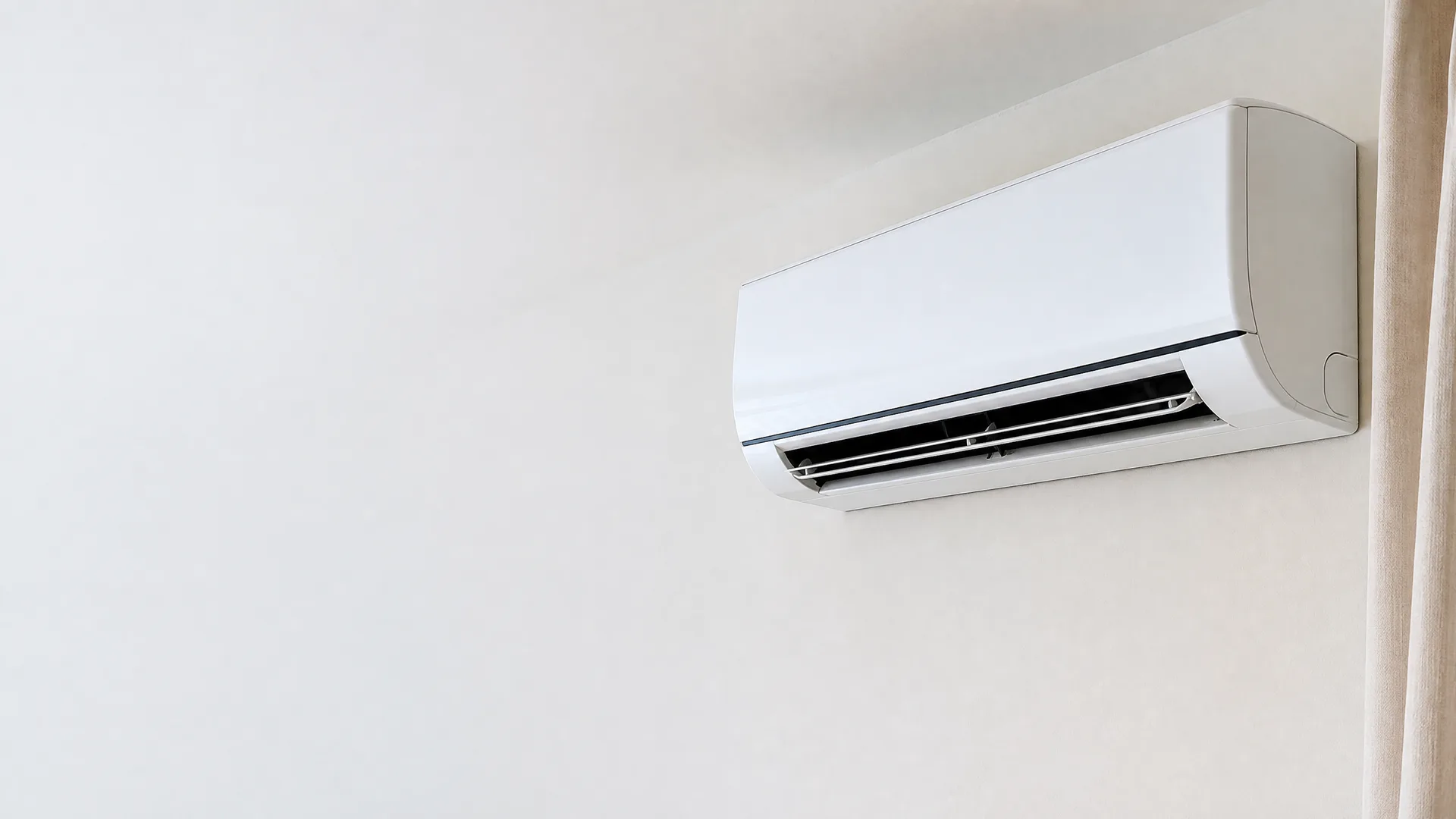
Calling someone who knows this unit
Instead of searching around and calling a few HVAC companies to describe the same drip on the wall three separate times, you get matched with one licensed contractor near you who works on mini splits all winter. Someone who services these units through a Minnesota winter has seen a frozen drain line and a failed defrost sensor often enough to know which one you're probably looking at before they even get there. You explain it once, to the person who's actually coming out.

What the dripping is telling you
A mini split leaking water in a Minnesota winter is almost always ice melting off the outdoor coil, draining the way it's supposed to or not. Normal defrost drip comes and goes with the cold snaps. Water pooling under the indoor head, a frozen drain line, or ice that keeps building past a normal defrost cycle points to something a contractor needs to look at: a drain line pitched wrong, a clogged line, a sensor telling the board the wrong thing, or refrigerant low enough that the coil can't shed the frost between cycles.
You don't need to figure out which one it is before you call. A contractor who services mini splits all winter has seen this exact drip on this exact equipment, in this exact cold, more times than you have. Instead of searching around, calling a few companies, and walking each one through the same description of where the water shows up and when, you tell it once to someone local who already knows what tends to fail on these units once the temperature drops and stays there.






Describe it once
The pro who reaches out is licensed in Minnesota.
You're not committing to anything by asking.