






Why your mini split makes noise in a Minnesota winter

Step 1 of 3: Equipment

Why does my mini split make so much noise in winter?

Cold nights here push the mini split harder than it works all summer, and a unit that ran quiet in July can start clicking, cracking, or buzzing once temperatures drop. You're not imagining it getting louder. It's worth knowing what's normal strain on the system and what's a sign something needs a look before it gets worse.

Cold makes the unit work harder, and that shows up as noise

A mini split pulls heat from outside air even when that air is well below freezing, and the colder it gets, the harder the compressor and outdoor fan have to work to do it. That extra effort shows up as sound: a steady hum that gets louder, a whoosh from the outdoor fan running at full speed, or clicking as the system switches into defrost to melt ice off the outdoor coil. Defrost cycles are the main thing that's different about winter. The unit briefly reverses itself, and you may hear a whoosh or a change in pitch when it does. Some of this is the system doing what it's built to do in a Minnesota winter. Grinding, rattling, or a noise that wasn't there last winter is different, and that's worth having someone check.

A dim room with a wall-mounted mini-split air conditioner above a vertical water stain running down the wall to a towel on the floor, with a desk, chair, lamp and potted plant beside a window.

You're in the home office on a July afternoon, half listening to a conference call, when you notice the carpet under the window feels wrong. You look up and see it: a wet streak running down the wall below the indoor unit, dark against the paint. You grab a towel from the hall bathroom and press it to the baseboard, then stand back and watch the unit for a minute, like it might explain itself. It doesn't drip while you're watching. The streak is already dry at the top, wet near the bottom, like it's been going on longer than today. You check the floor around the towel every few minutes for the rest of the call.

Is this noise just the cold, or is something wrong?

You hear it most on the coldest nights, usually right when the unit kicks into defrost. A clicking as it starts, a cracking sound as the casing shifts with the temperature change, maybe a buzz that wasn't there in August. Some of that is normal. The outdoor unit is working through frost on its coil and the parts expand and contract as they heat and cool. What's worth paying attention to is noise that keeps getting louder, a new rattle that wasn't there last week, or the indoor head grinding instead of humming. Left alone, a developing problem can mean the system struggles to keep the house warm on the nights you need it most, right when everyone's home and the temperature outside is working against you.

  1. Outdoor temperature drops and the mini split calls for more heat

  2. Refrigerant pressure climbs as the compressor works harder to compensate

  3. Frost builds on the outdoor coil and triggers a defrost cycle

  4. A reversing valve switches, sending hot gas to melt the frost

A woman with long blonde hair in a light blue shirt leans back on a beige sofa with her eyes closed, in a softly lit living room with cushions and a blurred plant and shelf in the background.
A woman with long dark hair in a gray knit sweater sits on a gray sofa with a cushion, looking toward a window in a living room with framed pictures and a lamp in the background.
A woman with long dark hair in a light grey knit sweater sits on a sofa indoors, looking to her right, with a framed landscape picture, a potted plant and a curtained window behind her.
A woman with long dark hair leans back against a gray sofa with her eyes closed, in a living room with a curtained window, a potted plant, and a dark screen in the background.

A mini split pro near you

Explain the job once and skip repeating it on every call.

No fee to send it, and nothing to sign.

Sounds that mean normal operation

A clack when the reversing valve switches into defrost, a hum as the compressor speeds up, a rush of air as the outdoor fan changes speed. These happen because a mini split in Minnesota runs its compressor far harder at zero degrees than it ever does in July. The plastic casing on the outdoor unit also contracts in the cold, and that contraction makes a cracking sound similar to an old house settling. None of this points to damage. It points to a system working against a bigger temperature difference than it saw all summer.


Sounds worth a service call

A grinding or squealing from the outdoor fan motor, a buzz that keeps going after the unit should have finished defrosting, or a knocking that wasn't there last winter. A fan motor losing its bearings gets louder as the cold thickens the lubricant inside it. A refrigerant leak can make a hissing sound near the lines, and low refrigerant forces the compressor to run longer to reach the same heat. Noise that changes week to week, rather than staying the same each time the unit defrosts, is the kind worth having a contractor look at.

A smiling older woman with gray shoulder-length hair in a cream cable-knit turtleneck sweater stands behind a wooden board holding a round loaf of bread, in a warmly lit kitchen with a dark window and shelves behind her.
A woman with her hair in a bun sits wrapped in a beige knitted blanket on a couch, holding a sleeping child against her chest in a warmly lit room with a lamp and houseplant in the background.

Every part of the outdoor unit reacts to cold in its own way. The compressor sits on rubber mounts, and stiff rubber passes more vibration straight into the metal casing around it. That casing is built from sheet metal panels, and a panel that isn't seated tight will tick or pop as it contracts in the cold. The fan has to work across a wider range of speeds than it does in summer, pushing air across a coil that's fighting frost. Inside the unit, a reversing valve uses a solenoid to physically slide a piston back and forth, and that's the clunk you hear right when defrost kicks in or shuts off. Refrigerant itself is changing state as it moves through the line set, switching between gas and liquid as pressure shifts, which can sound like water moving behind the wall. If your unit has a crankcase heater, it may hum while it runs, keeping refrigerant from pooling in the compressor oil overnight.

What's Actually Making That Sound

  • The compressor sits inside the outdoor unit on rubber isolation mounts, and in deep cold that rubber stiffens and transmits more vibration into the casing.
  • Sheet metal panels on the outdoor unit contract as they cool, and a panel that fits loosely can pop or tick as it flexes with the temperature swing.
  • The outdoor fan motor has a wider range of speeds in winter, since the unit has to move air across a coil that's fighting frost buildup.
  • A reversing valve has a solenoid that physically slides a piston to redirect refrigerant flow, and that slide makes an audible clunk every time defrost starts or stops.
  • Refrigerant moving through the line set changes from a gas to a liquid and back as pressure swings, and that phase change can sound like water running inside the wall.
  • The crankcase heater, if the unit has one, cycles on to keep refrigerant from pooling in the compressor oil, and some models hum audibly while it runs.
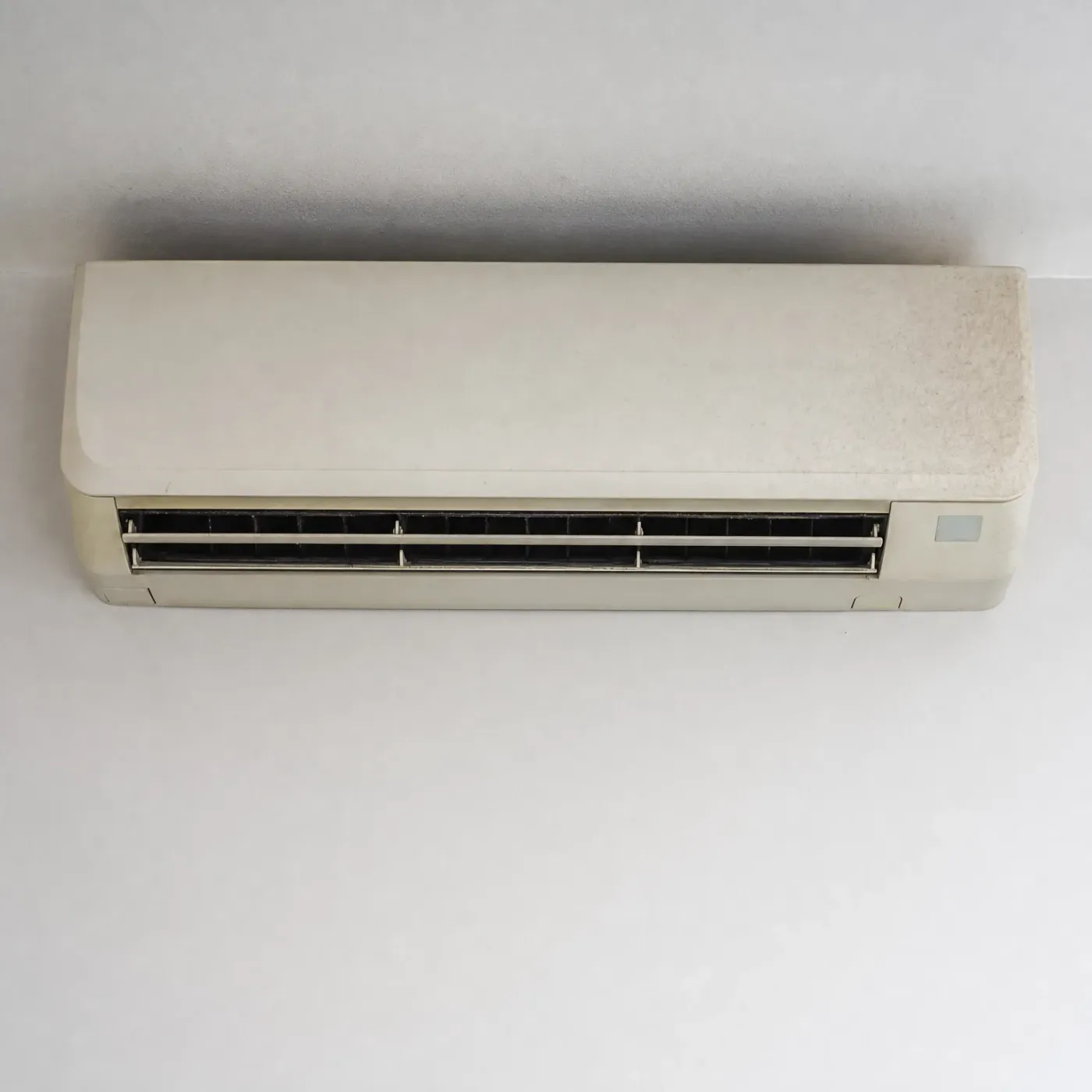
A wall-mounted mini-split air conditioner indoor unit with a yellowed plastic casing and dark horizontal vent louvers, installed on a plain light-gray wall.
Before you get your mini split repair
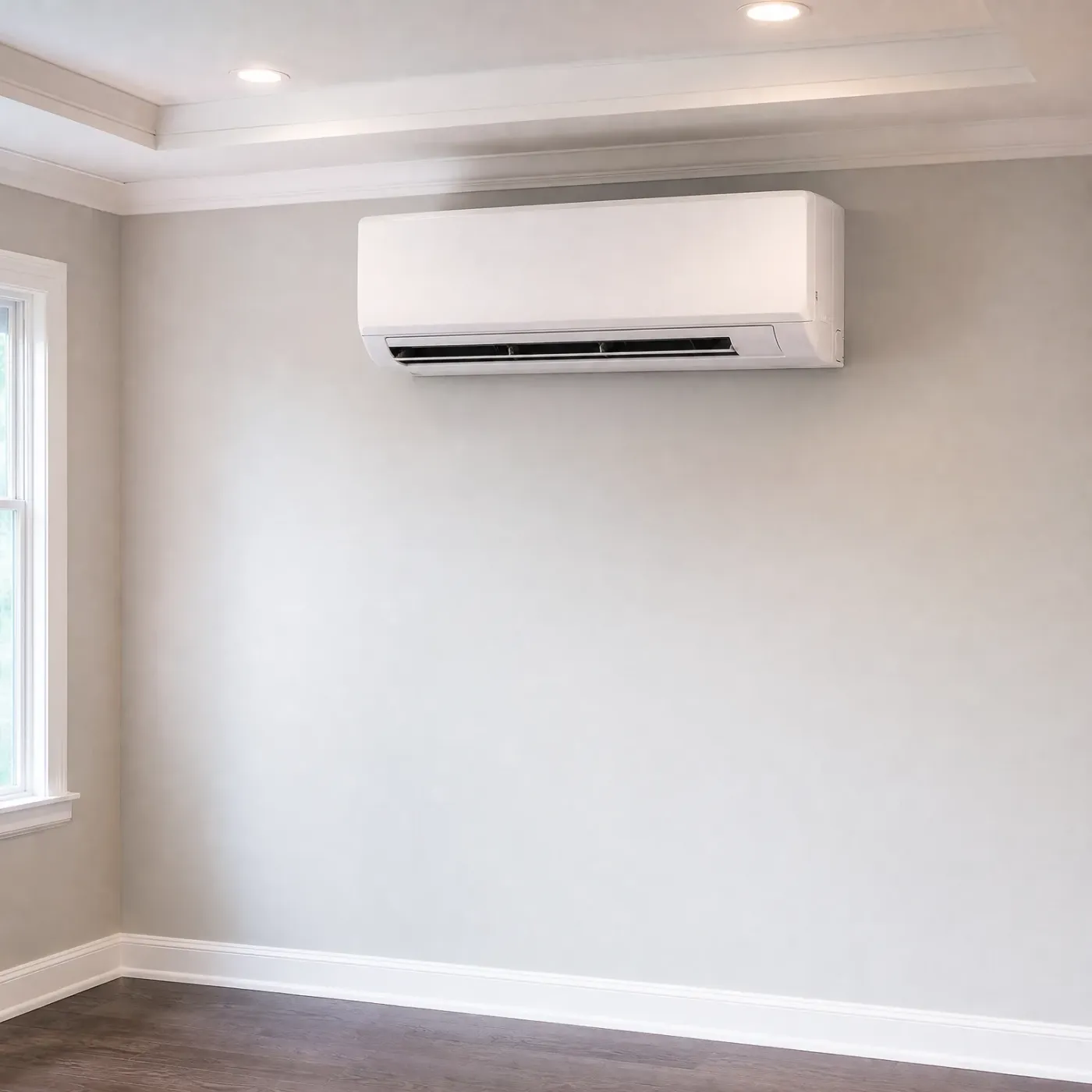
A white wall-mounted mini-split air conditioner on a light gray wall in an empty room with dark wood flooring, white baseboards, a tray ceiling with recessed lights, and a window at the left.
After you get your mini split repair
A two-story house with beige horizontal siding, stone veneer at the base, dark shingled gable roofs and a concrete walkway leading to the front door, set behind a patchy green lawn under a clear blue sky.

Minnesota summers aren't the heavy, sticky kind. Averaged across June, July and August, the dew point here runs 59°F, which is comfortable air by national standards. That matters for what happens in winter, because the mini split isn't built around fighting humidity here. Its compressor and coil are sized for dry summer heat, so when a January night drops hard, the system leans almost entirely on raw heating output to keep up, not the balanced load it was designed around. That's part of why the strain shows up as sound. The compressor and reversing valve are doing winter's work with a summer margin. Source: regional climate normals for Minnesota.

NASA POWER T2MDEW county cells weighted by homes

A mini split that clicks and cracks on the coldest nights is usually just doing the work a Minnesota winter asks of it. The sounds you hear through a January defrost cycle are the compressor, the reversing valve, and the casing responding to cold the way they're built to. What's worth a second look is a sound that's new, a rattle that wasn't there last winter, or noise paired with weaker heat. That's a sign something inside has shifted or worn down, not a sign the cold is just doing its thing. Instead of searching through contractors who may or may not work on mini splits, calling around to ask if anyone has an opening, and repeating the same description of the noise to each one, you can get matched with a contractor who handles this equipment and let them call you. You already know what you're listening for. What's left is getting someone out to your house who can tell you, for certain, whether it's the cold or something that needs fixing.

A wall-mounted mini-split air conditioner on a light wall above a beige sofa with green and cream cushions, a wooden coffee table with a vase of leafy branches and a dark bowl, and a green upholstered armchair beside a curtained window.

A local pro for your mini split repair

Find a mini split pro

Skip searching for a mini split pro and answer a few questions instead.

Sending the form costs nothing.