
Running clean
This is what the unit looks like when the coil is clear. No smell on start-up, no haze near the vent. Heat kicks on and just moves warm air into the room, nothing burning off it.
 Send it today
Send the request today and stop worrying about who to call.
That smell hits right when the mini split kicks on for heat, and it's enough to make you wonder if something's wrong with the unit or just dusty. In a Minnesota winter, you can't exactly shut it off and wait it out.
A smell on heat start-up usually points to something sitting inside the indoor unit. Dust that settled on the coil over the warm months will burn off with a sharp, almost hot smell the first few times you run heat. That one fades. A musty or sour smell is different. That's usually moisture that never fully drained, sitting in the pan or the line, growing something it shouldn't. A plasticky or electrical smell is different again, and that one you don't wait on.
Most homes here heat with gas, so the mini split is doing extra work carrying heat during the stretches the furnace isn't running full time, or in the room it was put in to cover on its own. Either way, it needs to actually work right when it's cold outside, not just smell fine.
You don't need to know which smell is which to get it looked at. What you need is someone who can open the unit, find out if it's dust, standing water, or a wiring problem, and deal with it before you're running that smell through the house all winter.
Sending the form here takes the search off your plate. No calling around to find someone who works on mini splits, no explaining the smell three different times to three different companies, no sitting with a stack of quotes trying to guess who's any good. You describe it once, and from there it's someone else's job to take it from here.
Your mini split has been sitting on cooling mode or idle for months, and the first cold snap finally pushes you to switch it over to heat. That's when the smell shows up, right as the unit kicks on, and it catches you off guard enough to stop and check the manual or search for what's going on before you decide whether to run it or wait on a repair call.
A mini split heats by warming air over an electric element or coil, and when that part sits unused all summer, dust settles on it. The first run of the season burns that dust off, and you get a sharp, slightly burnt smell for a few minutes until it clears. In Minnesota, where the mini split might not run heat again until well into fall, that buildup has months to collect. If the smell lingers past the first ten or fifteen minutes, or comes back every time you turn the heat on, that points to something else, like a dirty filter or a problem inside the unit itself.
Dust and debris settle on the coil while the unit sits unused.
The heat exchanger warms up fast once heat mode starts.
That dust burns off the hot coil and releases an odor.
Air from the coil pushes the smell straight into the room.
You'd notice it first in whatever room the indoor unit is mounted in, a burnt-dust smell that fades after the unit's run for a few minutes. Some households catch a faint haze near the vent on start-up too. If it's just that first run after months on cooling or sitting idle, it's not something to worry over. But if the smell keeps coming back every time the heat kicks on, or it's sharper and sticks around longer, that's dust building up on the coil or something else going on inside the unit. Left alone through a Minnesota winter, that's months of the heat side working harder than it should, and a smell that doesn't fade is worth having someone look at before it turns into a bigger repair.
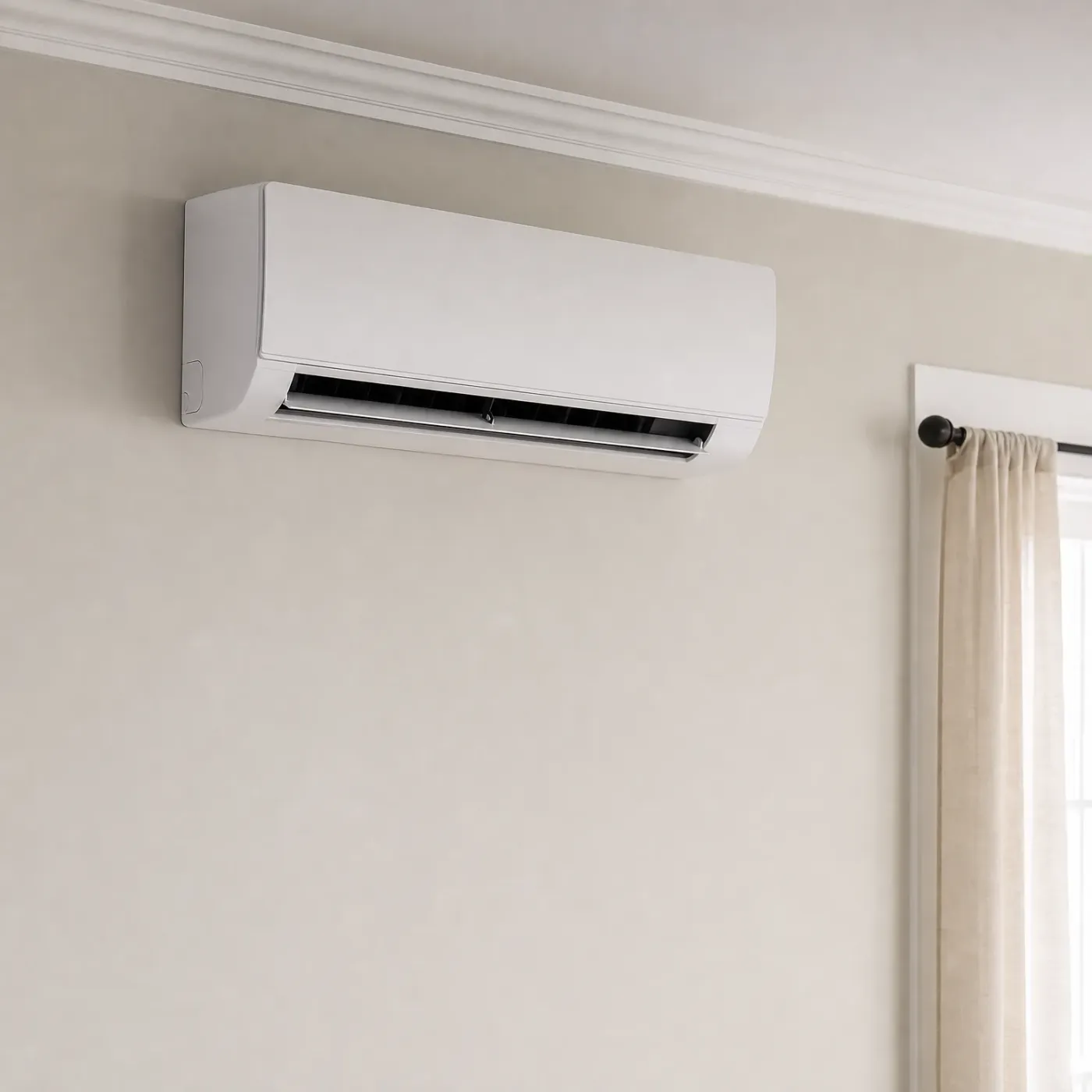
This is what the unit looks like when the coil is clear. No smell on start-up, no haze near the vent. Heat kicks on and just moves warm air into the room, nothing burning off it.
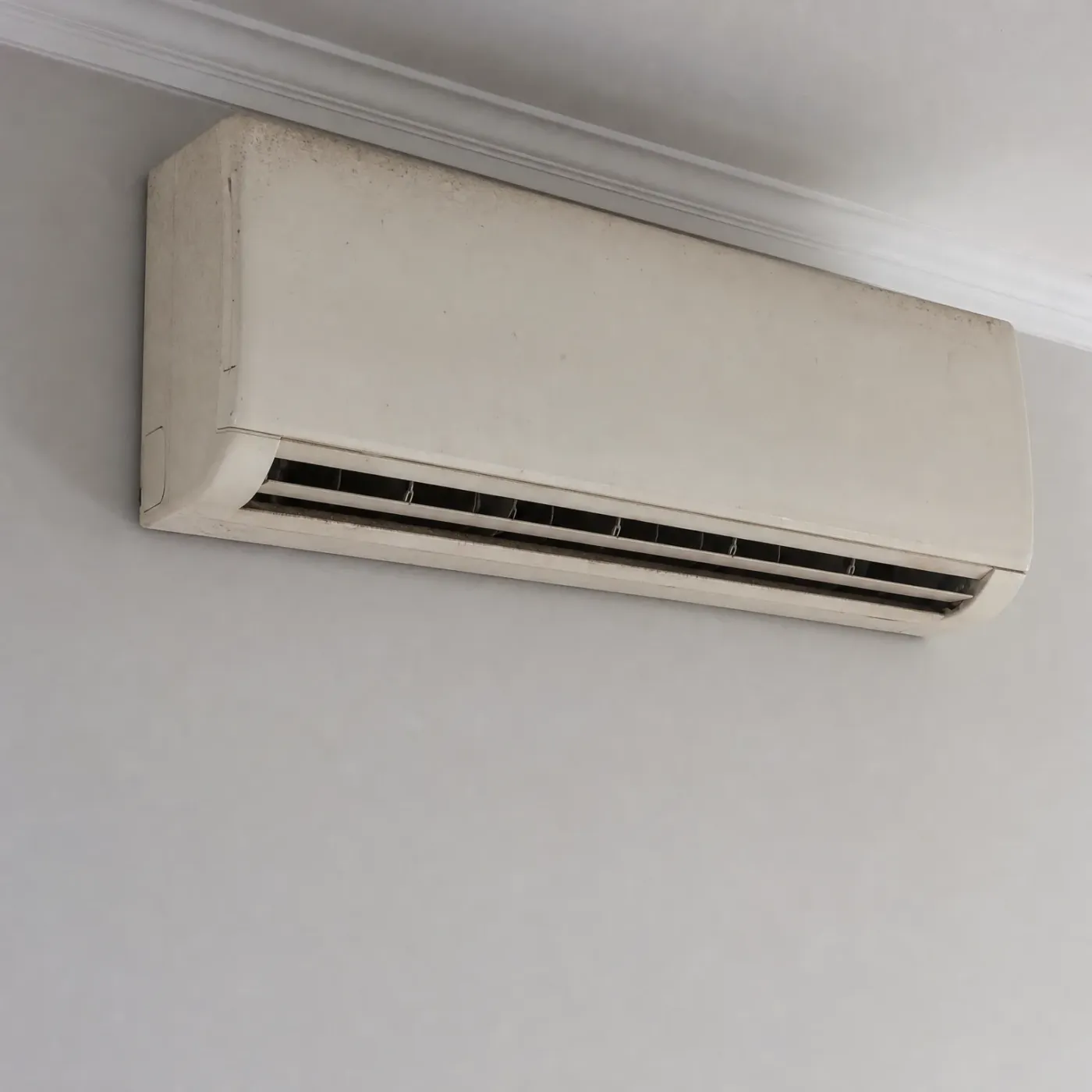
A casing this dingy usually means the coil behind it hasn't been cleaned in a while either. That's the buildup that scorches when the heat exchanger warms up, and why the room gets that burnt-dust smell every time the mini split kicks on.





Describe what your mini split is doing once, in one form.
Send the request today and let a mini split pro reach out to you.
Sending the form costs nothing.

If your mini split is what's carrying the heat in that room, that burnt smell greets you every time it cycles on, not just once. A Minnesota winter means that unit is running for months, so a coil that smells dusty in November is going to keep smelling dusty through March unless something changes. The room it heats is the room you live in most, which is exactly why you notice it.
Left alone, a dirty coil also means the unit works harder to push the same heat into the room, and whatever's been settling on it stays in the air you're breathing near that vent. You could spend your evening calling around to find out who actually works on mini splits in your area, waiting on hold, explaining the smell twice to two different companies before anyone can tell you what's wrong. Sending one form means you're not the one tracking down who's available and sorting through quotes to find someone who knows this equipment.


It's a December afternoon and you're at your desk in the home office, the mini split clicking on for its heat cycle like it's done all day. This time there's a wet streak coming down the wall under the indoor unit, dark against the paint, pooling at the baseboard. You grab a towel from the hall bathroom and lay it on the floor under the drip. The room still smells faintly of burnt dust from the start-up cycle. Outside, the Minnesota afternoon is gray and in the teens, and the unit keeps running, keeps dripping, while you stand there deciding whether to shut it off or let it ride until someone can look at it.
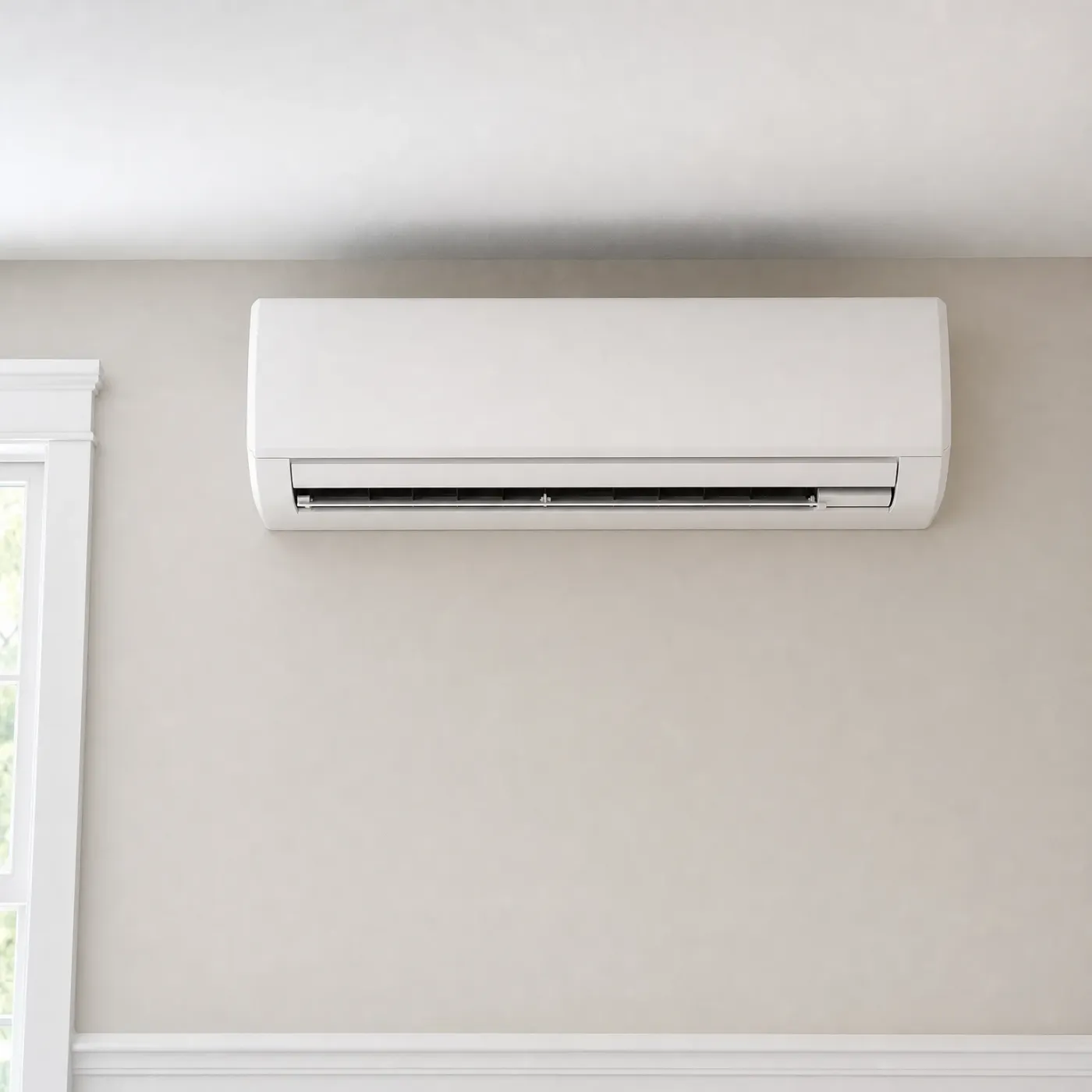
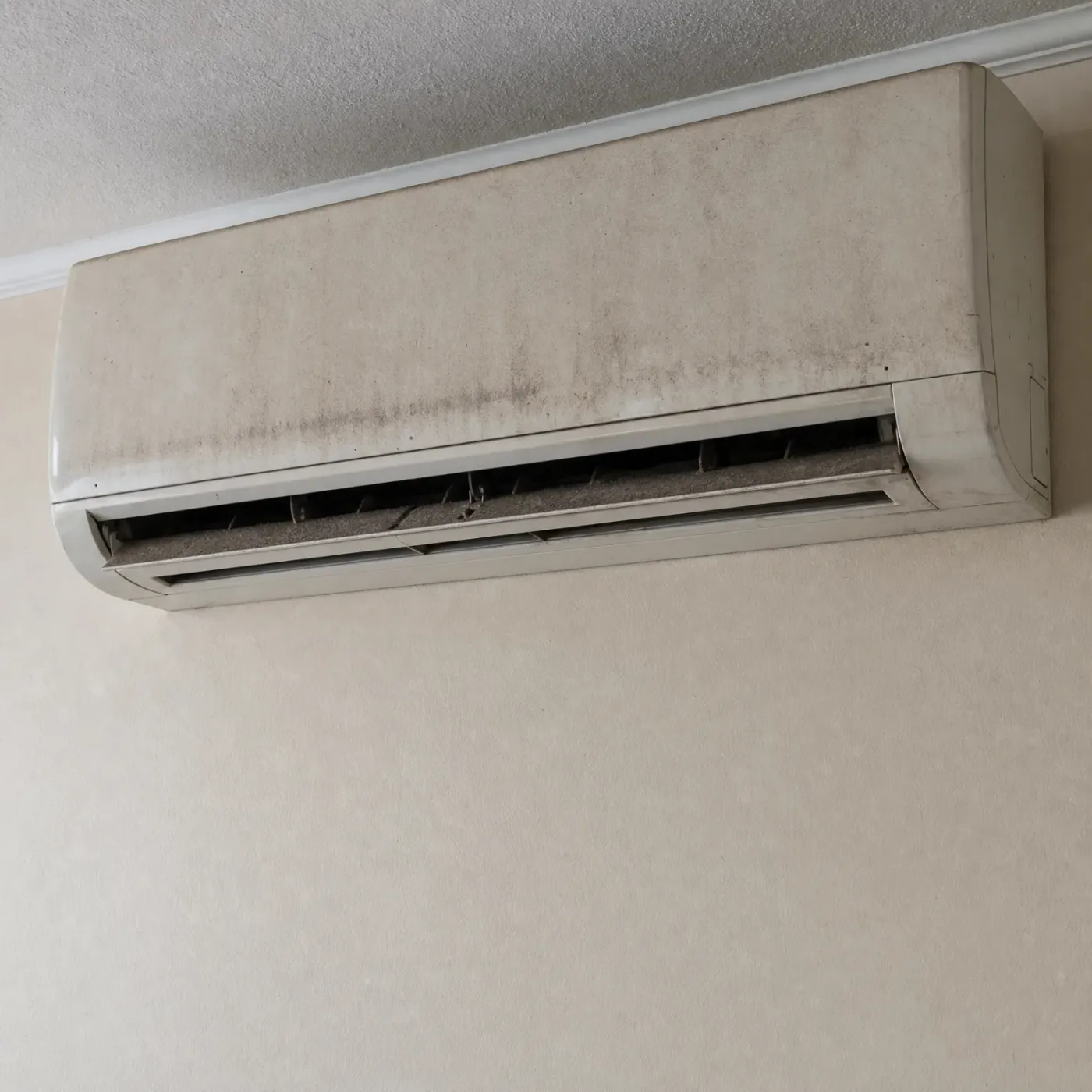


At 15.83 cents per kilowatt-hour, a mini split pulling double duty as your main heat source adds up fast over a Minnesota winter. A coil caked with dust makes the unit work harder to push out the same warmth, so that smell is costing you more than comfort.
EIA-861 2025 statewide residential average
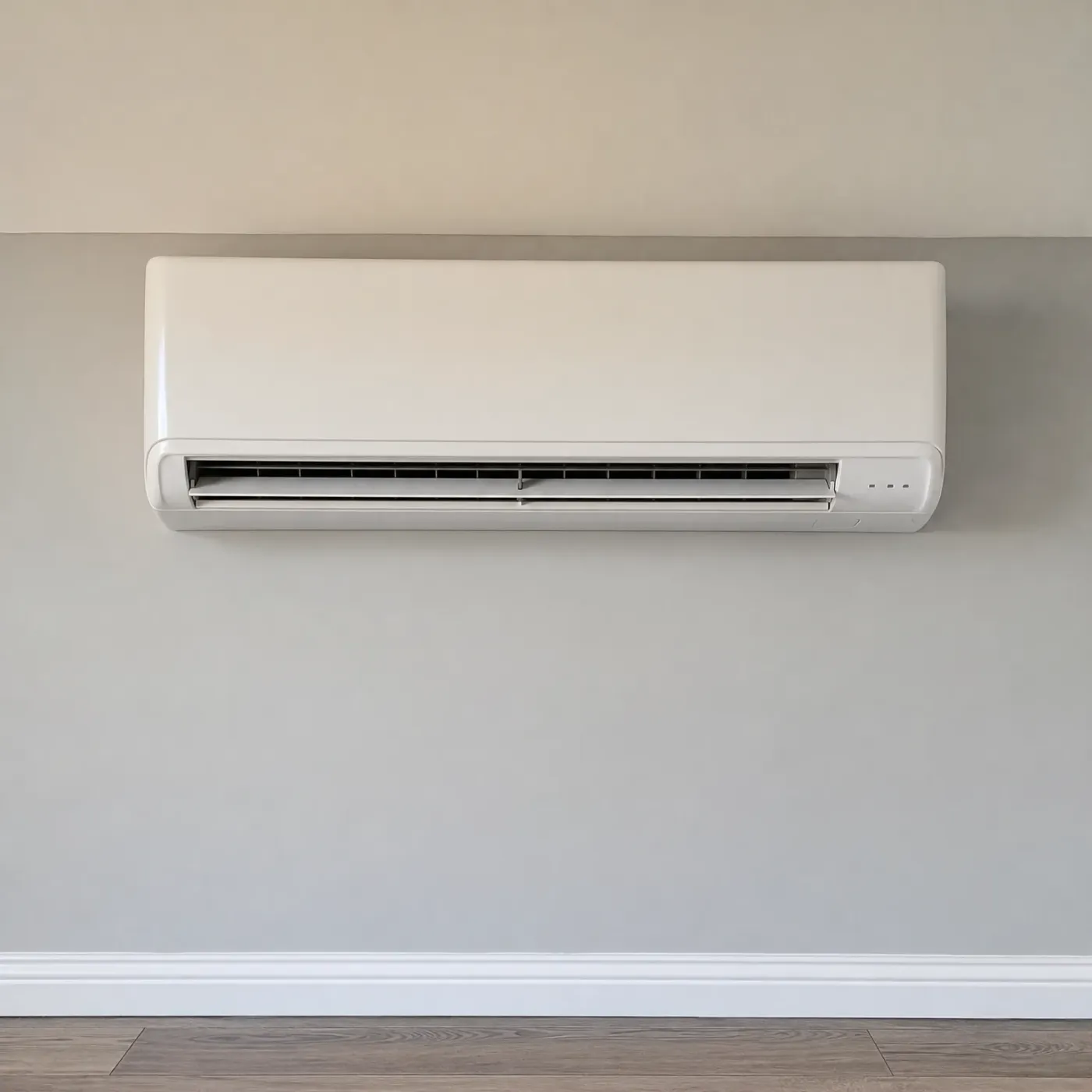
This is a mini split with nothing to hide. The vane sits open, the casing is white, no dust ringing the edges. Heat comes on and warm air just moves into the room. No smell, no haze, no reason to think twice about it.
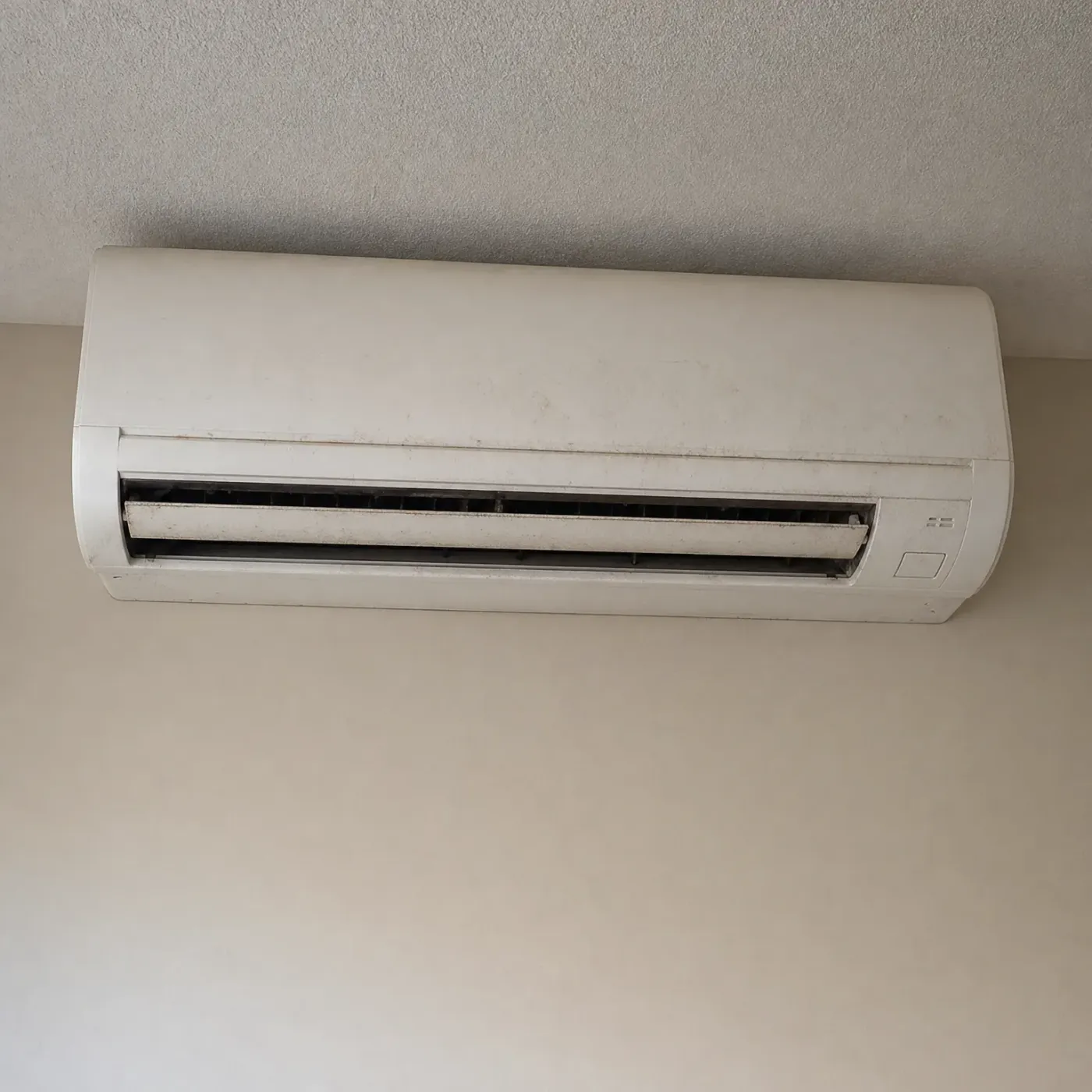
This casing has months of dust worked into it, the kind that collects while a unit sits idle all summer. A coil that looks like this is usually just as dirty underneath. That's what burns off and fills the room every time heat mode kicks on.
A burnt smell when the heat kicks on is dust burning off the coil, and it should fade after a few minutes. If it doesn't fade, or it comes back every cycle, the coil needs a real cleaning, and that's worth having someone look at before the smell turns into a bigger repair. You already know not to let a small problem sit all winter. What you don't have to do is spend your evening hunting down a contractor who works on mini splits, calling a few numbers, explaining the smell and when it happens and what mode it's in, then doing it again with the next one just to see who can actually get to it. Send the form once and that search is off your plate. You still get the coil checked and cleaned, the unit still needs the work it needs, but finding someone to do it stops being something you have to manage yourself.

Answer a few questions instead of calling shop after shop.