Tell us about the job
Takes about a minute. No obligation.

A contractor called out to repair a mini-split in St. Louis County is working on a system that has been running against real weather pressure for years. 695 severe weather events were recorded in St. Louis County, Minnesota between 2015 and 2024. At that rate, severe weather is part of the normal operating life of equipment here, and the compressor, refrigerant circuit, and electrical components carry that load directly. A repair quote that ignores cumulative wear is missing what the system has already been through.
What a mini-split has been asked to do since it was added to the house shapes what a contractor finds once the cabinet is off. Half the homes in St. Louis County, Minnesota were built in 1962 or earlier (2020-2024 ACS 5-year). Equipment came later, fitted into spaces and onto electrical that were already in place, which means two units in the same neighborhood can be in very different condition despite matching model numbers. A contractor opening a system here is tracing what happened inside that particular installation: whether the refrigerant circuit is intact, whether the control board shows signs of moisture or surge, and whether the parts a repair requires are still in production for that model.
The Parts of a Mini-split a Contractor Checks First
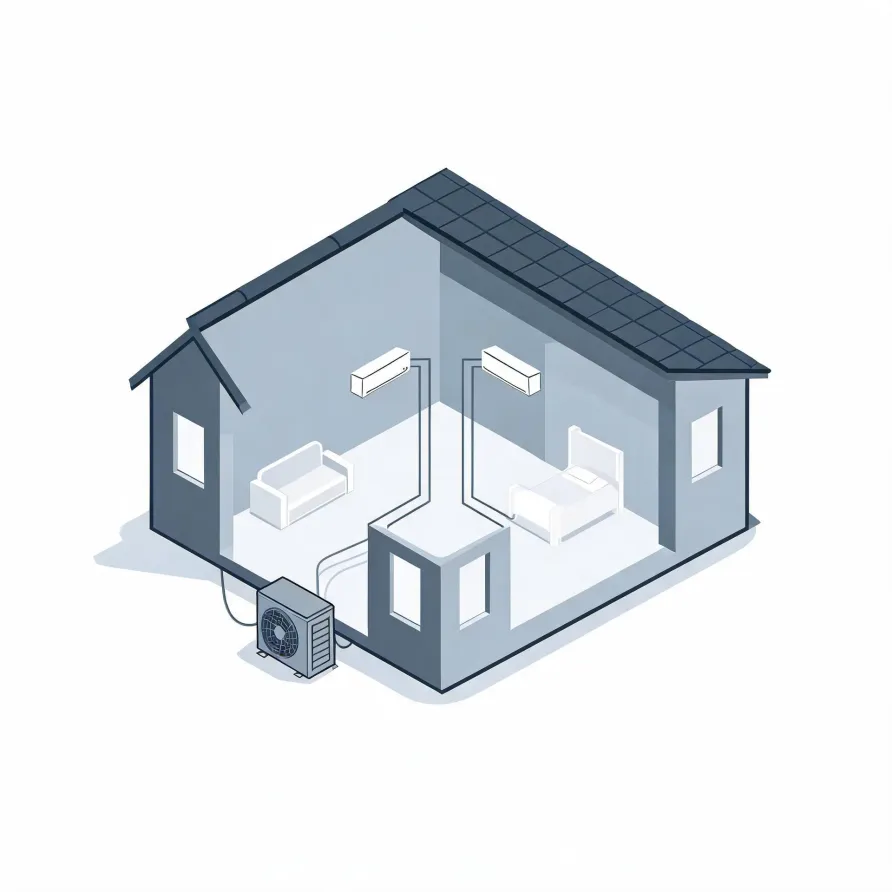
The indoor air handler mounts high on a wall inside the room and is the piece a homeowner notices first. It draws room air across a coil and pushes conditioned air back out. When airflow drops, temperatures swing, or the unit leaks water, the handler's coil, fan, or drain line is usually where a contractor starts.
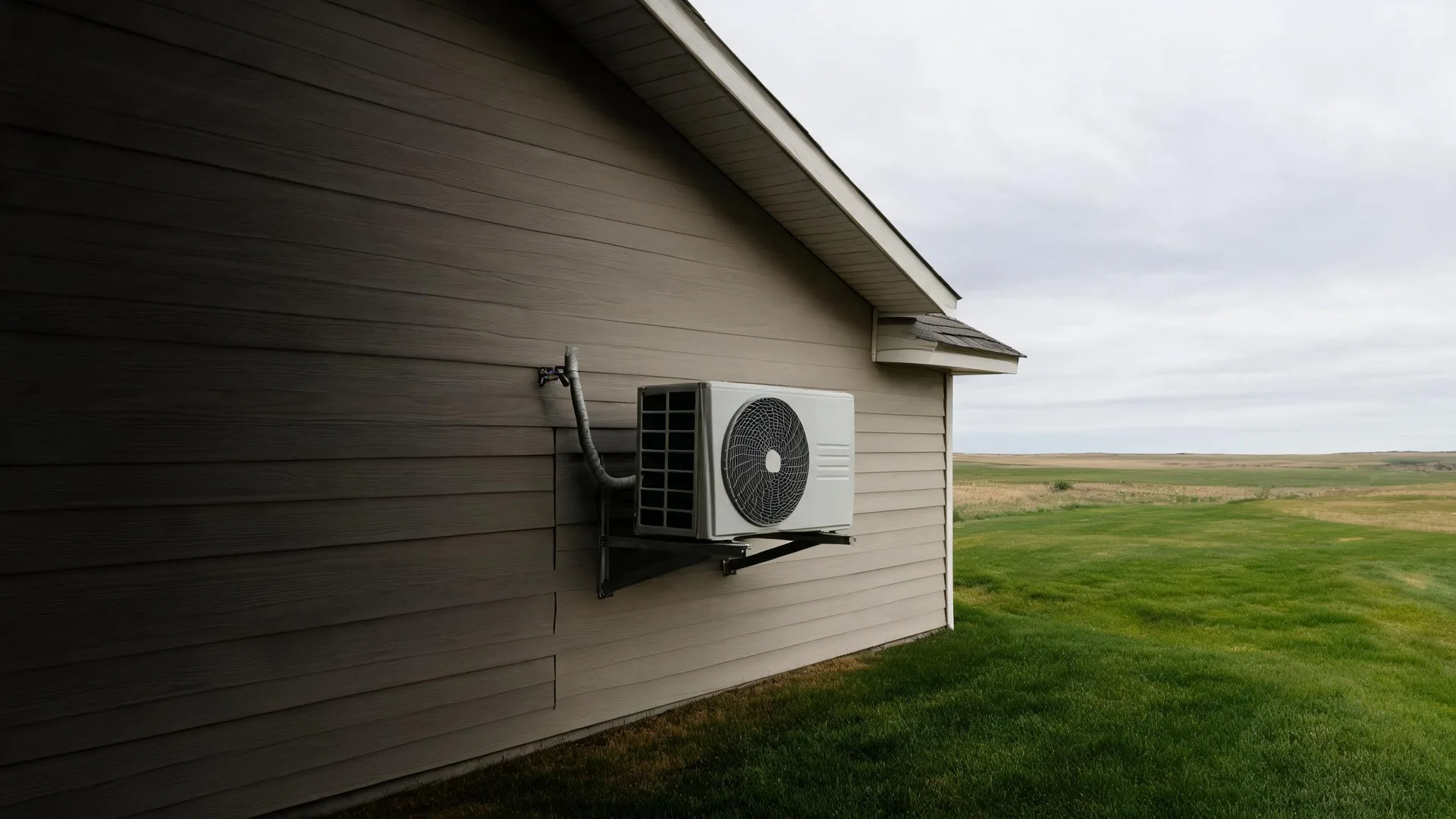
The outdoor condenser sits on the ground or a wall bracket outside the house and holds the compressor and the second coil. A set of refrigerant lines and a power cable run through a small hole in the wall and connect the two units. A faulty compressor, a refrigerant leak, or a failed capacitor all live in this outdoor section.
The drawing shows a typical layout, and a licensed contractor determines what applies to your specific system and home.
Get matched in St. Louis CountySt. Louis County, by the numbers
695 severe weather events were recorded in St. Louis County, Minnesota between 2015 and 2024.
NOAA National Centers for Environmental Information, Storm Events Database, bulk CSV export, events 2015-01-01 through 2024-12-31.Half the homes in St. Louis County, Minnesota were built in 1962 or earlier (2020-2024 ACS 5-year).
U.S. Census Bureau, 2020-2024 American Community Survey 5-Year EstimatesSt. Louis County, Minnesota holds 104,263 housing units (2020-2024 ACS 5-year).
U.S. Census Bureau, 2020-2024 American Community Survey 5-Year EstimatesOwners occupy 71.2% of the occupied homes in St. Louis County, Minnesota (2020-2024 ACS 5-year).
U.S. Census Bureau, 2020-2024 American Community Survey 5-Year EstimatesRepair Rules That Apply in St. Louis County, Minnesota2 sourced rules and standards
Licensing Rules That Apply in St. Louis County, Minnesota
Minnesota defines a mechanical contractor as a business that installs, repairs or maintains heating, ventilating, cooling or refrigeration systems — the definition that carries the exemption from the residential contractor licence.
Minnesota's residential contractor licence does not reach HVAC work: the licensing section carries its own exemption list, and a mechanical contractor is exempt from the licence requirement by name.
Severe Weather Events in St. Louis County
St. Louis County weather puts real stress on heating and cooling equipment, and that stress shows up as repair calls. How hard the climate runs a mini-split system is a local fact, and the chart below reflects that local reality.
695 severe weather events, 2015–2024. Source: NOAA National Centers for Environmental Information, Storm Events Database.