Tell us about the job
Takes about a minute. No obligation.

A contractor diagnosing a mini-split repair in Traverse County starts with the unit itself: how old the refrigerant lines are, whether the original install left clearances tight, how consistently filters got swapped. 101 severe weather events were recorded in Traverse County, Minnesota between 2015 and 2024. At roughly the midpoint nationally, that record means severe weather is a real but ordinary part of operating here. It shapes the cumulative wear a compressor or control board has seen, but it does not dominate the repair picture the way it would somewhere with a far heavier seasonal load. When a component fails, age and installation quality are what the contractor weighs first.
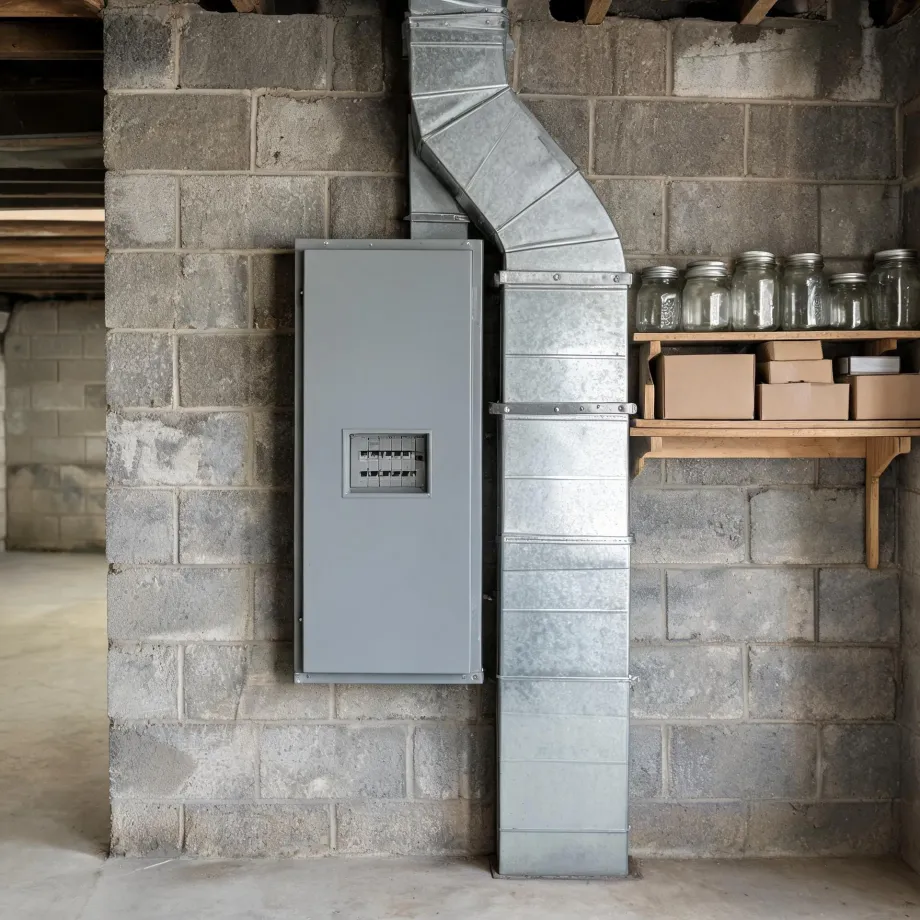
Half the homes in Traverse County, Minnesota were built in 1962 or earlier (2020-2024 ACS 5-year). A mini-split added to a house built in that era was almost certainly retrofitted into walls and chases that were arranged for something else entirely, and what a contractor opens during a repair reflects that. Refrigerant line routing, condensate drainage, and the penetrations holding everything in place were improvised at install time and have been under the same stress and seasonal movement ever since. When a fault shows up, the repair scope often follows those improvised paths before it reaches the unit itself.
The Parts of a Mini-split a Contractor Checks First
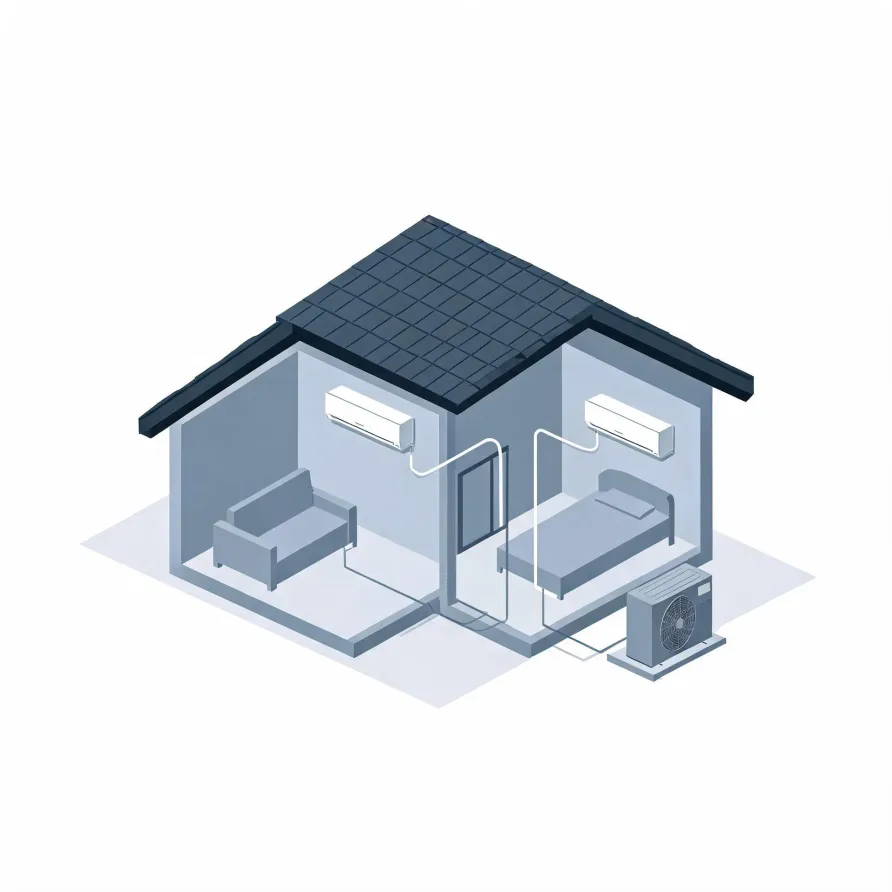
The indoor air handler mounts high on a wall inside the room and is where most failures show up first: a blocked drain line, a frozen evaporator coil, or a fan motor that has stopped moving air. The outdoor condenser unit sits on a pad or brackets outside and houses the compressor, which is the piece contractors reach for when the system runs but produces no change in room temperature.
A refrigerant line set runs through a small hole in the wall to connect the two units, and a contractor will check it for leaks or damage at both ends. The condensate drain line exits the indoor unit and needs to be clear; a blockage there drives water back into the handler and can trigger a shutdown.
The drawing shows a typical layout, and a licensed contractor will determine which components and conditions apply to your specific home.
Get matched in Traverse CountyTraverse County, Minnesota, by the numbers
101 severe weather events were recorded in Traverse County, Minnesota between 2015 and 2024.
NOAA National Centers for Environmental Information, Storm Events Database, bulk CSV export, events 2015-01-01 through 2024-12-31.Half the homes in Traverse County, Minnesota were built in 1962 or earlier (2020-2024 ACS 5-year).
U.S. Census Bureau, 2020-2024 American Community Survey 5-Year EstimatesTraverse County, Minnesota holds 1,896 housing units (2020-2024 ACS 5-year).
U.S. Census Bureau, 2020-2024 American Community Survey 5-Year EstimatesOwners occupy 81.8% of the occupied homes in Traverse County, Minnesota (2020-2024 ACS 5-year).
U.S. Census Bureau, 2020-2024 American Community Survey 5-Year EstimatesRules & Standards Behind Mini-Split Repair in Traverse County, Minnesota2 sourced rules & standards
What Traverse County, Minnesota Requires for This Work
Minnesota defines a mechanical contractor as a business that installs, repairs or maintains heating, ventilating, cooling or refrigeration systems — the definition that carries the exemption from the residential contractor licence.
Minnesota's residential contractor licence does not reach HVAC work: the licensing section carries its own exemption list, and a mechanical contractor is exempt from the licence requirement by name.
Severe Weather Events in Traverse County
Extreme weather puts real stress on heating and cooling equipment, and the repair demands that follow are shaped by what the local climate actually does. How hard a mini-split works, and how often it needs attention, is a local question.
101 severe weather events, 2015–2024. Source: NOAA National Centers for Environmental Information, Storm Events Database.