Tell us about the job
Takes about a minute. No obligation.
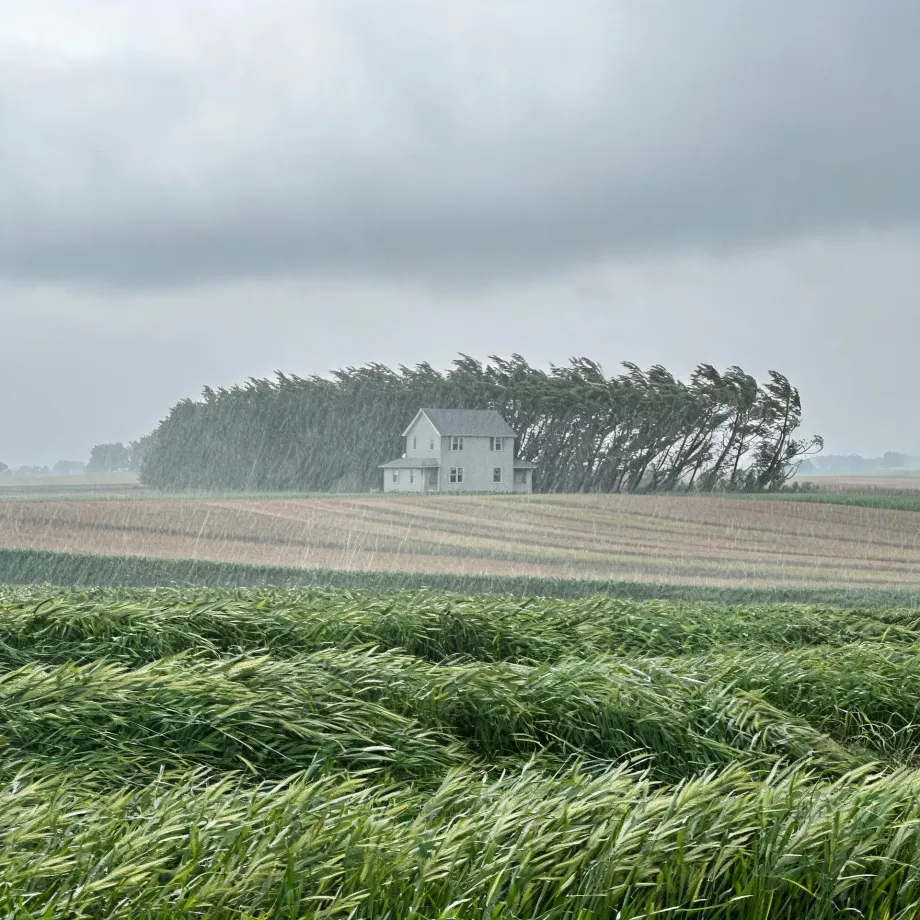
A contractor diagnosing a mini-split repair in Stevens County has to settle one question before anything else: did the system wear out, or did the load wear it out? 81 severe weather events were recorded in Stevens County, Minnesota between 2015 and 2024. At that rate, severe weather is a real part of what every system here runs against, but it is not frequent enough to be the automatic explanation for a failing compressor or refrigerant loss. Age and how well the unit was maintained will account for most of what a contractor finds inside the cabinet.
Half the homes in Stevens County, Minnesota were built in 1971 or earlier (2020-2024 ACS 5-year). A mini-split retrofit into a house of that era sits on wiring and wall penetrations that were adapted for it, not designed for it, which means the building itself rarely explains what fails. What a contractor finds once the indoor head or outdoor unit is open decides the repair: whether the refrigerant circuit has held charge, whether the control board responds correctly, whether the condensate path has stayed clear through seasons of freeze and thaw. Those are conditions the equipment accumulated on its own, and a parts search on a system of this vintage can hit a short catalog fast.
The Parts of a Mini-split a Contractor Checks During Repair
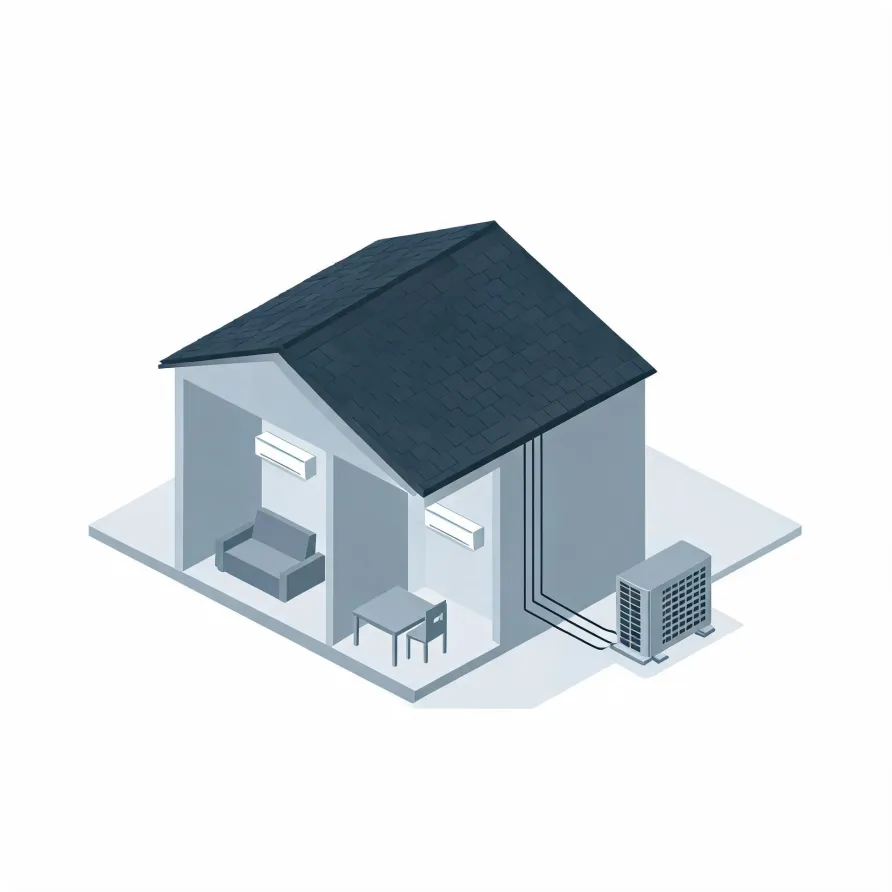
The indoor air handler mounts high on a wall inside the room and is the piece a homeowner notices first. It holds the evaporator coil, the blower fan, and the filters. When the system is not cooling or heating properly, a contractor starts here, checking whether the coil is fouled, whether the fan is moving air, and whether refrigerant flow through the coil is right.
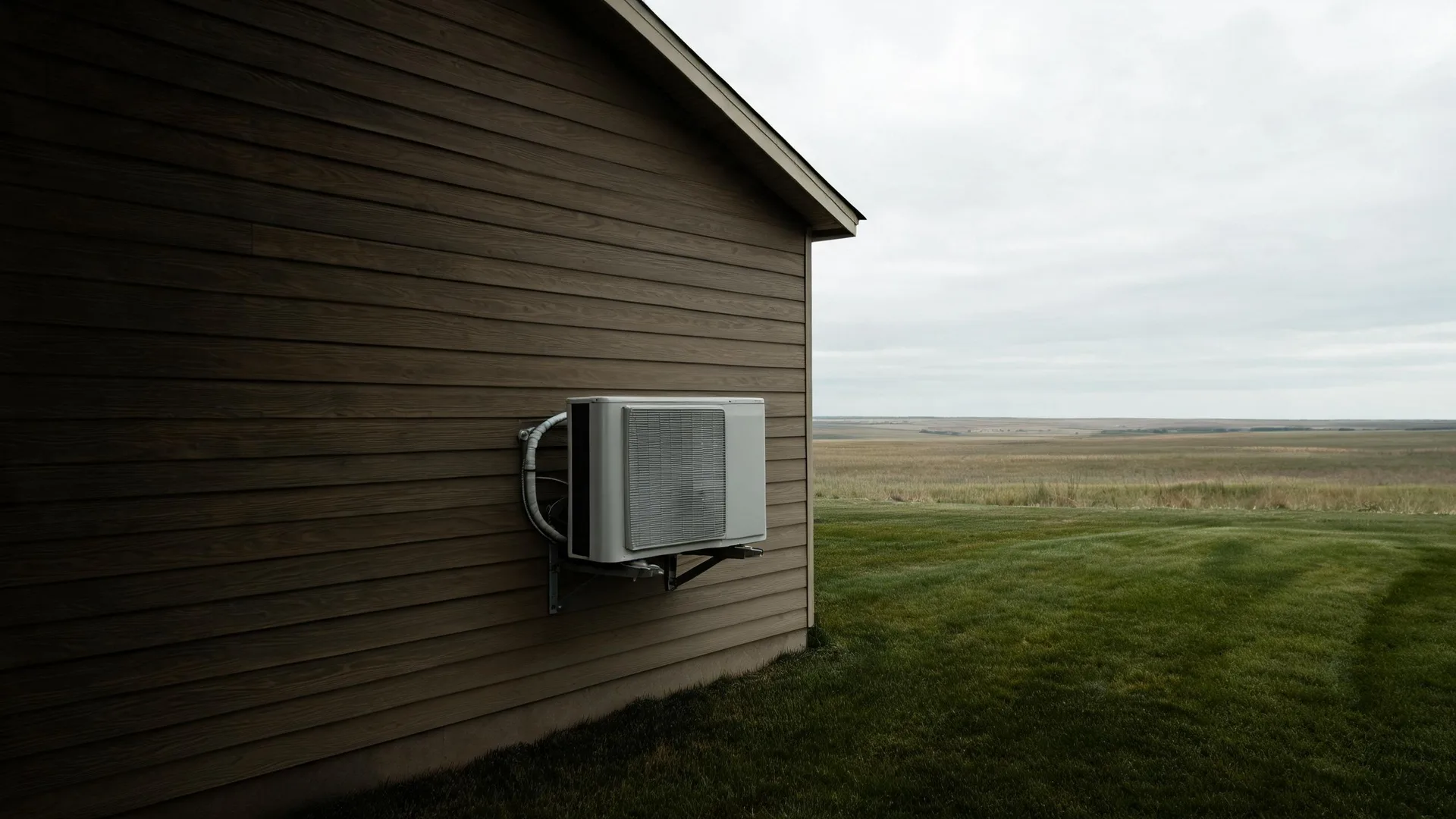
The outdoor condenser unit sits on a pad or bracket outside the house and carries the compressor, the second coil, and the fan that sheds heat to the outside air. Connecting the two units is the line set, a pair of insulated copper tubes that carry refrigerant, bundled with a condensate drain line and the power and signal wiring. A fault in the compressor, a refrigerant leak along the line set, or a failed control board in either unit can each stop the system cold.
The drawing shows a typical mini-split layout, and a licensed contractor determines which components are involved in any specific repair once they have looked at the actual system.
Get matched in Stevens CountyStevens County, by the numbers
81 severe weather events were recorded in Stevens County, Minnesota between 2015 and 2024.
NOAA National Centers for Environmental Information, Storm Events Database, bulk CSV export, events 2015-01-01 through 2024-12-31.Half the homes in Stevens County, Minnesota were built in 1971 or earlier (2020-2024 ACS 5-year).
U.S. Census Bureau, 2020-2024 American Community Survey 5-Year EstimatesStevens County, Minnesota holds 4,182 housing units (2020-2024 ACS 5-year).
U.S. Census Bureau, 2020-2024 American Community Survey 5-Year EstimatesOwners occupy 63.4% of the occupied homes in Stevens County, Minnesota (2020-2024 ACS 5-year).
U.S. Census Bureau, 2020-2024 American Community Survey 5-Year EstimatesCodes & Standards Governing Mini-Split Repair in Stevens County, Minnesota2 sourced rules and standards
Licensing Rules That Apply in Stevens County, Minnesota
Minnesota defines a mechanical contractor as a business that installs, repairs or maintains heating, ventilating, cooling or refrigeration systems — the definition that carries the exemption from the residential contractor licence.
Minnesota's residential contractor licence does not reach HVAC work: the licensing section carries its own exemption list, and a mechanical contractor is exempt from the licence requirement by name.
Severe Weather Events in Stevens County
Extreme weather puts real stress on heating and cooling equipment, compressing run times, forcing hard restarts, and wearing components faster than moderate climates do. How often that stress hits Stevens County shapes how much repair work mini-split systems here actually face.
81 severe weather events, 2015–2024. Source: NOAA National Centers for Environmental Information, Storm Events Database.